A credit request for media Template is most useful when it turns a potentially complicated credit review into a structured record that both the requesting business and the reviewing party can understand. In practice, a well-designed credit request document can gather company identity, contact details, requested terms, banking information, trade references, financial context, authorization, and signatures in one organized place. The exact fields should depend on why credit is being requested, who will review it, and what information can reasonably be verified.
Searches for this topic often overlap with business credit applications, customer account forms, trade reference requests, and credit information letters. Those documents are related, but they do not always serve the same purpose. A customer credit form generally asks the applicant for information, while a reference request asks another organization to confirm payment experience or account history. Keeping those functions distinct makes the resulting record easier to review and reduces unnecessary requests for sensitive information.
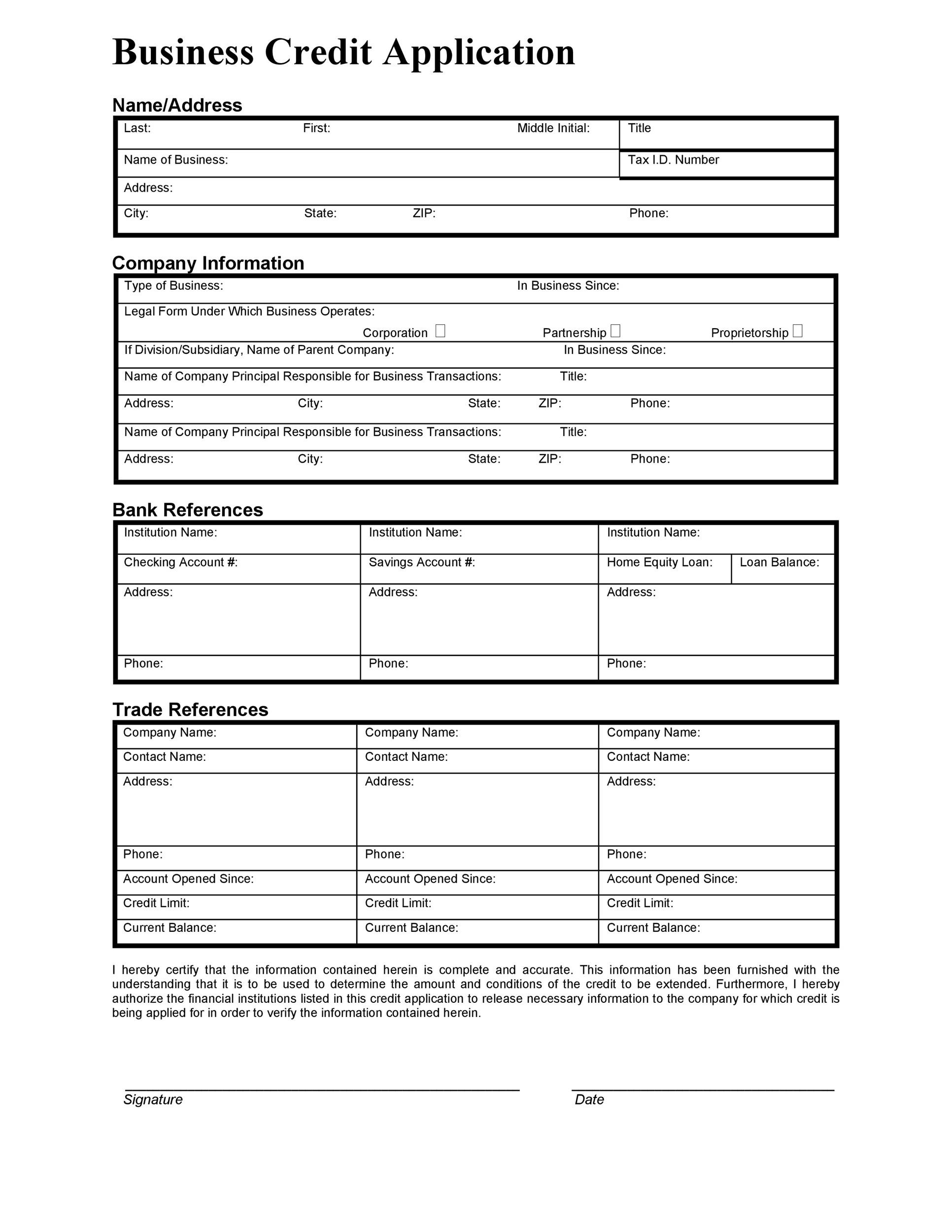
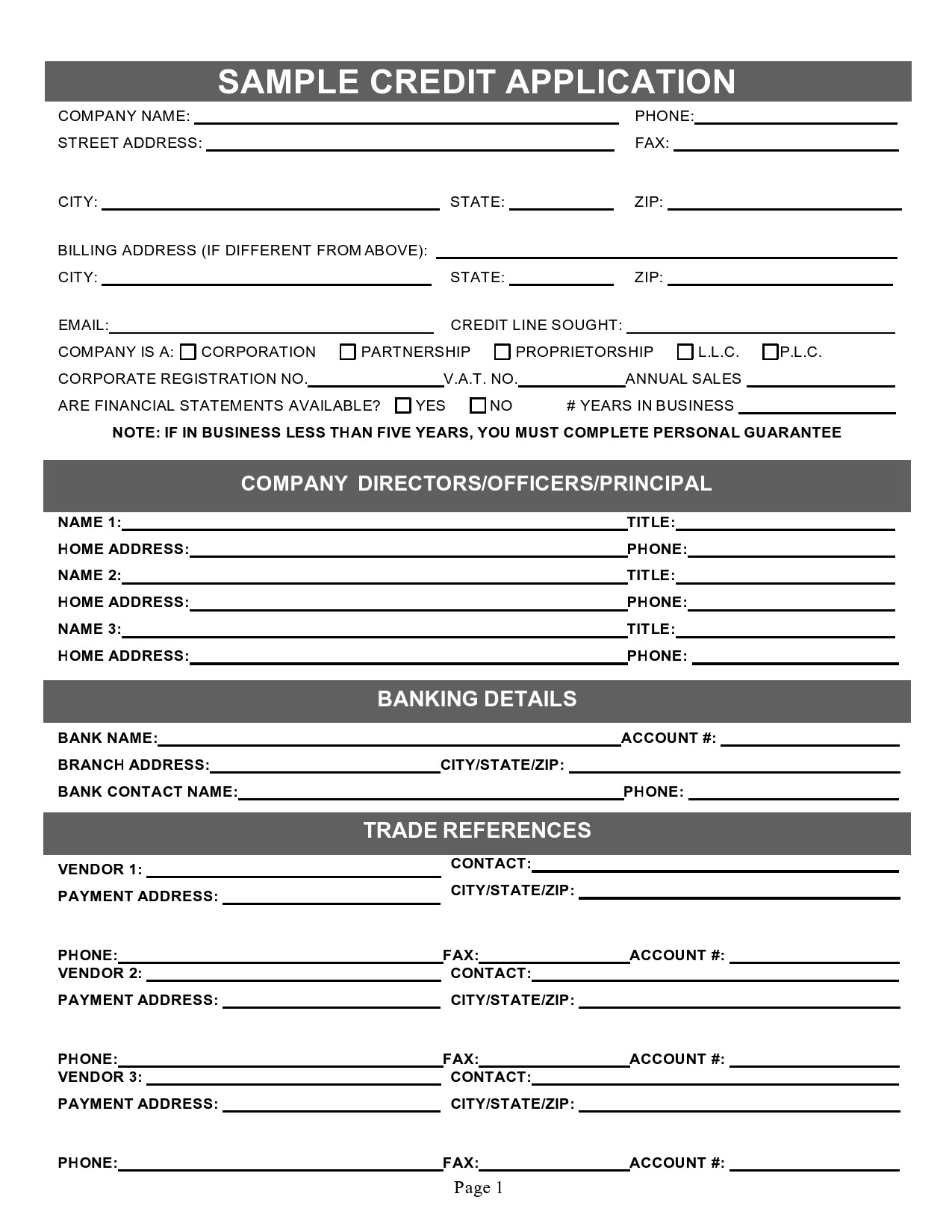
Current examples from business-form publishers show recurring sections such as company information, business structure, bank references, trade references, requested credit limits, payment history, authorization, and signatures. The precise fields vary substantially between organizations, so a template should be treated as a starting structure rather than an automatically suitable legal or financial instrument.
What a credit request template is designed to accomplish
The primary purpose of a credit request template is consistency. When every prospective customer provides information in a different format, a finance or accounts-receivable team has to spend extra time locating basic details, identifying missing fields, and comparing information that was presented inconsistently. A structured form establishes a predictable sequence so reviewers can see who the applicant is, what credit is being requested, and what evidence supports the request.
A useful template also separates factual information from judgment. Company name, business address, requested limit, payment terms, reference contacts, and account history are factual fields. A credit reviewer may then interpret those facts according to the organization’s own credit policy. Keeping those stages separate helps prevent the form itself from implying that approval is guaranteed simply because the applicant has completed every field.
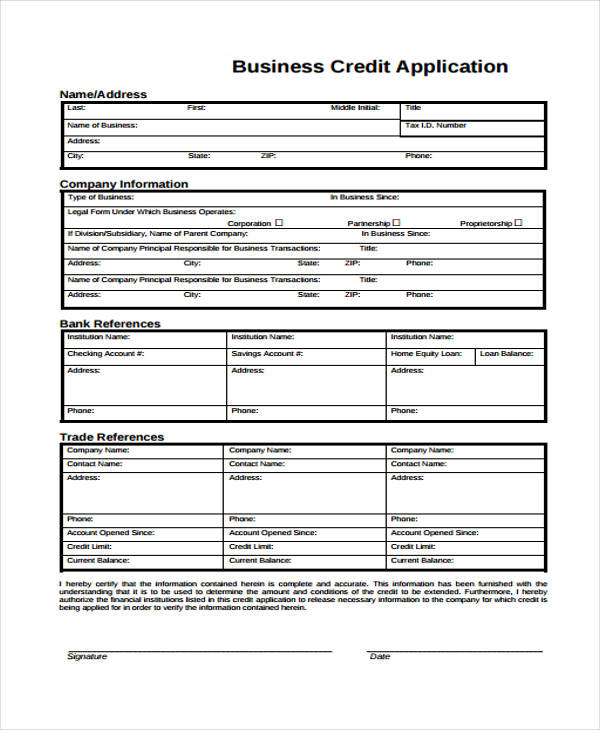
Examples of business credit forms commonly collect legal or trading names, addresses, business type, time in operation, bank references, trade references, credit limits, current balances, and contact details. Some also include authorization language permitting reference checks. These recurring elements provide a practical foundation for designing a form, although the final wording should be reviewed for the jurisdiction and business situation in which it will be used.
When businesses typically use this type of document
A supplier may use a credit request document when a new business customer wants to purchase goods or services on agreed payment terms rather than paying immediately. The same basic structure can also support an existing customer’s request for a higher credit limit, revised payment terms, or a new account. In each situation, the document gives the reviewer a defined information set instead of relying entirely on informal correspondence.
Another common use is collecting trade references. A prospective customer may identify suppliers with whom it has an established commercial relationship. The reviewing company can then request information about account duration, payment terms, payment behavior, current balance, or other relevant account facts. Reference forms published by business-form providers commonly use these categories because they provide context about the commercial relationship rather than relying on a single subjective recommendation.
A related document is the request for credit information template. Instead of asking the applicant to describe its own history, this type of request is directed to a bank, supplier, or other reference source. The distinction matters because the questions, authorization language, recipient information, and response fields need to be designed for the party providing the information.

Core sections to include
Applicant and business identification
The first section should establish exactly which legal or commercial entity is requesting credit. Depending on the situation, useful fields may include legal business name, trading name, business address, mailing address, telephone number, email address, company registration identifier, tax identifier where appropriate, and the name and position of the primary contact. If the applicant operates through several entities, the form should make it clear which entity will actually owe the invoices.
Business structure can also be useful because a corporation, partnership, sole proprietorship, limited-liability entity, or other structure may require different internal review procedures. A template should avoid collecting highly sensitive personal information merely because another form includes it. Only information that is genuinely necessary for the intended credit decision should be requested.
A clear identity section also reduces a common administrative problem: mismatched records. If the name on the credit request differs from the name used by accounts payable, invoices can be assigned incorrectly or reviewed against the wrong customer account. A well-organized form therefore acts as both a credit-review document and a customer-record reference.

Requested credit terms
The request itself should be specific. Instead of simply asking whether credit is desired, the form can identify the requested credit limit, preferred payment terms, expected purchasing frequency, estimated monthly purchases, and intended account purpose. These fields give the reviewer a better understanding of the exposure being requested.
For example, a hypothetical wholesale customer might request a credit limit of a particular amount and ask for a defined invoice-payment period. The example should be treated as illustrative rather than a recommended approval threshold. A credit reviewer may consider the request alongside customer history, financial information, references, internal policy, and other evidence.
The requested terms should also be separated from approved terms. A customer can ask for one limit while the reviewing organization approves another. A good template therefore includes a clearly identified internal review area or approval record rather than making the applicant’s requested amount appear to be an approved facility.
Bank references and trade references
Bank references and trade references serve different purposes. A bank reference can provide information associated with a banking relationship, subject to the bank’s policies and applicable privacy requirements. A trade reference usually comes from another supplier or commercial partner that has experience selling to the applicant on credit terms.
A useful trade-reference section normally identifies the reference company, contact person, telephone number, email address, account relationship, and relevant account history. Depending on the review process, the reviewer may also ask about the length of the relationship, credit terms, payment consistency, outstanding balance, and other factual account information. Jotform’s current business reference form, for example, includes the applicant business, reference company, contact details, relationship length, and comments.
References should not be treated as automatically authoritative. A supplier may have limited information, an old relationship, different payment terms, or its own policy about what it can disclose. The reviewer should therefore interpret a reference in context and avoid presenting one reference response as a complete picture of an applicant’s financial position.


Designing the reference request portion
A reference request should clearly identify the company being evaluated and the organization receiving the request. It should explain why the information is being requested and identify the specific information needed. Broad requests such as “please provide all credit information” can be less useful than focused questions about account opening date, credit terms, payment experience, current balance, and other relevant facts.
Authorization deserves particular attention. Depending on the information requested and the parties involved, the reference provider may require evidence that the applicant has authorized disclosure. The exact requirements can vary by jurisdiction, institution, contract, and type of information. A template should therefore avoid asserting that one authorization clause is universally sufficient.
A response section can make the process easier for the reference provider. Instead of requiring the recipient to write a completely new letter, the form can offer clearly labeled fields and optional comment space. This encourages consistent responses while still allowing the reference provider to explain unusual circumstances or limitations.


Choosing between Word, PDF, Excel, and online formats
People searching for a credit request for media template word usually want a document that can be edited as ordinary business correspondence. A Word-based structure is convenient when the organization expects variable text, signature blocks, explanatory clauses, or occasional changes to field labels. It is also useful when the completed record will be reviewed as part of a conventional customer file.
A credit request for media template pdf is better understood as a fixed presentation format. PDF is useful when consistent page layout matters or when the organization wants recipients to see the same document structure regardless of their editing environment. Whether a PDF can be filled electronically depends on how it was created; a static PDF is not automatically a fillable form.
A credit request for media template excel can make sense when the process involves repeated structured records, sortable reference information, or internal tracking. However, a spreadsheet should be designed carefully when it contains confidential financial or business information. Access controls, file permissions, retention practices, and protection against accidental changes become important considerations.

Cloud-based document formats
Searches for a credit request for media template google docs or credit request for media template google sheets generally indicate a preference for collaborative editing and centralized record handling. A document format is useful when several authorized staff members need to review wording, while a spreadsheet structure can support lists of customers, references, or internal review fields.
Cloud collaboration should not automatically mean that every participant receives editing rights. A practical workflow can distinguish between people who prepare the form, people who review credit information, and people who approve the final terms. Permissions should match those responsibilities so that an ordinary data-entry user cannot unintentionally change approval criteria or previously recorded information.
Organizations should also decide where completed records belong, how long they should be retained, and who can access them. A template is only one part of the process. Good document governance includes version control, consistent naming, controlled access, and a defined method for correcting outdated customer information.


How a customer credit request moves through review
The process normally begins with intake. The customer or prospective account holder supplies identifying information, requested terms, and any references required by the reviewing organization. Before review begins, the receiving team should check whether required fields are complete and whether the business identity is internally consistent.
The next stage is verification. Information may be compared against existing customer records, trade references, banking information, financial statements, credit reports, or other sources that the organization is authorized to use. The purpose is not simply to collect more documents; it is to establish whether the information supplied is sufficiently reliable for the specific decision being considered.
The final stage is decision and documentation. The organization may approve the requested terms, approve different terms, request additional information, or decline the request according to its own policy. The completed record should show what was requested, what was reviewed, what was decided, and who was authorized to make that decision.


What to collect from a business customer
A practical credit application for customers template should collect enough information to support the decision without turning the form into an unnecessarily broad personal-data questionnaire. Core business details usually include the legal name, trading name, business address, accounts-payable contact, telephone number, email address, business structure, and time in operation.
The financial portion can ask for the requested limit and payment terms, along with other information that is genuinely relevant to the organization’s credit policy. Depending on the business relationship, a reviewer may request bank references, trade references, financial statements, or information about existing obligations. Each field should have a clear reason for being present.
References should be easy to contact and should identify the relationship accurately. If the customer provides several suppliers, the reviewer can record which references were contacted, when they were contacted, and what information was received. That creates a better audit trail than keeping informal notes scattered across email conversations.


Building a strong credit reference request
A credit reference request form template free search often reflects a desire for a simple structure that can be adapted without starting from a blank page. The important issue is not the label attached to the template but whether it contains the fields necessary for the intended review. A basic form can be more useful than a visually complicated document if its questions are specific and easy for the reference provider to answer.
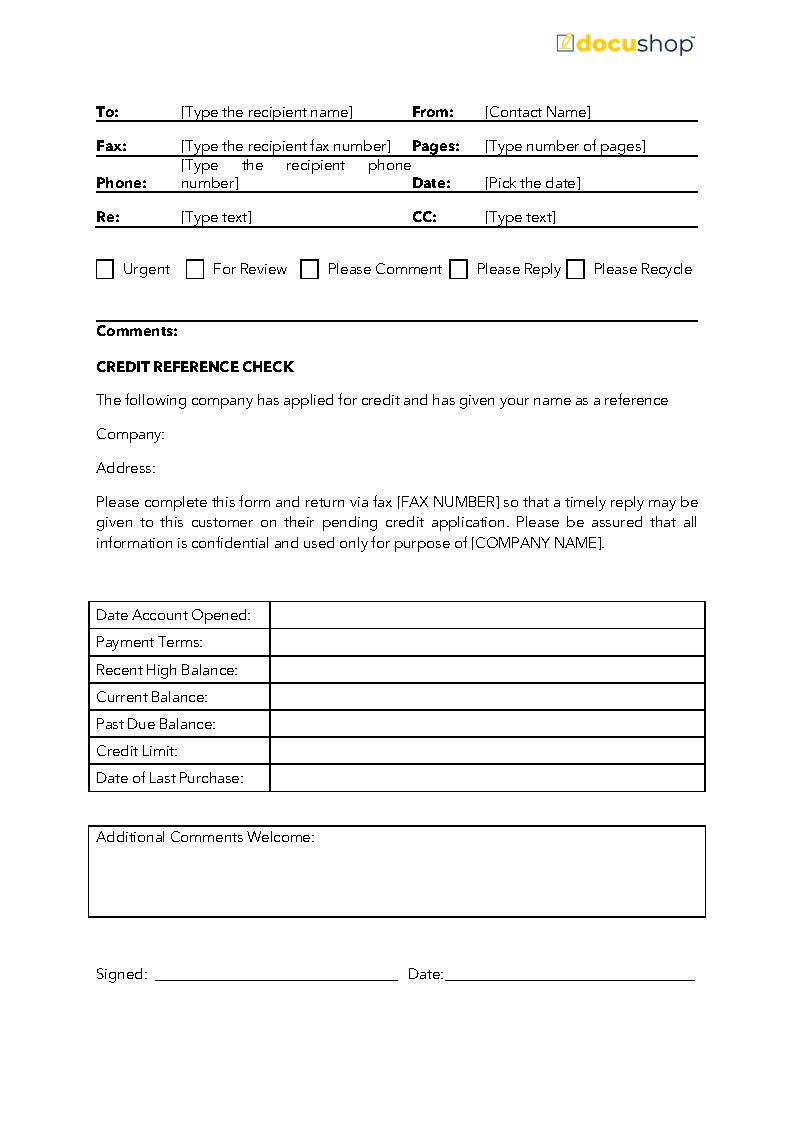
A request for credit reference template can include the applicant’s name, the requesting organization’s details, the reference provider’s contact information, the relationship period, account terms, payment history questions, current balance, and a comments area. If the reference provider needs written authorization before responding, the workflow should address that separately and clearly.
The credit reference request form template free search phrase also illustrates why terminology can be confusing. Some resources describe a document sent by a lender or supplier to a reference, while others describe a form completed by an applicant listing its references. Before selecting a format, identify which party is supposed to complete the document and which party is expected to provide the information.


Common mistakes that weaken a credit request
One common mistake is requesting too much information without explaining its purpose. Long forms can appear thorough while creating unnecessary administrative work and increasing the amount of sensitive information that must be handled. A better approach is to distinguish essential fields from conditional fields and only show additional questions when the circumstances justify them.
Another problem is unclear terminology. “Credit limit,” “requested amount,” “current balance,” and “available credit” can describe different concepts. The form should use precise labels and, where necessary, short explanatory notes. This is particularly important when the form will be completed by customers in different industries or countries.
Incomplete reference information is another frequent weakness. A reference name without a company, telephone number, email address, or account context may be difficult to verify. A structured reference block should therefore make the required information obvious and leave enough room for accurate responses.


Authorization, privacy, and responsible record keeping
Credit requests frequently involve information that should be handled carefully. Business addresses and payment histories may be ordinary commercial information, while personal identifiers, financial account details, or information about individual guarantors can require stronger controls. The template should not assume that every field can be shared freely with every recipient.
Authorization wording should match the actual process. If an organization intends to contact listed trade references, obtain credit-report information, or verify banking details, the document should accurately describe those activities. Generic wording copied from another organization may not reflect the actual process or applicable legal requirements.
Record keeping is equally important. A completed credit request should be stored with enough context to show when it was submitted, what information was current at the time, which references were contacted, and what decision resulted. Periodic review is especially important for existing customers because business ownership, addresses, contacts, payment behavior, and requested credit exposure can change.


Practical Solution
Start by defining the decision the credit request for media Template is supposed to support. Write down the type of customer, the credit product or trade terms involved, the maximum information the reviewer actually needs, and the evidence that will normally be checked. From there, create sections for business identity, requested terms, references, authorization, internal review, and final approval. This prevents the form from becoming a collection of unrelated questions.
Next, separate customer-facing fields from internal fields. Customers should complete their own company details, requested terms, and reference information. Internal staff can record verification dates, reviewer notes, risk considerations, approval status, approved limit, approved terms, and follow-up requirements. Keeping those areas distinct reduces accidental changes and makes the completed document easier to audit.
Finally, test the form with a realistic hypothetical customer before putting it into regular use. Check whether a reviewer can quickly determine who is requesting credit, how much exposure is requested, which references are available, what information has been verified, and what decision was made. Remove fields that do not contribute to those objectives, clarify ambiguous labels, and establish a controlled version so every department works from the same structure.


A practical field sequence
A straightforward sequence is business identification first, followed by contact and accounts-payable details, requested credit terms, banking references, trade references, supporting information, authorization, and signatures. The internal review section can then follow the customer portion. This sequence mirrors the way many reviewers naturally evaluate a request: identify the entity, understand the request, examine supporting evidence, and document the decision.
For a small supplier, the form may remain relatively short. A larger organization with several customer categories may use conditional sections so that different types of applicants provide different information. The objective is not to make every applicant complete the longest possible form; it is to collect information proportionate to the decision being made.
For teams that need structured records, the credit request form template should also have a clear version identifier and revision date. If the organization later changes its credit policy, the revision history can help establish which version was used for a particular customer review.

Evaluating different template structures
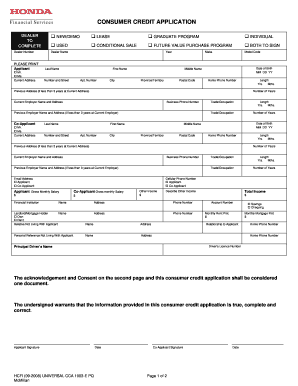
A compact one-page design works well when the business only needs company details, requested terms, references, and authorization. Its main advantage is speed: the applicant can understand the entire request without navigating several pages. Its limitation is that it may not provide enough room for complex financial circumstances or multiple owners and guarantors.
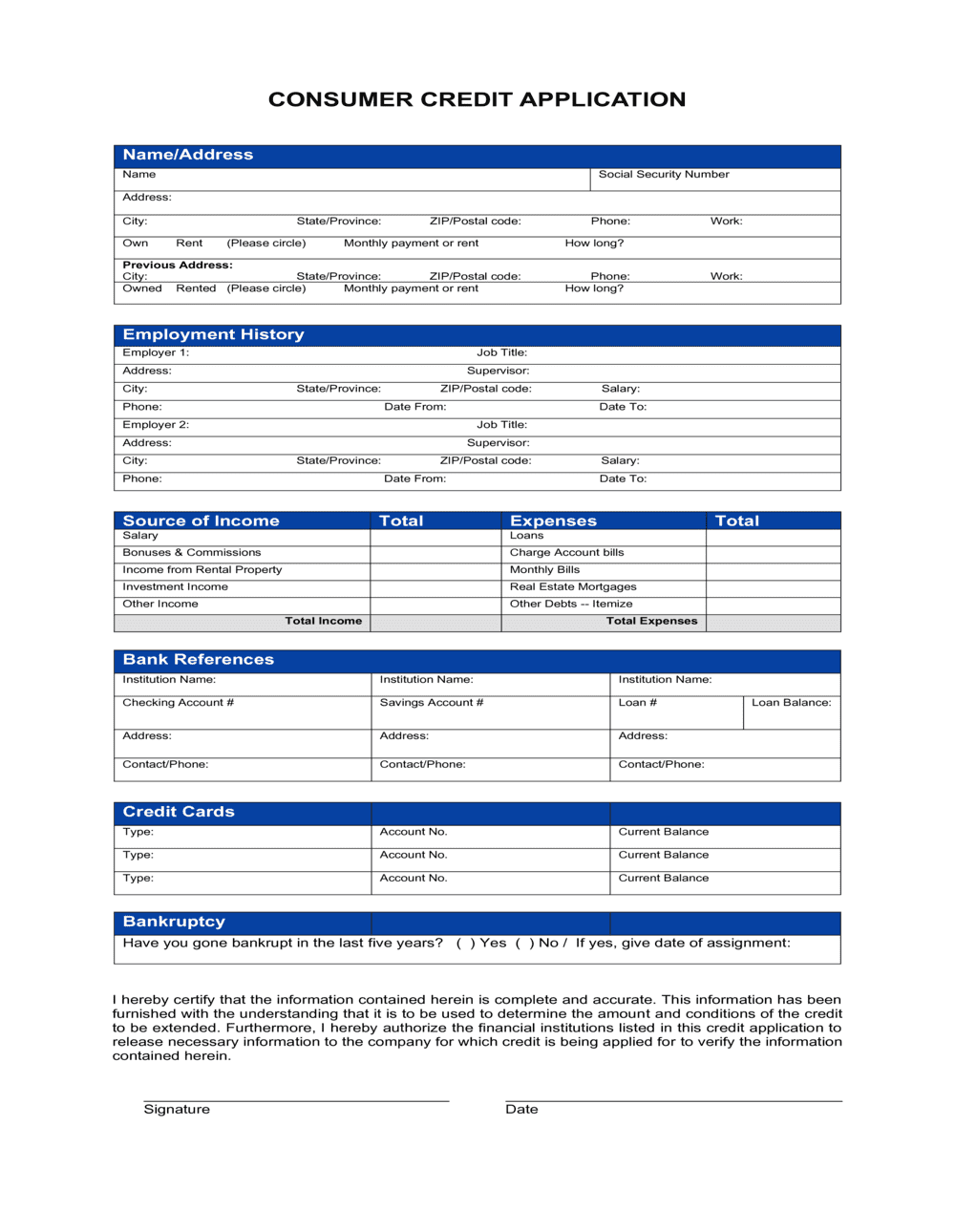
A multi-section business form is more appropriate when the credit review involves several categories of information. Current examples show layouts that divide company details, banking information, trade references, and financial information into distinct blocks. Such separation improves scanning and allows reviewers to locate a specific category without reading the entire document. :contentReference[oaicite:4]{index=4}
A reference-focused form is different again. Its main purpose is not to establish every fact about the applicant but to obtain consistent information from another organization. The visual hierarchy should therefore prioritize the reference provider’s identity, relationship with the applicant, account terms, payment experience, and comments.

Using examples without copying another organization’s policy
Existing forms are valuable because they reveal recurring field patterns, but copying another organization’s wording can create problems. A form may contain payment terms, guarantees, fees, jurisdiction-specific clauses, or disclosure language that is appropriate only for the organization that created it. The safer approach is to study the structure and then adapt it to the actual business process.
For example, one form may request several trade references while another asks for banking information and financial statements. Neither structure is automatically superior. The right choice depends on the organization’s risk model, customer type, transaction size, industry, and internal policy.
The same principle applies to digital formats. A form that works well in Word may not translate neatly into a spreadsheet, and a spreadsheet designed for internal tracking may not be suitable as a customer-facing document. Format should follow workflow rather than dictate it.


Making the form easier to review
Good visual organization can materially improve usability. Related fields should be grouped together, labels should be consistent, and the most important information should not be hidden in dense paragraphs. Blank space is useful because it makes handwritten or typed responses easier to identify and review.
Reference sections benefit from repeated layouts. If three suppliers are requested, each reference block should use the same fields in the same order. This makes comparison easier and reduces the chance that the reviewer overlooks a key item in one reference because it appeared in a different location.
Internal approval fields should also be visually distinct from customer responses. A reviewer should be able to identify the requested limit and the approved limit without confusing one with the other. Dates and responsible reviewer names are useful for establishing an audit trail.


When a simple template is better than a complex one
Complexity should correspond to the decision. A low-value recurring trade account may not require the same level of information as a large credit facility. If a form becomes so long that customers routinely skip fields or provide low-quality answers, the additional questions may reduce rather than improve the quality of the review.
A useful approach is to identify mandatory information and optional information. Mandatory fields should be limited to information genuinely required for the initial decision. Optional or conditional fields can be used when the requested exposure, customer category, or risk characteristics justify deeper review.
This principle also helps organizations maintain better customer experiences. A focused form communicates that the business knows what information matters, while an unnecessarily broad form can create confusion about why sensitive or unrelated details are being requested.


Practical checks before putting a template into production
Review every field and ask whether someone will actually use the information. Confirm that required contact details have enough space, that dates are unambiguous, and that the form distinguishes requested terms from approved terms. If references are part of the process, make sure the form provides enough information to identify the reference organization and relationship.
Next, test the completed document from the reviewer’s perspective. Can a credit analyst locate the applicant’s identity in seconds? Can the requested exposure be distinguished from the eventual decision? Can reference responses be compared? Can someone determine who authorized the decision and when?
Finally, review the document from a data-management perspective. Decide where completed records will be stored, who can access them, how corrections are handled, and when outdated records should be reviewed. These controls are as important to a reliable credit workflow as the visual template itself.

Reference Examples
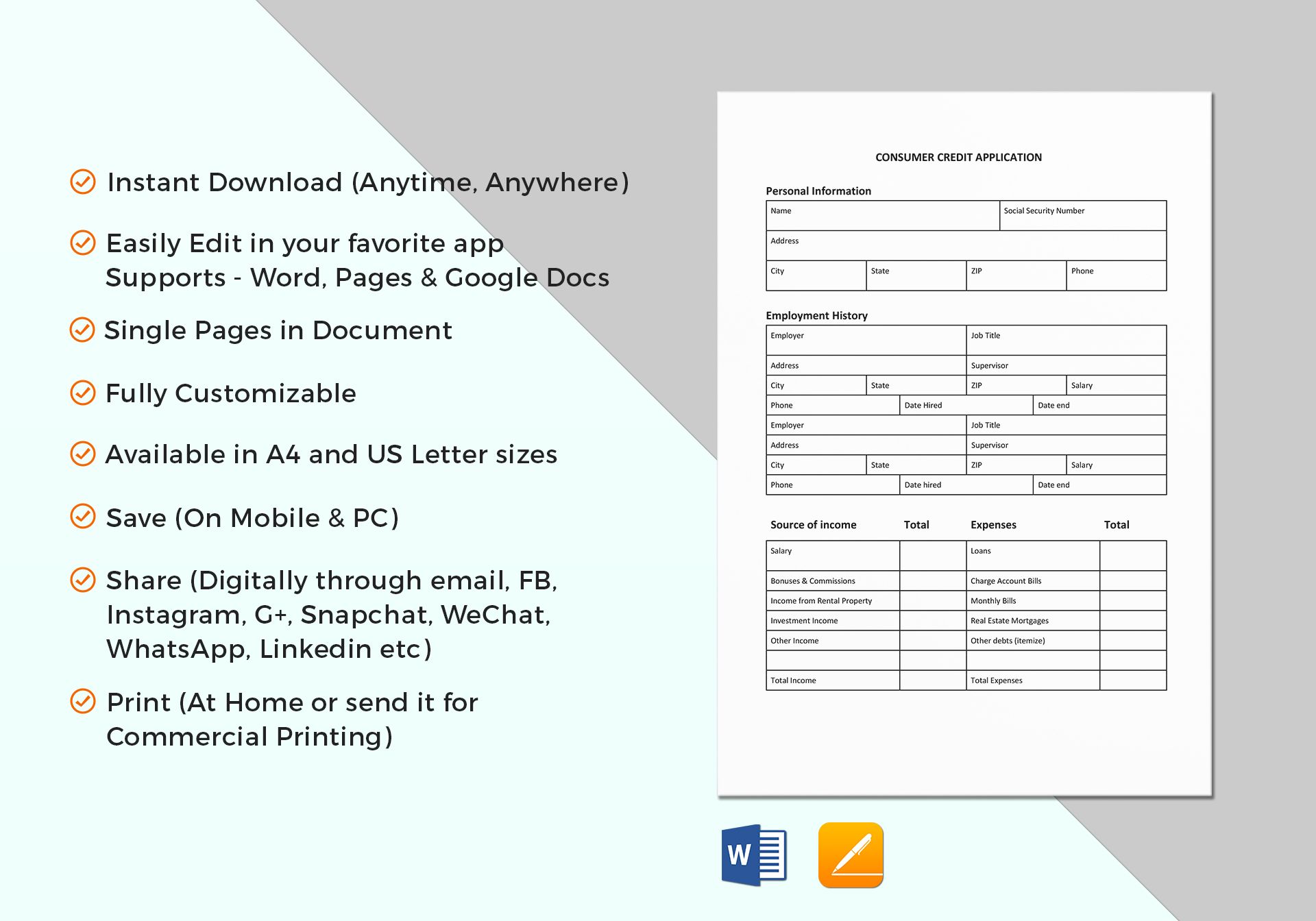
The visual references below show several ways a credit request for media Template can be structured around different business needs. Some examples emphasize business identity and trade references, while others focus more heavily on banking information, financial details, or customer authorization. Comparing these layouts helps clarify an important point: there is no single universal design for a credit request. The most useful structure is the one that matches the decision being made, the information the reviewer is permitted to obtain, and the organization’s own internal review process.
These examples are also useful for evaluating field hierarchy. Notice how stronger layouts separate company information, requested credit, references, financial information, and signatures instead of placing every question into one continuous block. When reviewing a credit request for media Template, use these visual patterns as structural inspiration rather than assuming that another organization’s terms, disclosures, or approval rules should be copied unchanged.
Heartway USA Credit Application
Source: CocoDoc
Credit Application Form T
Source: Romanoff International Supply Corporation
Credit Application Credit Agreement
Source: American Apparel
Credit Application
Source: Initial Print
Credit Application
Source: Peter Ainsworth
Consumer Credit Application
Source: Small Business Free Forms
Business Credit Application
Source: Template.net
