A well-prepared healthcare IT consulting proposal can help healthcare organizations understand how technology can solve operational challenges, improve patient services, protect sensitive information, and support long-term growth. Whether the project involves electronic health records, cybersecurity, cloud migration, data management, interoperability, or digital transformation, a professional proposal gives both the healthcare organization and consulting firm a clear roadmap for working together.
Unlike a generic IT proposal, a healthcare-focused proposal needs to address the unique requirements of medical organizations. Patient data security, regulatory considerations, system integration, clinical workflows, business continuity, and user adoption can all influence the success of an IT project. A strong proposal therefore combines technical expertise with a clear understanding of healthcare operations.
This guide explains what to include in a healthcare IT consulting proposal, how to structure each section, and practical ways to make your proposal clear, credible, and easy for decision-makers to evaluate.
What Is a Healthcare IT Consulting Proposal?
A healthcare IT consulting proposal is a formal document that outlines the services, solutions, approach, timeline, and expected outcomes a technology consultant plans to provide to a healthcare organization. It may be prepared for hospitals, clinics, physician practices, laboratories, healthcare networks, medical groups, or other organizations that rely on technology.
The purpose of the proposal is to connect the client’s business and clinical needs with practical technology solutions. It should explain not only what the consultant will deliver, but also why the recommended approach is appropriate and how the project will be managed.
A typical proposal can cover areas such as:
- IT strategy and technology planning
- Electronic health record optimization
- Healthcare software implementation
- Cloud migration and infrastructure modernization
- Cybersecurity and risk management
- Data analytics and reporting
- Health information interoperability
- IT governance and compliance support
- Technology assessments and audits
- Digital transformation initiatives
Why a Professional Healthcare IT Consulting Proposal Matters
Healthcare organizations often manage complex technology environments while maintaining high standards for patient care, privacy, reliability, and operational efficiency. A detailed proposal helps stakeholders understand how a consulting engagement can address those priorities.
A strong proposal can also reduce uncertainty before a project begins. By clearly defining scope, responsibilities, deliverables, milestones, and assumptions, both parties have a shared understanding of what the engagement involves.
Creates a Clear Project Scope
Technology projects can quickly become complicated when responsibilities and deliverables are unclear. A proposal should define the specific systems, processes, departments, and objectives included in the engagement. It should also identify items that are outside the current scope.
Builds Confidence With Decision-Makers
Healthcare executives and IT leaders need enough information to evaluate whether a proposed engagement is practical. A professional proposal demonstrates preparation by connecting the organization’s challenges with measurable project objectives and an organized implementation strategy.
Supports Better Communication
Different stakeholders may view an IT project from different perspectives. Clinical teams may focus on workflow, executives may focus on business outcomes, and IT teams may focus on architecture and security. A well-structured proposal provides a common reference point for everyone.
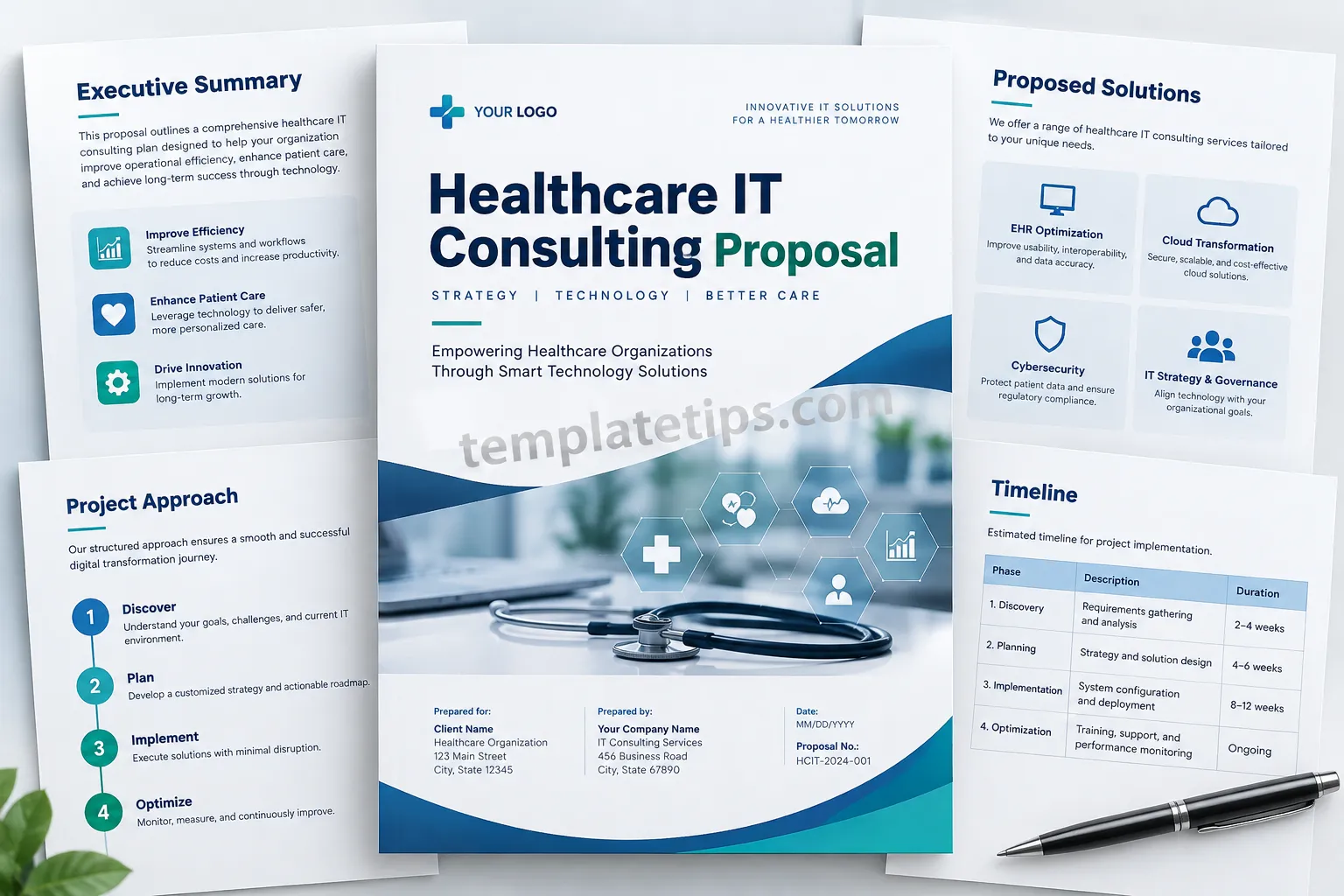
Essential Sections of a Healthcare IT Consulting Proposal
The exact structure can vary depending on the project, but including the following sections can make a proposal more complete and easier to review.
1. Executive Summary
The executive summary provides a concise overview of the proposed engagement. It should explain the client’s primary challenge, the recommended direction, and the value the consulting project is expected to provide.
Keep this section focused. Senior decision-makers may read the executive summary before reviewing the technical details, so it should communicate the main business case quickly.
2. Client Needs and Current Challenges
Show that you understand the healthcare organization’s situation. Describe the technology, workflow, operational, or strategic challenges that the consulting engagement will address.
For example, a healthcare provider may experience disconnected systems, inefficient workflows, outdated infrastructure, inconsistent reporting, cybersecurity concerns, or difficulties integrating new applications with existing platforms.
3. Proposed IT Solutions
This section explains how your consulting services will address the identified challenges. Recommendations should be specific enough for the client to understand the intended outcome without becoming unnecessarily technical.
Potential solutions may include EHR optimization, cloud infrastructure, cybersecurity improvements, data integration, application modernization, network upgrades, business intelligence, or IT governance.
4. Project Approach
Explain how the engagement will move from assessment to implementation. A phased approach is often easier to understand and manage.
- Discovery: Review current systems, workflows, goals, and challenges.
- Assessment: Identify risks, gaps, opportunities, and technical requirements.
- Planning: Develop the recommended architecture, roadmap, priorities, and implementation plan.
- Implementation: Configure, deploy, integrate, or improve the selected solutions.
- Optimization: Measure performance, provide support, and identify opportunities for continuous improvement.
5. Deliverables
Clearly list the tangible outputs the client will receive. Depending on the project, deliverables may include an IT assessment report, technology roadmap, cybersecurity recommendations, implementation documentation, system configurations, training materials, integration plans, or performance reports.
6. Timeline and Milestones
A realistic timeline helps the client understand how the project will progress. Break the work into major phases and provide estimated durations or milestone dates where appropriate.
For complex healthcare IT projects, avoid presenting overly precise dates before discovery is complete. Clearly identify assumptions that could affect the schedule, such as data availability, stakeholder approvals, vendor dependencies, or system integration requirements.
7. Team and Responsibilities
Introduce the consulting team and explain the role each person or function will play. The proposal can also identify responsibilities that belong to the client, such as providing access to systems, assigning internal stakeholders, approving deliverables, or coordinating staff participation.
8. Pricing and Commercial Terms
Explain the consulting fees in a transparent format. Depending on the engagement, pricing may be structured as a fixed project fee, hourly or daily consulting rates, a retainer, or a phased payment schedule.
Include important assumptions, payment milestones, expenses, optional services, and conditions that could affect the final cost. Clear commercial terms help prevent misunderstandings later.
9. Security, Privacy, and Compliance Considerations
Healthcare technology projects require careful attention to sensitive information and organizational risk. The proposal should describe relevant security practices, privacy considerations, access controls, data protection measures, and compliance requirements applicable to the engagement.
Rather than making broad compliance claims, explain the specific responsibilities, controls, assessments, or processes that will be addressed within the project scope.
10. Success Metrics
Define how project success will be evaluated. Useful metrics depend on the engagement and may include system availability, workflow efficiency, user adoption, response times, data quality, reporting accuracy, security improvements, cost savings, or completion of implementation milestones.
How to Make Your Healthcare IT Consulting Proposal More Effective
Focus on Business and Patient Outcomes
Technical terminology alone does not communicate value. Explain how the proposed technology can support operational efficiency, staff productivity, information availability, patient experience, security, or organizational goals.
Use Clear and Specific Language
A proposal should be professional without becoming difficult to read. Define technical terms when necessary and use headings, short paragraphs, tables, and bullet points to make important information easy to scan.
Customize the Proposal
A generic proposal can make a consulting firm appear disconnected from the client’s needs. Reference the organization’s specific challenges, objectives, existing environment, and priorities wherever appropriate.
Set Realistic Expectations
Healthcare IT projects often depend on multiple systems, vendors, departments, and approval processes. State important assumptions and dependencies instead of promising results that depend on factors outside the consultant’s control.
Make the Document Easy to Navigate
Use consistent formatting throughout the proposal. A professional cover page, clear section headings, concise summaries, structured tables, and a logical sequence can make a complex consulting proposal much easier to review.
Common Mistakes to Avoid
Even a technically strong proposal can lose effectiveness if it is difficult to understand or fails to address the client’s priorities. Avoid these common problems:
- Using excessive technical jargon without explaining the business value.
- Providing vague deliverables that are difficult to measure.
- Failing to define project assumptions and exclusions.
- Ignoring security, privacy, and compliance considerations.
- Using the same proposal for every healthcare organization.
- Providing unrealistic implementation timelines.
- Hiding important pricing assumptions or additional costs.
- Writing lengthy sections without clear headings or summaries.
Practical Tips for Using a Healthcare IT Consulting Proposal Template
A healthcare IT consulting proposal template can significantly reduce the time required to prepare a professional document. Instead of starting from a blank page, consultants can use an established structure and customize the content for each client.
Start by replacing generic placeholders with the client’s organization name, project objectives, current challenges, proposed services, timeline, and commercial terms. Next, review every section to make sure the language accurately reflects the actual engagement.
Templates should provide structure rather than restrict customization. Add sections when the project requires specialized information, such as data migration, interoperability, cybersecurity assessment, application integration, change management, or staff training.
Healthcare IT Consulting Proposal Checklist
Before sending the final proposal, review the document against this checklist:
- Is the client’s primary problem clearly explained?
- Are the project objectives specific and understandable?
- Are the proposed solutions connected to those objectives?
- Are deliverables clearly defined?
- Are project phases and milestones included?
- Are client and consultant responsibilities clear?
- Are security and privacy considerations addressed?
- Is the pricing structure easy to understand?
- Are assumptions and exclusions documented?
- Are success metrics or expected outcomes included?
- Has the proposal been proofread for grammar and consistency?
- Does the final design look professional and easy to scan?
Conclusion
A well-designed healthcare IT consulting proposal does more than describe technology services. It connects a healthcare organization’s challenges with a practical plan for improvement. By clearly presenting the current situation, proposed solutions, project approach, deliverables, timeline, responsibilities, pricing, and success measures, consultants can create a document that is easier for stakeholders to understand and evaluate.
Using a professional healthcare IT consulting proposal template can make the process faster while providing a consistent structure for future projects. The most effective proposals are then customized to the client’s specific goals, technology environment, operational needs, and project requirements.
