The most useful template is not necessarily the most complicated one. A good balance sheet template should make account categories easy to understand, provide enough space for relevant figures, show the reporting date clearly, and make the fundamental accounting relationship visible: assets should equal liabilities plus equity.
This guide explains how balance sheets work, what a template should contain, how to prepare one from accounting records, how PDF compares with Excel and Google Sheets formats, and how to avoid common mistakes. It also includes practical examples for startups, established companies, service businesses, retailers, and small-business owners.
A template can save time, but it does not replace accounting judgment. The quality of the final statement depends on whether transactions have been recorded correctly, accounts have been reconciled, depreciation and other adjustments have been considered, and the reporting period has been defined consistently.
For that reason, the best approach is to treat a template as a presentation and organization tool rather than as an accounting system. Build the figures from reliable records first, verify the accounting equation, and then use the template to communicate the resulting financial position clearly.
What Is a Balance Sheet?
A balance sheet is a financial statement that presents an organization’s financial position at a specific point in time. Unlike an income statement, which summarizes performance over a period, a balance sheet is a snapshot showing what the business owns, what it owes, and the residual interest belonging to its owners.
The statement is built around three major categories: assets, liabilities, and equity. Assets represent economic resources controlled by the business, liabilities represent obligations to other parties, and equity represents the owners’ residual interest after liabilities are deducted from assets.
The central relationship is expressed as Assets = Liabilities + Equity. This equation is more than a formatting convention. It provides a fundamental check on whether the statement has been constructed consistently with double-entry accounting.
For example, suppose a hypothetical company has $80,000 in assets and $30,000 in liabilities. Its equity would be $50,000. If the reported equity were $45,000 without another reconciling item, the statement would not balance and the underlying records would need to be investigated.
A well-designed pdf balance sheet template makes this relationship visible by organizing totals into logical sections. Readers should be able to move from individual accounts to subtotals and then to total assets and total liabilities plus equity without having to decipher an overly complicated layout.

Why Use a PDF Balance Sheet Template?
PDF is valuable when the finished balance sheet needs to look consistent on different devices and when the recipient is primarily expected to read or print the document rather than modify calculations. A PDF can preserve the visual structure after the statement has been finalized.
Businesses may also use PDF documents for financial archives because a finalized statement is easier to distribute without accidentally changing formulas or values. A PDF can serve as a stable presentation copy while the underlying spreadsheet remains available for calculations and future updates.
Another advantage is readability. A carefully formatted PDF can use clear headings, aligned figures, consistent decimal treatment, and distinct subtotal lines. These visual conventions help users distinguish current assets from long-term assets and current obligations from longer-term liabilities.
However, PDF is usually less convenient for data entry. If figures change frequently, entering information into a spreadsheet first is often more efficient. A sensible workflow is therefore to calculate and validate the statement in a spreadsheet or accounting system and export a finalized version to PDF when appropriate.
The purpose of the PDF should also determine its level of detail. A management copy may contain numerous account lines, while a simplified statement for a general audience may group similar accounts. The right degree of compression depends on the decision the document is intended to support.

Core Components of a Balance Sheet
Assets
Assets are resources controlled by the business that are expected to provide economic value. Common examples include cash, bank balances, accounts receivable, inventory, equipment, vehicles, buildings, and certain prepaid or intangible items, depending on the nature of the organization and applicable accounting framework.
Current assets are generally expected to be converted into cash, sold, or consumed within the relevant short-term operating or reporting cycle. Cash, receivables, inventory, and certain prepaid expenses are typical examples. The exact classification depends on the circumstances and reporting framework.
Non-current assets are resources expected to support the business beyond the short term. Property, equipment, long-term investments, and certain intangible assets can fall into this category. A template should provide enough flexibility to include the categories that actually exist in the business.
Accumulated depreciation deserves special attention. When depreciable assets are presented at cost alongside accumulated depreciation, the latter reduces the carrying amount of the related assets. A template should make this treatment clear rather than encouraging users to enter depreciation as an unrelated expense in the balance sheet.
Grouping assets sensibly makes analysis easier. For example, separating cash and receivables from equipment helps a reader understand both short-term liquidity and longer-term investment in operating resources. A useful template balances completeness with enough simplicity to remain readable.

Liabilities
Liabilities represent obligations that the business expects to settle through the transfer of economic resources. Typical examples include accounts payable, accrued expenses, taxes payable, short-term loans, leases, and long-term borrowing.
Current liabilities are generally obligations expected to be settled within the short term. Accounts payable and accrued expenses are common examples. Separating these obligations from longer-term debt can help users assess near-term cash requirements.
Long-term liabilities can include loans and other obligations that extend beyond the short-term reporting horizon. A balance sheet template should provide separate lines or sections for these items so that the reader can distinguish immediate obligations from financing that extends further into the future.
Liability classification also helps with financial analysis. A business may have substantial total liabilities while still maintaining a manageable short-term position, or it may have modest total liabilities but significant obligations coming due soon. The categories in the statement provide context for those differences.
When entering liabilities, users should rely on reconciled records rather than estimates made simply to force the balance sheet to balance. If the statement does not balance, the discrepancy should be investigated rather than hidden through an unexplained liability or equity adjustment.
Equity
Equity is the residual interest after liabilities are deducted from assets. In a corporation, equity may include contributed capital, additional paid-in amounts, retained earnings, and other equity accounts depending on the reporting framework. A sole proprietorship may instead use an owner’s capital account and related withdrawals.
Retained earnings reflect accumulated earnings that remain in the business after considering distributions and other relevant adjustments. Current-period profit or loss ultimately affects equity, although the exact presentation depends on the accounting system and financial statement structure being used.
Owner contributions and withdrawals should be distinguished from ordinary operating revenue and expenses. Treating an owner’s personal withdrawal as a business expense, for example, can distort both the income statement and the equity section.
A template should therefore avoid assuming that every organization has the same equity structure. A corporation, partnership, nonprofit, and sole proprietorship may require different labels and presentation conventions.
When adapting a template, keep the underlying accounting classification intact even if the visual design changes. The goal is to make the statement easier to understand, not to create a decorative document that obscures the meaning of the accounts.

What Should a Good PDF Balance Sheet Template Include?
The heading should identify the business or reporting entity and clearly state the date of the statement. Because a balance sheet represents a point in time, the reporting date is essential. A heading such as “Balance Sheet as of December 31, 20XX” communicates the statement’s purpose immediately.
The template should then organize accounts into meaningful sections. At minimum, most business-oriented formats need space for assets, liabilities, and equity, together with subtotals and final totals.
Numeric columns should be aligned consistently. Amounts should use the same currency convention, decimal treatment, and negative-number presentation throughout the document. Inconsistent formatting makes otherwise correct financial information harder to review.
Total assets should have a clearly identifiable subtotal or final total. The liabilities and equity side should also show appropriate subtotals. The final comparison between total assets and total liabilities plus equity should be obvious rather than buried among individual accounts.
A strong template also leaves room for customization. Different businesses have different charts of accounts, so a rigid form with irrelevant lines can be less useful than a simple template that can be adapted without disrupting the fundamental accounting structure.

How to Create a Balance Sheet From Accounting Records
The first step is to establish the reporting date. Decide whether the statement is intended to represent the business at month-end, quarter-end, year-end, opening day, or another specific date. Every account balance should correspond to that same point in time.
Next, gather the relevant ledger balances or an adjusted trial balance. Bank accounts, receivables, inventory, fixed assets, payables, loans, equity accounts, and other relevant balances should be reviewed before they are transferred into the template.
Reconcile important accounts before entering the final figures. Bank balances should be compared with bank records, receivables should be reviewed for unusual or outdated amounts, and liabilities should be checked against supporting statements or schedules where applicable.
Then classify the accounts. Decide which balances belong under current assets, non-current assets, current liabilities, non-current liabilities, and equity. The categories should reflect the accounting framework and the actual circumstances of the business.
Finally, calculate subtotals and verify the accounting equation. If total assets do not equal total liabilities plus equity, stop and investigate the difference. The discrepancy may come from an omitted account, incorrect sign, duplicated entry, incomplete adjustment, or another accounting-record issue.

Using a PDF Balance Sheet Template Free Download Responsibly
Search intent around free templates often focuses on convenience, but a free document is useful only when its structure fits the intended purpose. Before using any downloadable template, inspect the categories, formulas if applicable, instructions, and licensing or usage conditions associated with the resource.
A template should never be treated as authoritative simply because it looks professional. Financial statements vary by business type and accounting framework, and a generic document may omit accounts that are important to a particular organization.
When evaluating a free resource, check whether it supports the reporting period you need, whether it can accommodate your chart of accounts, and whether the output can be exported or printed cleanly. Also check whether formulas are transparent when the original format is a spreadsheet.
If the document is intended for external use, compare it with the format expected by the recipient. A lender, accountant, investor, board, or other stakeholder may have preferences about comparative periods, classifications, notes, or supporting schedules.
Free resources are particularly useful for learning and internal organization. For formal financial reporting, however, the template should be reviewed against the organization’s accounting policies and any applicable professional requirements rather than being used without modification.

Choosing a PDF Balance Sheet Template Excel Workflow
Many users search for a pdf balance sheet template excel because they want both editable calculations and a polished final document. Excel is generally better suited to entering, calculating, sorting, and reviewing numbers, while PDF is better suited to distributing a finalized presentation.
A practical workflow begins with an editable spreadsheet. Account balances can be entered into designated cells, subtotals can be calculated with formulas, and checks can be added to identify whether assets equal liabilities plus equity.
After the figures have been reviewed, the completed spreadsheet can be exported to PDF. This creates a stable presentation copy while preserving the editable workbook as the working file. Keeping these two versions separate reduces the risk of changing the official presentation copy accidentally.
Spreadsheet users should protect formula cells where appropriate and distinguish input cells from calculated cells. Clear labels and consistent formatting make it easier for another person to review the workbook without accidentally overwriting a calculation.
The Excel-to-PDF workflow is particularly useful when the balance sheet must be updated monthly. The spreadsheet becomes the calculation environment, while each finalized PDF can be retained as a period-specific record for comparison and review.

PDF Balance Sheet Template Download: What to Check Before Using One
A pdf balance sheet template download should be inspected before any business figures are entered. First, verify that the file is actually a balance sheet rather than an income statement, cash-flow worksheet, personal financial statement, or general bookkeeping form.
Next, examine the account structure. A useful document should provide logical areas for current assets, long-term assets, current liabilities, long-term liabilities, and equity when those categories apply to the intended business.
Look at the date field and entity name area as well. These details are easy to overlook, yet a balance sheet without a clear reporting date can be misleading because the statement’s balances are meaningful only in relation to a particular point in time.
Inspect the page layout before printing. Wide spreadsheets may become difficult to read when converted to portrait PDF, while narrow forms may leave insufficient space for longer account names. Landscape orientation can sometimes improve readability when many columns are necessary.
Finally, test the template with hypothetical figures before relying on it. A simple test can reveal missing subtotal lines, confusing labels, inadequate space, or a layout that does not communicate the relationship between assets, liabilities, and equity effectively.

Understanding a PDF Balance Sheet Template Free Format
A pdf balance sheet template free option can be sufficient for a small organization that needs a straightforward statement without sophisticated automation. The important issue is whether the template contains the categories and presentation features necessary for the intended use.
A simple format can be organized vertically, with assets at the top followed by liabilities and equity. Another common presentation places assets on one side and liabilities and equity on the other. Either approach can work when totals and classifications are clear.
For a small business with limited accounts, a concise format may actually be easier to review than a highly detailed form. Grouping several immaterial or closely related accounts can reduce visual clutter, provided the grouping remains appropriate for the purpose of the statement.
For a more complex company, excessive simplification can hide useful information. A business with substantial inventory, multiple debt arrangements, significant fixed assets, or several equity categories may require more detailed schedules and supporting documentation.
The best free template is therefore the one that can be adapted without distorting the underlying information. Free does not mean universally appropriate, and simple does not mean incomplete when the business itself is simple.

PDF Balance Sheet Template Small Business Considerations
A pdf balance sheet template small business users choose should reflect the actual structure of the company. A freelance service provider may have cash, receivables, equipment, accounts payable, taxes payable, and owner’s equity, while a retailer may need substantial inventory and supplier obligations.
Small businesses often benefit from avoiding unnecessary complexity. A template with clear sections and a manageable number of account lines can make monthly review faster and reduce the temptation to place balances in arbitrary categories.
At the same time, small size does not eliminate the need for accurate classification. A loan should not be treated as revenue, an owner’s withdrawal should not automatically be treated as an operating expense, and equipment should not necessarily be treated the same way as ordinary supplies.
Owners can also use the balance sheet to ask practical questions. How much cash is available? How much is tied up in receivables or inventory? How much debt exists? How much of the company’s resources have been financed by owners versus creditors?
Reviewing these questions regularly turns the balance sheet from a static document into a management tool. Even a small business can benefit from maintaining consistent month-end statements so that changes in financial position become easier to identify.

PDF Balance Sheet Template Google Sheets Workflow
A pdf balance sheet template google sheets workflow can be useful when several authorized users need access to a shared working spreadsheet. The key advantage is collaboration rather than PDF itself: the editable document can serve as the calculation workspace before a finalized PDF is produced.
The same accounting principles apply regardless of the spreadsheet platform. Users should maintain a clear chart of accounts, avoid overwriting formulas, document adjustments, and make sure the reporting date is consistent across the statement.
Shared spreadsheets should also use sensible permissions. People entering data should not necessarily have the same editing access as people responsible for financial review. Clear ownership of the working file can reduce accidental changes.
Version control is important when multiple monthly statements are produced. Rather than replacing the only copy each month, maintain a logical archive of finalized statements and preserve the editable workbook used to generate them.
When the statement is ready for distribution, export the approved version to PDF and review the resulting pages visually. Check that account names, totals, dates, and page breaks remain readable after conversion.

Balance Sheet Template PDF Versus Other Formats
A balance sheet template pdf is primarily a presentation format, whereas a spreadsheet is generally better for calculations and repeated revisions. Word-processing documents can be useful for highly customized layouts, but they may require more manual work when financial figures change frequently.
PDF works well when the numbers are final and the document needs to retain its appearance. It is also convenient for printing, attaching to a report, or maintaining a period-specific financial archive.
Excel and similar spreadsheet tools are more appropriate when the statement needs formulas, linked schedules, automated subtotals, comparative columns, or repeated updates. A spreadsheet can also make it easier to investigate the source of a particular total.
Word processors can work for a very simple balance sheet, especially when the statement contains relatively few lines. However, manual calculation and alignment increase the risk of errors when figures change.
The most efficient approach for many businesses is not to choose one format exclusively. Use an accounting system or spreadsheet for data preparation, validate the figures, and then create a PDF for the finalized presentation when a fixed-format document is useful.

Monthly Balance Sheets and Comparative Analysis
A monthly balance sheet template pdf can help a business establish a repeatable month-end reporting process. The statement for each month should use consistent account classifications so that changes can be interpreted rather than being caused by a redesigned template.
Comparative reporting can reveal movements that are not obvious from a single period. A growing receivables balance, for example, may deserve attention if sales are increasing but collections are not keeping pace. A reduction in cash may also have a different meaning depending on whether it funded inventory, equipment, debt repayment, or operating losses.
Inventory changes can be particularly informative for retailers and manufacturers. An increase may support expected growth, but it may also indicate slower sales or purchasing ahead of demand. The balance sheet provides the amount, while operational records provide the explanation.
Debt balances should also be monitored over time. A business that repeatedly increases borrowing may be funding expansion, managing seasonal cash needs, or compensating for operating shortfalls. The balance sheet alone does not explain the cause, but it highlights the change.
Monthly statements become more valuable when paired with consistent notes. Recording major changes in assets, debt, capital contributions, distributions, or other unusual items can make later reviews much easier.

Practical Example: A Simple Service Business
Consider a hypothetical consulting business at the end of a month. It has $25,000 in cash, $12,000 in accounts receivable, $3,000 in equipment after accumulated depreciation, and $5,000 in other assets. Total assets are therefore $45,000.
Assume the business has $8,000 in accounts payable and $7,000 remaining on a business loan. Total liabilities are $15,000. The remaining $30,000 represents equity under the simplified assumptions used in this example.
The balance sheet would therefore show $45,000 of assets and $45,000 of liabilities plus equity. The equality does not prove that every underlying transaction is correct, but it confirms that the two sides are mathematically consistent.
If accounts receivable subsequently rise to $20,000 while cash falls to $17,000, total assets could remain unchanged. That movement would tell management that more resources are tied up in customer balances rather than cash, prompting a closer look at collections.
This example illustrates why the balance sheet should be read as a set of relationships rather than a collection of isolated numbers. Changes in one account can affect liquidity, financing, and operating flexibility even when total assets do not change.

Practical Example: A Small Retail Business
Imagine a hypothetical retail company with $18,000 in cash, $22,000 in receivables, $45,000 in inventory, and $35,000 in equipment and other non-current assets. Its total assets would be $120,000 under these simplified assumptions.
Suppose current liabilities total $30,000 and long-term borrowing totals $25,000. Total liabilities would be $55,000, leaving $65,000 in equity. Again, the example is hypothetical and intended to demonstrate template structure rather than represent industry statistics.
The inventory line deserves particular attention in this scenario. Inventory is an asset, but it cannot necessarily be used to pay an immediate bill as easily as cash. A balance sheet therefore helps distinguish the amount of resources owned from the degree of immediately available liquidity.
Receivables also require interpretation. A large receivables balance may reflect strong sales, but if customers are slow to pay, the business can still experience cash pressure. Comparing receivables with aging schedules and collection activity provides useful context.
The template should make these balances easy to locate. A retailer with substantial inventory and receivables benefits from a layout that does not hide those accounts among miscellaneous assets.

How to Analyze a Completed Balance Sheet
Start with liquidity. Compare current assets with current liabilities, but do not stop at a single ratio. Examine the composition of current assets and determine how much consists of cash, receivables, inventory, or other balances with different levels of short-term availability.
Next, review leverage. The amount of debt relative to assets and equity can provide insight into how the business is financed. A higher debt position is not automatically negative, because borrowing can support productive investment, but it increases the importance of repayment capacity.
Then examine asset composition. A business whose assets are heavily concentrated in equipment may have a different financial profile from one whose assets are primarily cash and receivables. The template should make those differences visible.
Look for significant changes between reporting periods. Sudden increases or decreases deserve explanation, especially when they involve cash, receivables, inventory, debt, or equity. A change is not necessarily a problem, but unexplained changes are worth investigating.
Finally, connect the balance sheet with the income statement and cash-flow information. Profitability, cash movement, and financial position describe different dimensions of the same business. Reading them together produces a more complete understanding than relying on the balance sheet alone.

Common Mistakes When Using a Balance Sheet Template
One common mistake is entering figures from different dates. For example, using a bank balance from one month-end and a loan balance from another date can produce a statement that appears complete but does not actually represent the business at one point in time.
Another mistake is confusing income-statement accounts with balance-sheet accounts. Revenue and ordinary operating expenses generally affect profit and ultimately equity, but they are not normally presented as individual asset or liability balances simply because money was received or spent.
Users also sometimes force the statement to balance by adding an unexplained “other equity” amount. This is dangerous because the balance equation is a control mechanism, not a target to achieve by arbitrary adjustments.
Inconsistent account classification can create another problem. Moving the same type of loan between current and long-term categories from month to month makes comparative analysis less meaningful and can obscure changes in near-term obligations.
Finally, users may focus too heavily on visual design. A beautiful PDF cannot compensate for incomplete records. Accuracy, classification, reconciliation, and clear reporting dates should always come before decorative formatting.

Best Practices for Maintaining Balance Sheet Templates
Keep a master template separate from completed reporting files. The master should contain the approved layout and formulas, while individual reporting periods should be saved separately. This prevents one month’s customization from unintentionally changing future statements.
Use consistent account names. If one month uses “Accounts Receivable” and another uses “Customer Receivables,” automated comparisons can become harder even if the underlying account is the same.
Document unusual adjustments. A brief note about a major asset purchase, new loan, owner contribution, or significant reclassification can help reviewers understand why a balance changed.
Review formulas before exporting a spreadsheet to PDF. Check total current assets, total assets, total current liabilities, total liabilities, total equity, and the final accounting equation. Formula errors can survive visually if no one tests the totals.
Archive finalized PDFs in a logical sequence. A naming convention based on the entity and reporting date can make later retrieval easier, while retaining the editable source file allows authorized users to investigate or reproduce the statement when necessary.

How to Improve Template Readability
Use hierarchy rather than excessive decoration. Main categories should be visually distinct from individual accounts, and subtotals should be easy to identify. A restrained design generally works better for financial documents than a layout filled with colors, boxes, and decorative elements.
Align numbers consistently on the right or according to the conventions of the spreadsheet or reporting system. Misaligned figures can make columns difficult to scan and increase the chance that readers misinterpret digits.
Keep account labels concise but specific. “Equipment” may be adequate for a simple business, while a more complex organization might need several equipment categories. The label should tell the reader enough to understand the balance without creating unnecessary complexity.
Use whitespace strategically. Crowding every available line with accounts can make the statement harder to review. At the same time, excessive blank space may make a compact statement appear unfinished. The ideal layout reflects the number and importance of the accounts.
Always inspect the PDF after export. Spreadsheet page settings can cause headings to repeat incorrectly, totals to move to another page, or columns to become unreadable. A final visual review is therefore an important part of the reporting process.
Practical Solution: A Repeatable Balance Sheet Workflow
For most small organizations, the most practical solution is to create one standardized master template and use the same reporting process every period. Start by defining the reporting date and gathering the adjusted account balances required for that date.
Reconcile the major balance-sheet accounts before entering them. Verify cash and bank accounts, review receivables, confirm inventory where applicable, update fixed-asset records, and compare liabilities with supporting documentation. The exact procedures depend on the organization’s accounting system.
Enter the verified figures into an editable spreadsheet or accounting system first. Use formulas for subtotals and total calculations instead of manually typing totals. Include a visible check that compares total assets with total liabilities plus equity.
Review the statement for classification and presentation. Confirm that current and long-term categories are sensible, account names are understandable, the reporting date is correct, and the entity name is clearly displayed.
Export the approved statement to PDF only after the calculations and classifications have been reviewed. Open the PDF separately and inspect every page, including the totals and footer or heading information.
Save the finalized PDF as the reporting copy and retain the editable source separately. If another person will review the statement, provide enough context for them to understand unusual movements without altering the finalized document.
Repeat the same workflow each month or quarter. Consistency is valuable because it makes changes between periods easier to interpret and reduces the amount of time spent redesigning the statement.
For management use, consider maintaining a comparative version with the current period beside the previous period. This makes changes in cash, receivables, inventory, debt, and equity easier to spot.
For external reporting, verify whether the recipient expects additional schedules, comparative periods, notes, or a particular accounting presentation. A generic template should be adapted rather than assumed to satisfy every reporting purpose.
If the statement supports a significant business decision, have the figures reviewed by an appropriately qualified accounting professional when the organization’s circumstances or reporting requirements warrant professional judgment.
Reference Examples
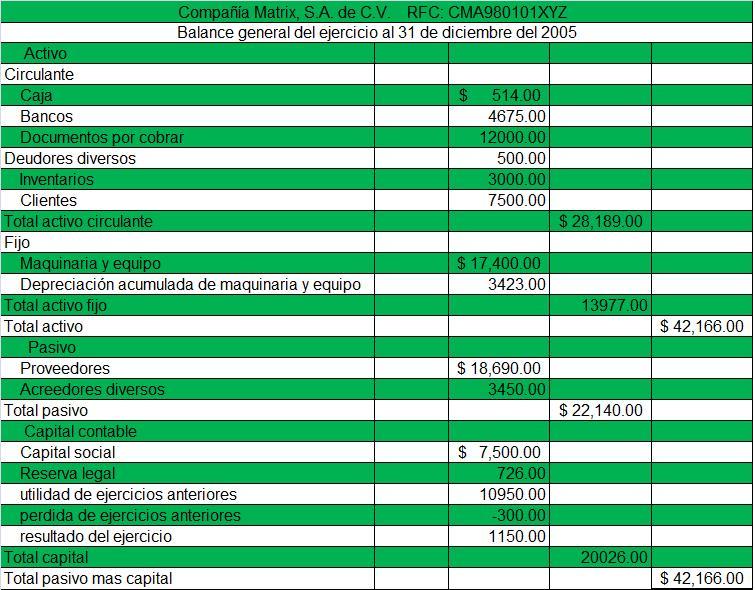
The following visual references illustrate different ways balance sheets, accounting records, spreadsheets, and financial statements can be presented. They are examples for understanding format and structure, not universal accounting requirements.
pdf balance sheet template free download

Source: Wikimedia Commons
pdf balance sheet template excel
Source: Wikimedia Commons
pdf balance sheet template download
Source: Wikimedia Commons
pdf balance sheet
Source: Wikimedia Commons
pdf balance sheet template small business
Source: Wikimedia Commons
pdf balance sheet template google sheets
Source: Wikimedia Commons
balance sheet template pdf
Source: Wikimedia Commons
monthly balance sheet template pdf

Source: Wikimedia Commons
Frequently Asked Questions
What is the main purpose of a PDF balance sheet template?
Its main purpose is to provide a structured format for presenting a business’s assets, liabilities, and equity at a specific date. PDF is particularly useful when the completed statement needs to be shared or printed without changing its appearance.
Can I create a balance sheet in Excel and save it as a PDF?
Yes. Excel can be used as the editable calculation and review environment, after which the completed worksheet can be exported as a PDF. This workflow combines spreadsheet flexibility with the fixed presentation of PDF.
Should a small business use a complicated balance sheet template?
Not necessarily. A small business usually benefits from a template that includes the accounts it actually needs without unnecessary complexity. The important requirement is accurate classification and clear presentation, not the number of lines on the page.
How often should a business prepare a balance sheet?
The appropriate frequency depends on the business and its reporting needs. Monthly statements can be useful for internal management because they make changes in financial position easier to monitor, while other organizations may use quarterly or annual reporting.
Why does my balance sheet not balance?
A discrepancy can result from an omitted transaction, incorrect account classification, duplicated entry, sign error, incomplete adjustment, or another bookkeeping issue. Do not create an arbitrary equity adjustment simply to force the totals to match.
What should I check before printing a balance sheet?
Check the entity name, reporting date, account classifications, individual amounts, subtotals, total assets, total liabilities, total equity, and the final accounting equation. Then inspect the PDF visually to ensure that page breaks and numbers remain readable.
Is a free template suitable for formal financial reporting?
A free template may be useful as a starting point, but suitability depends on the organization’s accounting framework, purpose, and reporting requirements. A generic template should not automatically be treated as an official or professionally compliant format.
Can I customize a balance sheet template?
Yes. Customization is often necessary because businesses have different charts of accounts and organizational structures. Keep the fundamental relationship between assets, liabilities, and equity intact while adapting account names, categories, comparative columns, and presentation details.
Conclusion
A well-designed pdf balance sheet template can make financial reporting more organized, readable, and repeatable. The most important features are not decorative elements but accurate classifications, a clear reporting date, logical account groupings, reliable totals, and a visible relationship between assets, liabilities, and equity.
For practical use, prepare and verify figures in an appropriate accounting system or editable spreadsheet before producing the final PDF. Keep working files separate from finalized statements, maintain consistent classifications across reporting periods, and document unusual changes so that future reviews are easier.
When comparing templates, choose the format that matches the business rather than selecting the most elaborate document available. A simple service business may need only a few categories, while a retailer, manufacturer, corporation, or other complex organization may require more detailed sections and supporting schedules.
Free and downloadable templates can provide a useful starting point, but they should be evaluated rather than accepted blindly. The final statement should reflect the organization’s actual accounting records and the requirements of the people who will rely on the information.
Ultimately, the best template is one that helps the reader understand financial position quickly while giving the preparer a reliable structure for checking the numbers. Used consistently, it can become an important part of a disciplined month-end or year-end reporting workflow.

A balance sheet is most useful when it turns accounting records into information that supports better decisions. By selecting an appropriate format, verifying every figure, maintaining consistent classifications, and preserving finalized PDF copies, a business can use its balance sheet as both a clear financial document and a practical management tool. I can also create an image explaining the balance-sheet workflow.
