Unlike a simple profit calculation, a cash flow schedule focuses on timing. A business can record a sale today while collecting the money weeks later, or incur an expense that is not paid until a future date. A useful schedule therefore connects transactions to the period in which cash actually moves.
The most useful templates combine an opening cash balance, categorized inflows, categorized outflows, net cash movement, and an ending cash balance. More advanced versions add expected-versus-actual columns, rolling forecasts, scenario analysis, monthly dashboards, or links to accounts receivable and accounts payable.
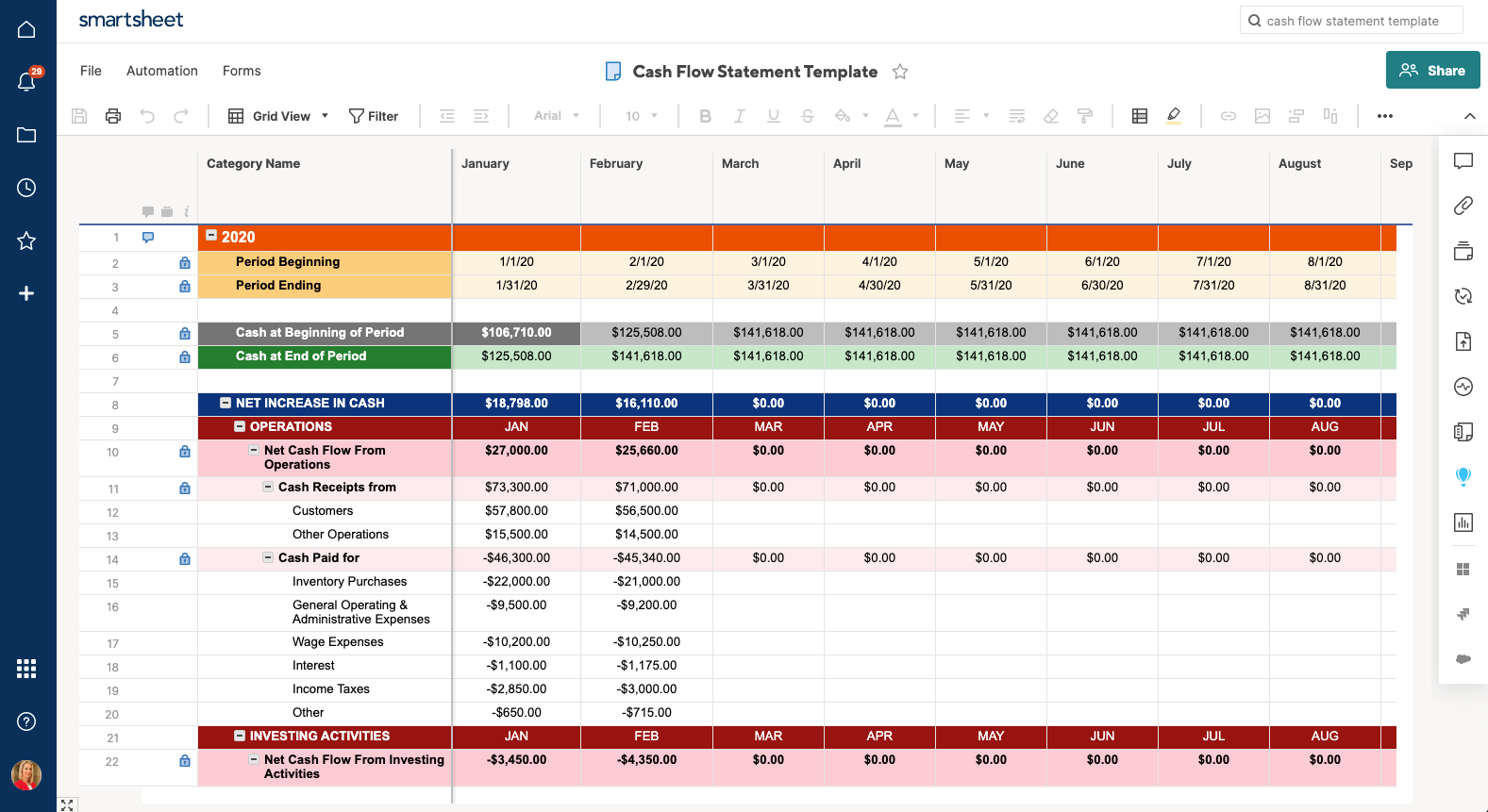
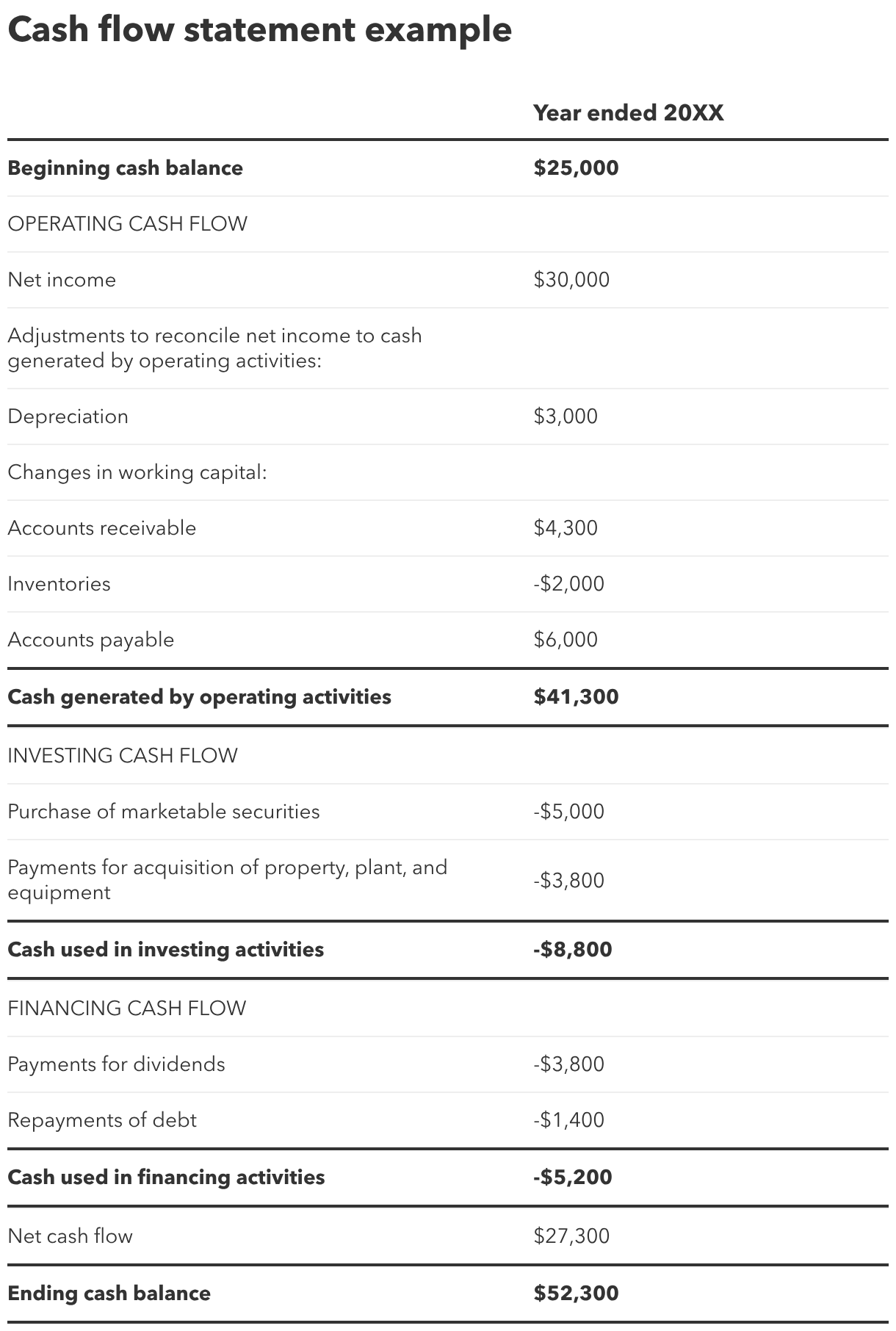
Cash flow statements commonly distinguish operating, investing, and financing activities. The Corporate Finance Institute describes these as the three principal sections used to organize cash movements, while the operating section is often prepared using an indirect method when building a formal statement. :contentReference[oaicite:0]{index=0}
This guide explains how to design a practical schedule, choose between spreadsheet formats, build formulas, collect reliable inputs, interpret results, avoid common mistakes, and create a repeatable workflow. The goal is not simply to produce another spreadsheet, but to create a schedule that supports better cash decisions.
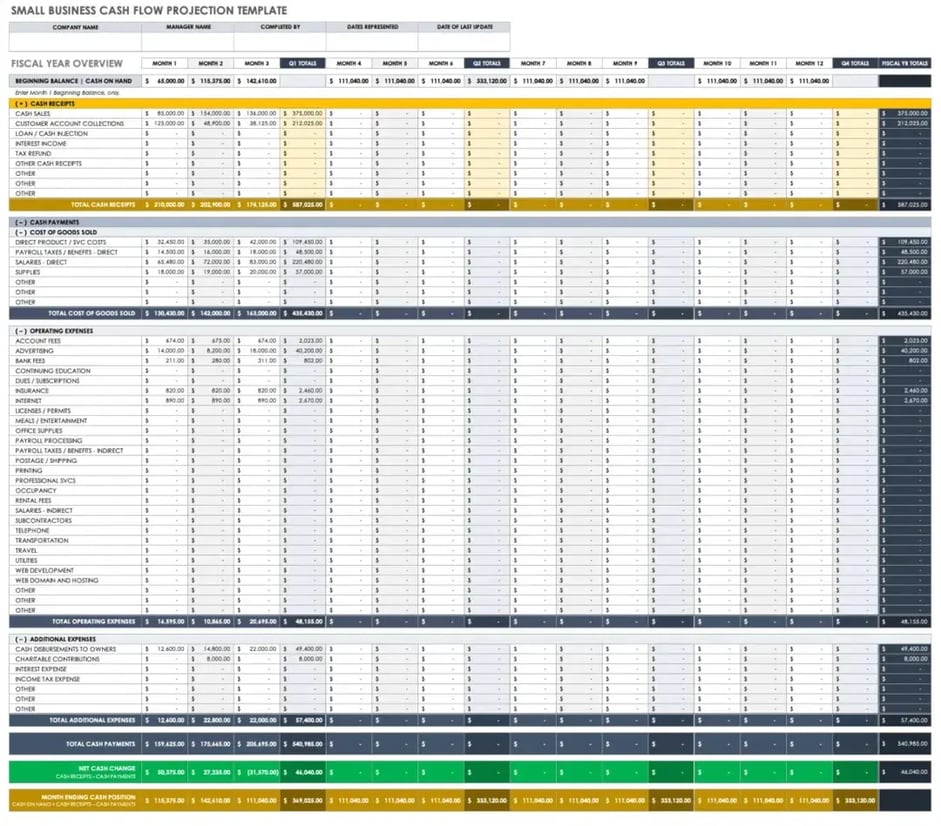
What Is a Schedule for Cash Flow Template?
A schedule for cash flow template is a repeatable framework for recording cash receipts and cash payments across defined periods. The period might be a day, week, month, quarter, or year, depending on how quickly the business needs to detect changes in liquidity.
The word “schedule” is important because the timing of cash is often as important as the amount. For example, $30,000 of invoices expected to be collected next month cannot necessarily fund a $20,000 supplier payment due tomorrow. A schedule makes that timing difference visible.
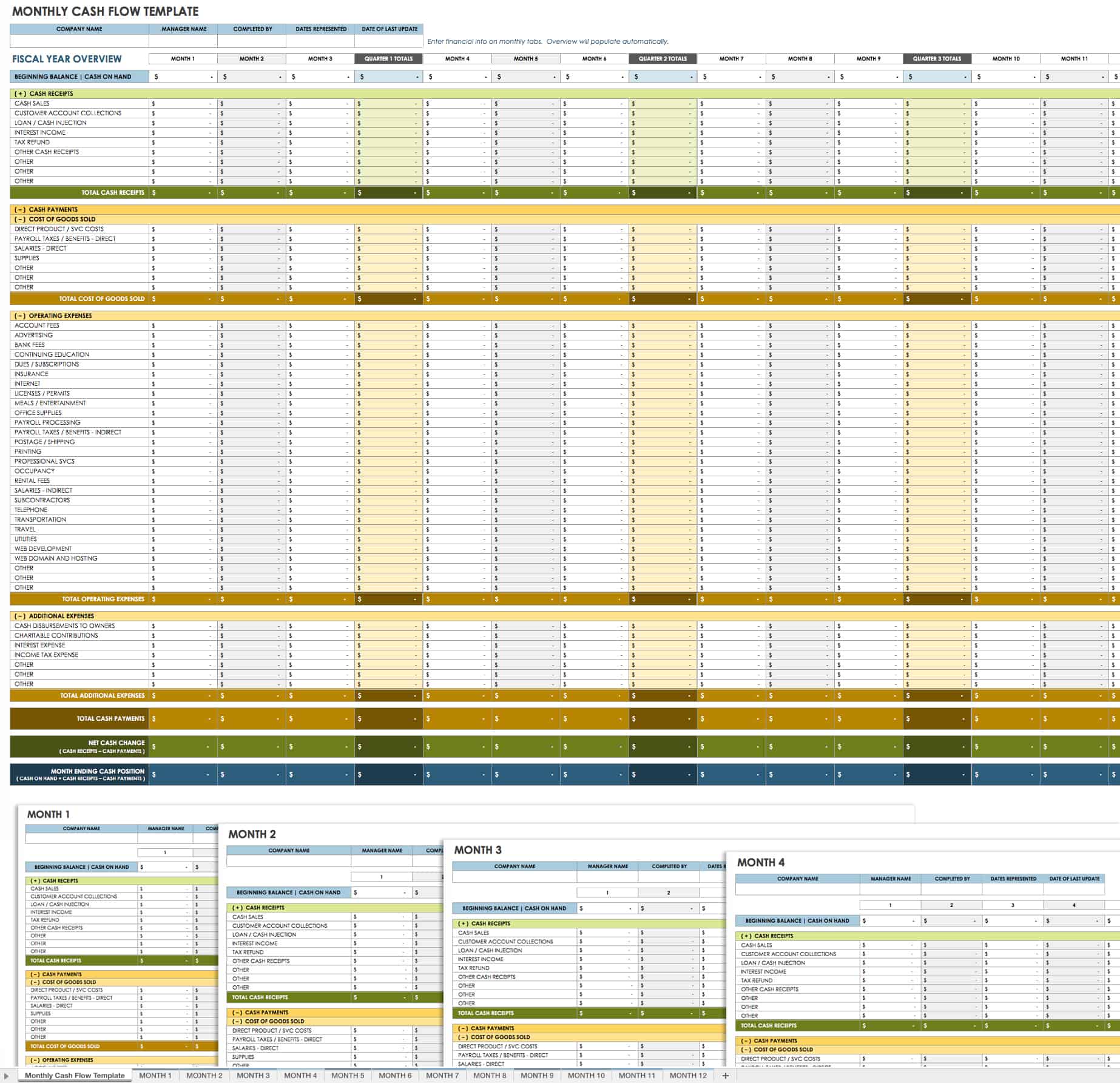
A basic structure begins with cash available at the start of the period. Expected or actual inflows are added, cash outflows are subtracted, and the resulting figure becomes the closing balance. For a rolling schedule, that closing balance then becomes the opening balance for the next period.
The fundamental calculation can be expressed as: Net Cash Flow = Cash Inflows − Cash Outflows. The period-end balance is then Opening Cash Balance + Net Cash Flow. Smartsheet and other established template providers use this basic relationship when describing cash-flow projections. :contentReference[oaicite:1]{index=1}
A good template also separates information that answers different questions. Operating activity helps explain cash generated by normal business operations, investing activity captures asset and investment transactions, and financing activity shows borrowing, repayment, equity, or distribution movements. :contentReference[oaicite:2]{index=2}

Why a Cash Flow Schedule Matters
Cash-flow planning helps management see liquidity before a problem becomes urgent. A forecast can reveal a month in which expected payments exceed available cash, giving the business time to adjust collections, postpone discretionary spending, negotiate payment timing, or arrange appropriate financing.
This visibility is particularly useful for businesses with seasonal revenue. A company may receive substantial cash during a strong sales period but face several quieter months afterward. Looking only at annual revenue can hide the low-cash periods that matter most for day-to-day operations.
A schedule also creates a common language for financial discussions. Instead of saying that cash “should be fine,” a finance team can point to specific opening balances, expected receipts, payment dates, projected net changes, and minimum cash levels.
Historical comparison makes the schedule more valuable. When actual collections consistently arrive later than planned, future forecasts can incorporate that pattern. When utility costs or payroll regularly exceed estimates, assumptions can be updated rather than carried forward indefinitely.
Established guidance emphasizes that forecasts should be updated against actual performance. Smartsheet recommends comparing estimated cash flows with actual outcomes and updating the forecast regularly, while QuickBooks similarly emphasizes cash visibility as a way to understand why reported profitability may differ from available cash. :contentReference[oaicite:3]{index=3}
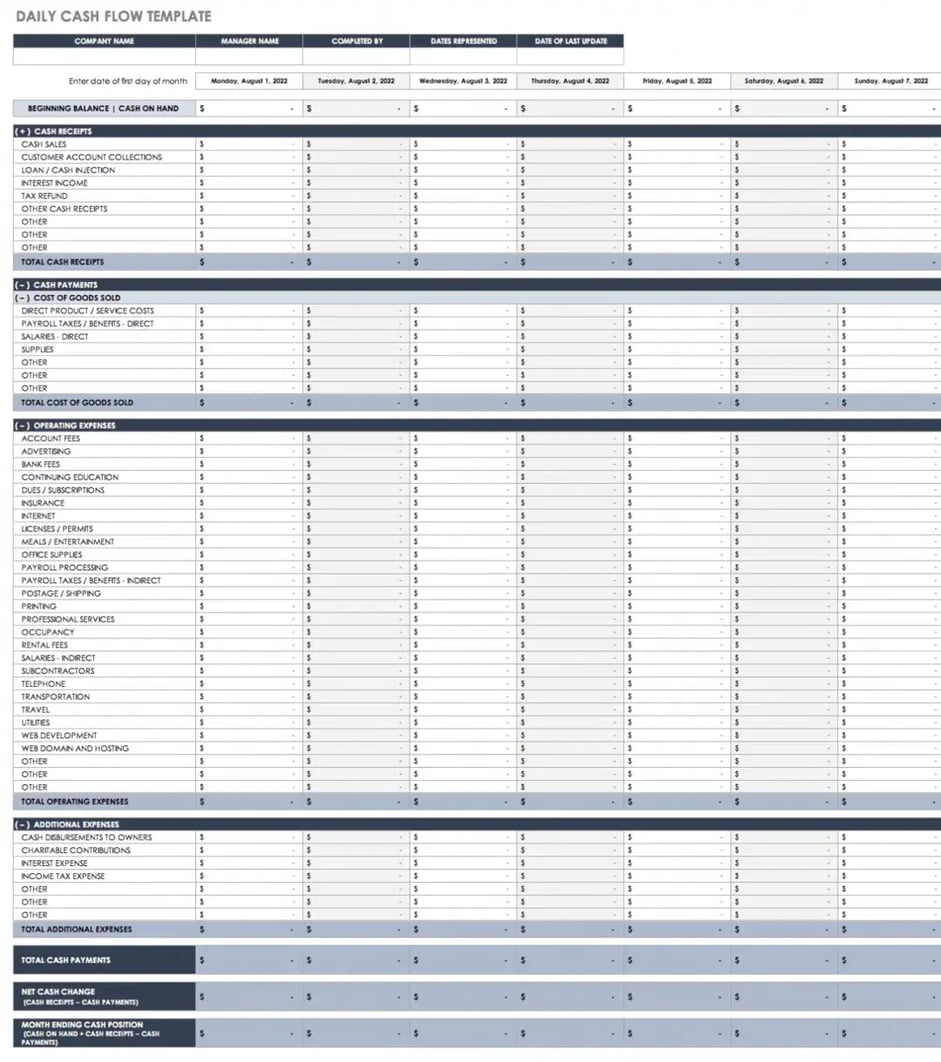
Cash Flow Statement vs. Cash Flow Forecast
A cash flow statement and a cash flow forecast are closely related but serve different purposes. A statement summarizes cash activity that has occurred during a reporting period, while a forecast estimates future cash receipts, payments, and balances using assumptions and available information.
The distinction matters when choosing a template. A historical statement should be populated from accounting records and bank activity. A forecast should be populated from realistic expectations about customer collections, supplier payments, payroll, taxes, capital purchases, debt service, and other future cash movements.
Some businesses need both views in the same workbook. One worksheet can preserve actual results, while another projects upcoming periods. A variance section can then compare the forecast with what actually happened and identify the reasons for meaningful differences.
A forecast is not expected to be perfectly accurate. Its value comes from making assumptions visible early enough to support action. Smartsheet notes that projections are estimates and recommends using realistic assumptions, regular updates, and appropriate forecasting horizons rather than treating a forecast as a fixed prediction. :contentReference[oaicite:4]{index=4}
For short-term cash management, a daily or weekly view may be appropriate. For routine planning, monthly schedules are often easier to maintain. A longer horizon can support strategic planning, but assumptions generally become less precise as the forecast extends further into the future.

Core Components of a Cash Flow Schedule
Opening Cash Balance
The opening cash balance is the amount of cash available at the beginning of the selected period. For a monthly schedule, January begins with the actual starting balance, while February should normally begin with January’s calculated closing balance.
Using linked balances reduces manual entry and makes the schedule easier to audit. If an early-period assumption changes, later balances should update automatically. This is safer than repeatedly typing the same balance into every monthly column.
The definition of available cash should also be consistent. Some organizations may include checking accounts and immediately available funds but exclude restricted cash or savings that management does not intend to use for ordinary operations.
The opening figure should be reconciled to a reliable source. Depending on the purpose of the schedule, that source may be a bank statement, accounting ledger, or reconciled cash account. A forecast built on an incorrect opening balance can remain wrong even when every subsequent formula works perfectly.
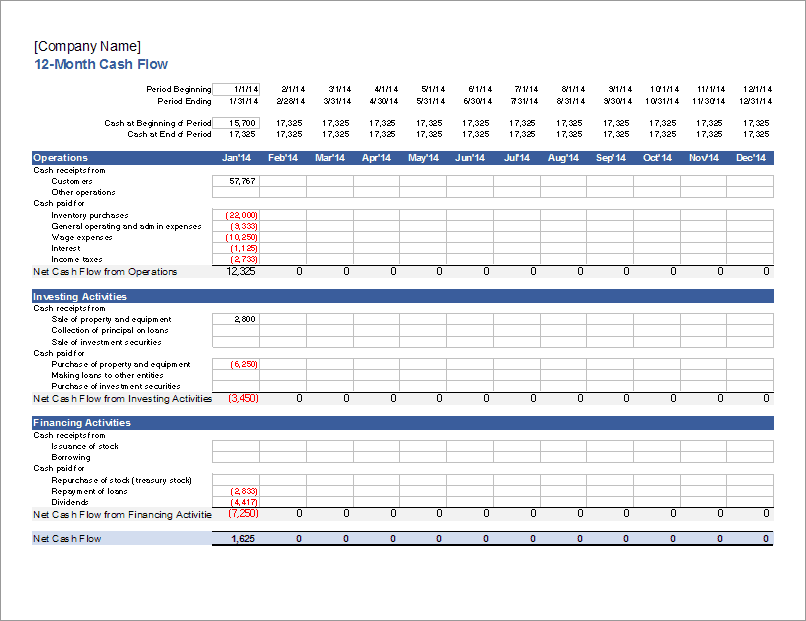
Vertex42’s cash flow materials illustrate this carry-forward concept by showing beginning and ending cash across monthly periods, while Smartsheet templates similarly place beginning cash at the top of the forecast before receipts and payments are calculated. :contentReference[oaicite:5]{index=5}

Cash Inflows
Cash inflows represent money expected to enter the business or money that has already entered it, depending on whether the schedule is historical or projected. Common examples include customer collections, cash sales, loan proceeds, owner contributions, investment proceeds, refunds, grants, and asset-sale proceeds.
Revenue should not automatically be treated as cash received in the same period. If a customer receives 30-day payment terms, the sale may be recorded when earned while the cash appears later. A forecast should therefore use expected collection timing rather than simply copying revenue totals.
For businesses with several revenue streams, separate rows can make the schedule more informative. A service company might distinguish retainers, project collections, subscriptions, and miscellaneous receipts. A retailer might separate cash sales, card settlements, and other receipts.
Historical collection behavior is one of the strongest inputs for future assumptions. Reviewing invoice dates, payment terms, overdue balances, and actual collection dates can reveal whether a forecast should assume immediate, delayed, or staggered receipts.
Accounts receivable is especially important because a large receivable balance can coexist with a weak cash position. QuickBooks and other accounting resources use cash-flow examples to demonstrate how changes in receivables can affect the difference between accounting income and available cash. :contentReference[oaicite:6]{index=6}
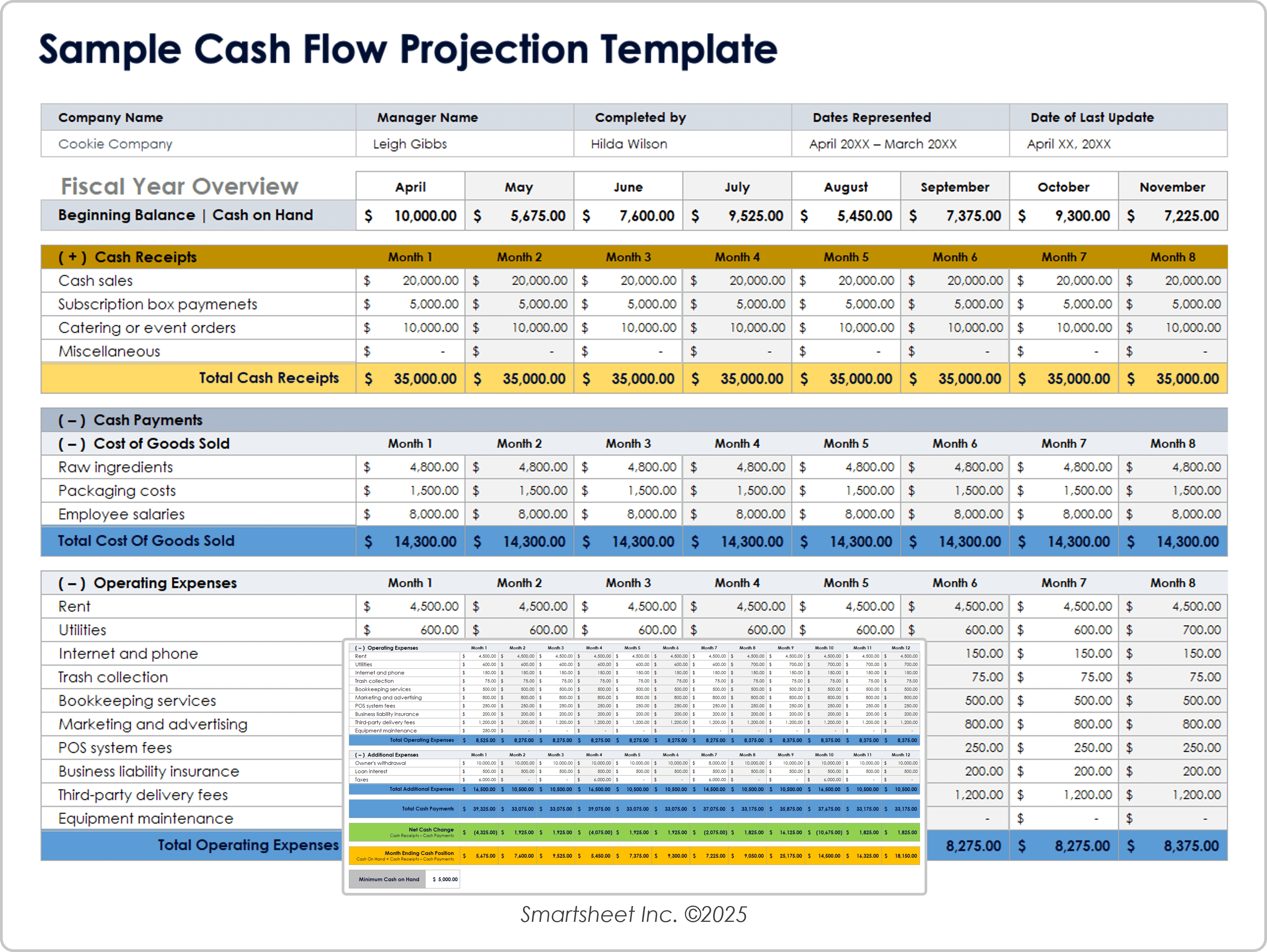
Cash Outflows
Cash outflows should be organized according to how the business actually pays its obligations. Typical categories include inventory, direct costs, payroll, rent, utilities, software, insurance, marketing, taxes, professional services, equipment purchases, debt repayments, and owner distributions.
Separating recurring and one-time payments improves forecasting quality. Monthly payroll is relatively predictable, while a major equipment purchase may occur only once. If both are placed into a single generic expense line, the timing and importance of the capital payment can be difficult to identify.
Accounts payable provides another critical timing input. A supplier invoice may be recognized as an expense before the business actually pays it. The cash schedule should reflect the expected payment date rather than merely the accounting date.
Tax obligations deserve their own attention because they can create large periodic cash requirements. A forecast that tracks only ordinary monthly operating expenses may look healthy until a quarterly or annual tax payment arrives.
A practical schedule therefore captures both amount and date. The more significant the payment, the more useful it is to model its expected timing explicitly rather than spreading it evenly across months without a business reason.
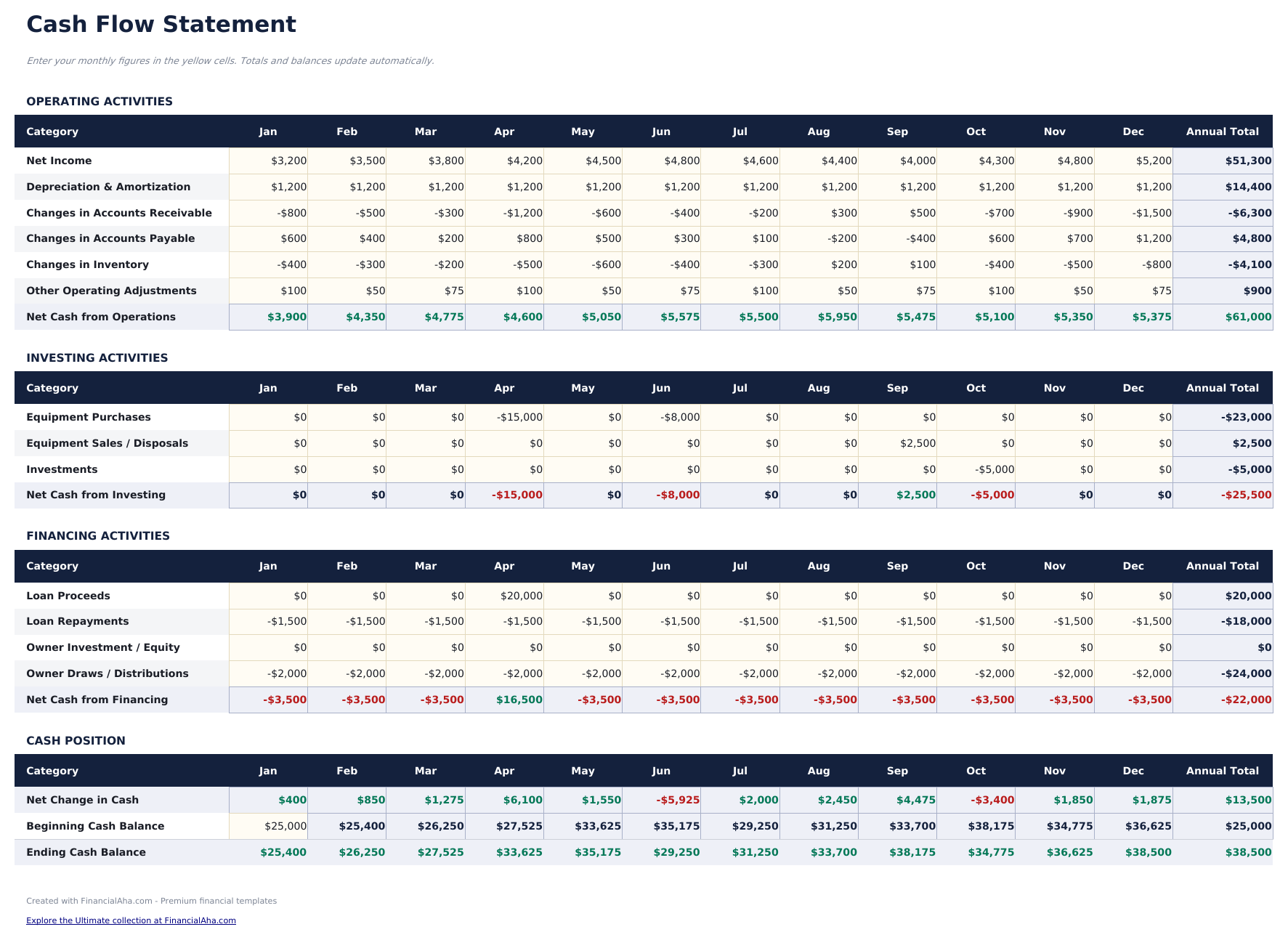
Operating, Investing, and Financing Activities
Formal cash flow statements generally divide movements into operating, investing, and financing activities. Operating activities relate to the normal business cycle, investing activities commonly involve long-term assets or investments, and financing activities involve changes in debt, equity, or distributions.
Operating cash flow deserves particular attention because it helps answer whether the underlying business is generating cash through its normal activities. A business can temporarily have positive total cash flow because it borrowed money, sold an asset, or received an equity contribution.
Investing activity can create large cash outflows during expansion. Equipment, vehicles, property, technology infrastructure, or acquisitions may require significant cash even when the ordinary business operation remains profitable.
Financing activity can move cash in either direction. Borrowing increases available cash when funds are received, while principal repayments reduce cash later. Equity contributions can increase cash, while distributions can reduce it.
The Corporate Finance Institute, Vertex42, and Smartsheet all describe the three-section structure as a standard way to organize cash movements. The exact classification of certain transactions can depend on the applicable accounting framework and reporting circumstances, so formal financial statements should be reviewed against the relevant accounting requirements. :contentReference[oaicite:7]{index=7}

How to Build a Schedule for Cash Flow Template in Excel
Excel is useful when you need flexible formulas, custom categories, scenario analysis, charts, and control over workbook structure. A well-designed workbook can contain input sheets, supporting schedules, a cash-flow statement, a forecast, and a dashboard without requiring specialized software.
Start by creating columns for the periods you want to monitor. Monthly columns are a practical starting point for many businesses. Add an opening balance row, followed by cash inflow categories, cash outflow categories, net cash flow, and ending cash balance.
Next, separate input cells from calculated cells. Users should enter assumptions only in clearly designated cells, while totals and balances should be formula-driven. This makes the workbook easier to review and reduces the chance that someone accidentally overwrites a calculation.
For example, if January begins with $25,000, receives $40,000, and pays $32,000, the January net cash flow is $8,000 and the closing balance is $33,000. February should then begin with $33,000 rather than requiring a second manual opening-balance entry.
A practical spreadsheet can also include expected and actual columns. The difference between them becomes a variance. Reviewing that variance each month helps identify whether errors are caused by timing, incorrect assumptions, unexpected expenses, or changes in business activity.
Using Accounts Payable and Receivable Data
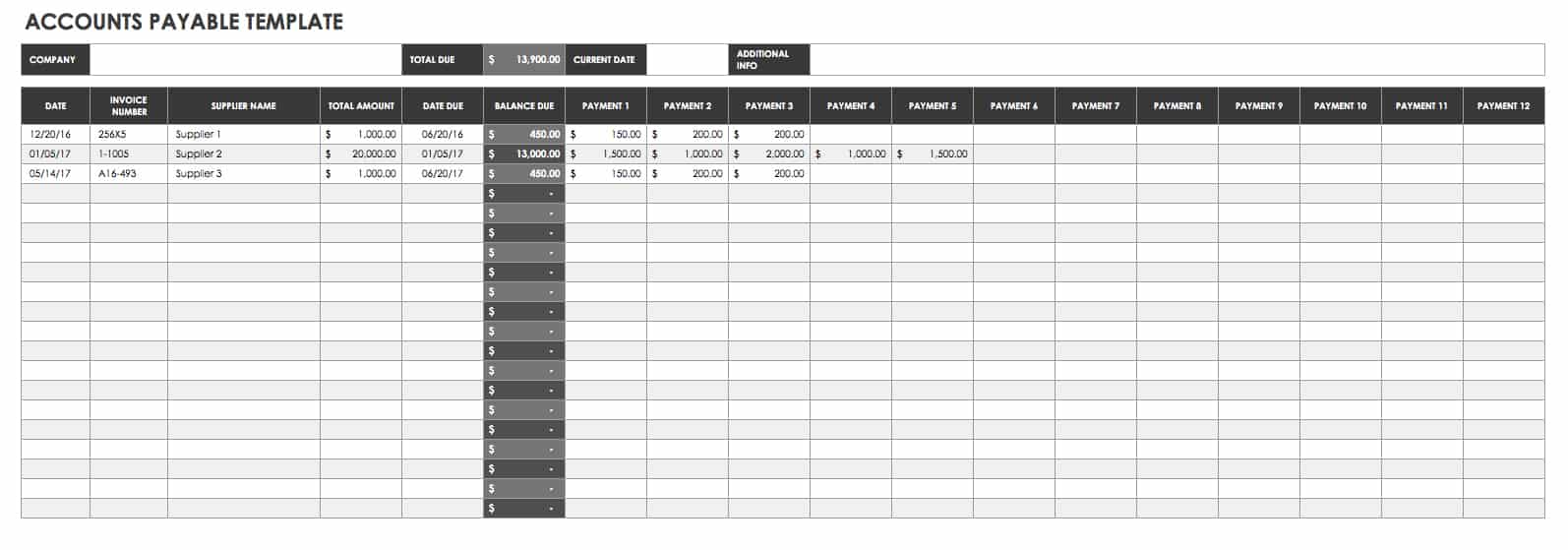
Accounts payable and accounts receivable schedules can make a cash forecast substantially more useful. Accounts receivable indicates money customers owe the business, while accounts payable tracks amounts owed to suppliers and other creditors.
For receivables, collect invoice-level information when practical: customer, invoice date, amount, payment terms, expected collection date, and current status. The objective is not to make the forecast unnecessarily complicated but to identify which expected receipts are dependable and which require caution.
For payables, record supplier, invoice amount, due date, planned payment date, and payment status. Large or unusual bills deserve special attention because they can materially change the minimum cash balance even when average monthly expenses appear manageable.
The most useful insight comes from connecting these schedules to the cash timeline. A $50,000 receivable due in 45 days should not be treated as available cash today, while a $20,000 supplier invoice due next week should appear in the near-term payment schedule.
Templates from Smartsheet demonstrate how separate accounts payable and receivable schedules can organize due amounts, payment timing, outstanding balances, and aging information. These supporting schedules can provide more reliable inputs for a cash forecast than broad monthly assumptions alone. :contentReference[oaicite:8]{index=8}

Connecting the Cash Schedule to Other Financial Statements
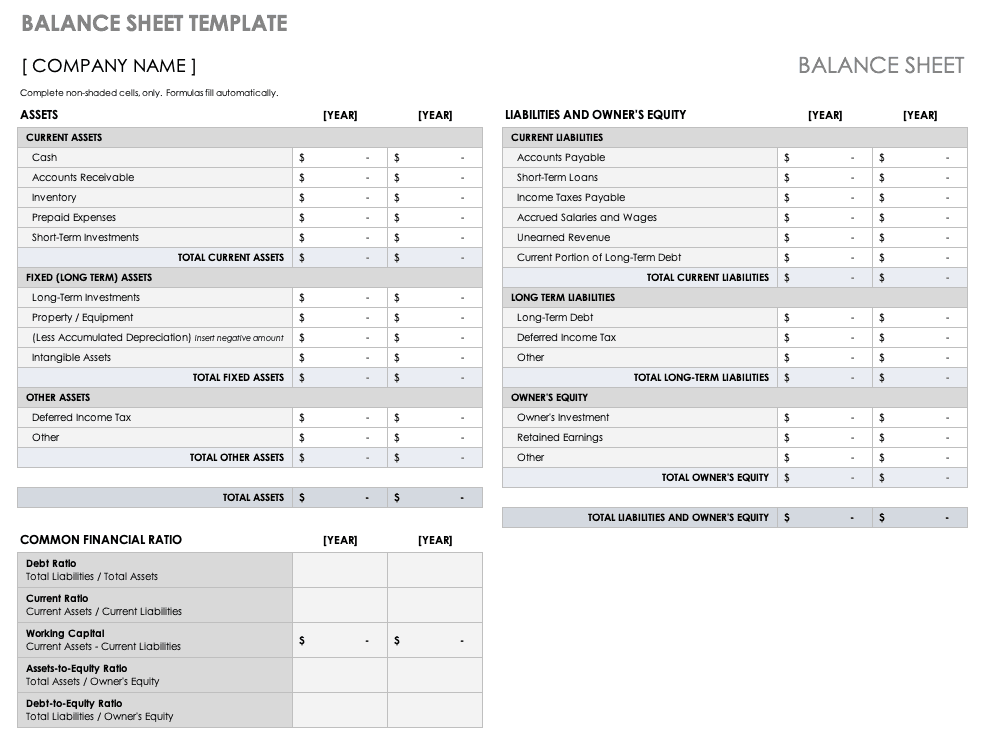
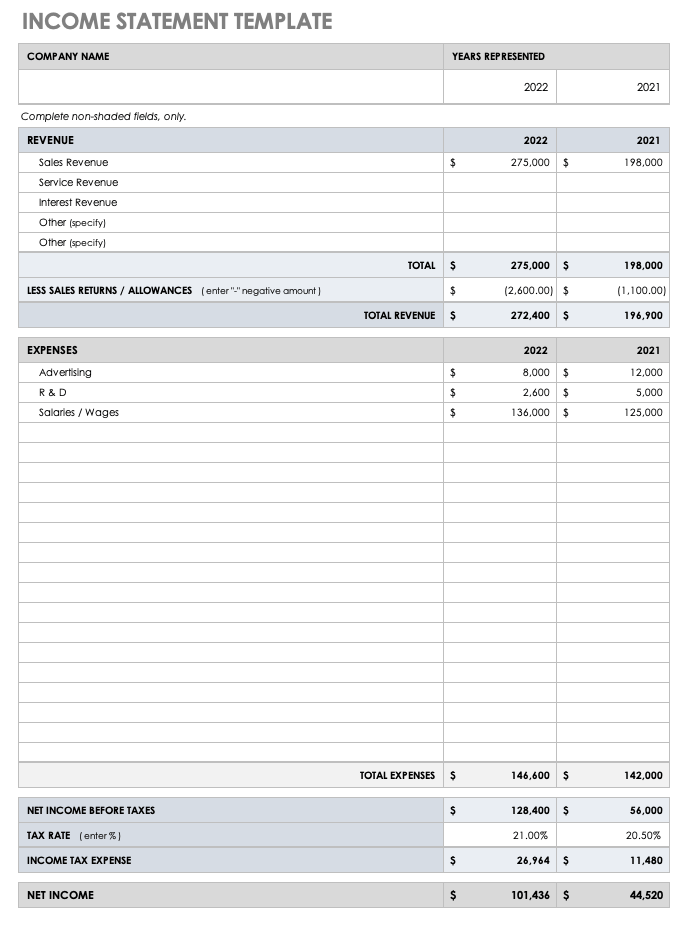
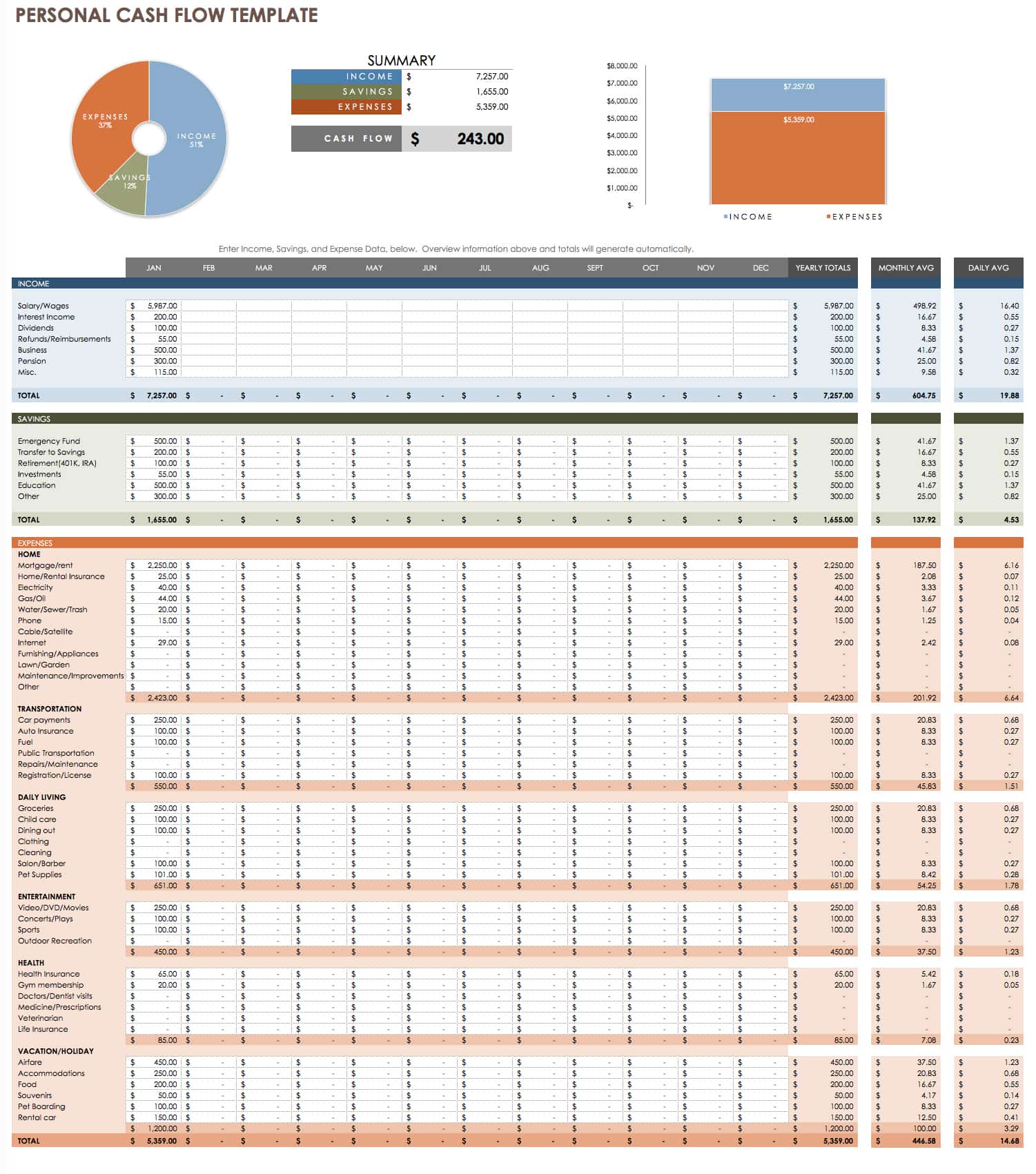
A cash flow schedule should not be treated as an isolated spreadsheet. The income statement, balance sheet, and cash flow statement answer different questions, and together they provide a more complete view of financial performance and liquidity.
The income statement focuses on revenue, expenses, and profit over a period. The balance sheet shows financial position at a particular point in time. Cash-flow information explains movements in cash and helps reconcile why profit does not necessarily equal the change in the bank balance.
Working capital is a major connection between these views. Changes in accounts receivable, inventory, accounts payable, and certain other current accounts can influence operating cash even when they do not appear as simple cash expenses in the income statement.
For example, suppose a business reports strong sales but allows customers to pay later. Revenue may rise while cash collections lag behind. A cash schedule can show the resulting liquidity pressure more clearly than a profit report alone.
QuickBooks describes the statement of cash flows as a way to understand the relationship between reported profit and cash activity, while Vertex42 similarly notes that cash-flow analysis is distinct from a business budget or profit-and-loss projection. :contentReference[oaicite:9]{index=9}
Designing a Useful Spreadsheet Structure
A professional workbook should be easy to navigate. A common structure is to use one tab for assumptions, one for supporting data, one for the cash schedule, one for actual-versus-forecast analysis, and one for a summary dashboard.
Input areas should use consistent formatting and clear labels. Avoid hiding important assumptions in formulas. If a collection rate, payment delay, or recurring expense assumption materially affects the forecast, make that assumption visible and document what it represents.
Use formulas that are simple enough to audit. A complicated formula may technically work but become difficult for another person to maintain. Where possible, calculate subtotals in stages so that a reviewer can trace the result from source data to final cash balance.
Data validation can help prevent obvious input errors such as text entered into numeric cells or inconsistent category names. Conditional formatting can also draw attention to negative balances, unusually large variances, or periods below a defined minimum cash threshold.
The best template is not necessarily the most elaborate. Smartsheet notes that a cash-flow forecast can be daily, monthly, quarterly, or yearly and recommends choosing a forecasting horizon and template appropriate to the business need rather than adding complexity without purpose. :contentReference[oaicite:10]{index=10}
Schedule for Cash Flow Template Google Sheets Workflow
Google Sheets can be particularly useful when several people need to review or update the same cash schedule. Because the workbook can be shared, teams can collaborate without maintaining separate local copies of the same file.
Google’s official documentation explains that users can open Sheets, select the Template Gallery, choose a template, and work from a copy. It also documents organization-level template galleries for teams that need a shared collection of standardized spreadsheets. :contentReference[oaicite:11]{index=11}
For a cash schedule, collaboration works best when responsibilities are defined. One person might update customer collections, another might maintain supplier payments, and a finance reviewer might approve the final monthly forecast.
Version history can also be valuable when a forecast changes unexpectedly. If a balance or assumption is overwritten, a reviewer can investigate when the change occurred and compare the current workbook with an earlier version.
The underlying structure should remain the same whether the schedule is maintained in Excel or Google Sheets. The critical requirements are consistent periods, accurate inputs, transparent formulas, controlled assumptions, and a reliable link between opening and closing cash.
Choosing the Right Forecasting Horizon
A daily schedule is useful when cash balances are tight and payment timing matters. It can show exactly when a bank balance may fall below a required level, making it appropriate for businesses that need close short-term liquidity control.
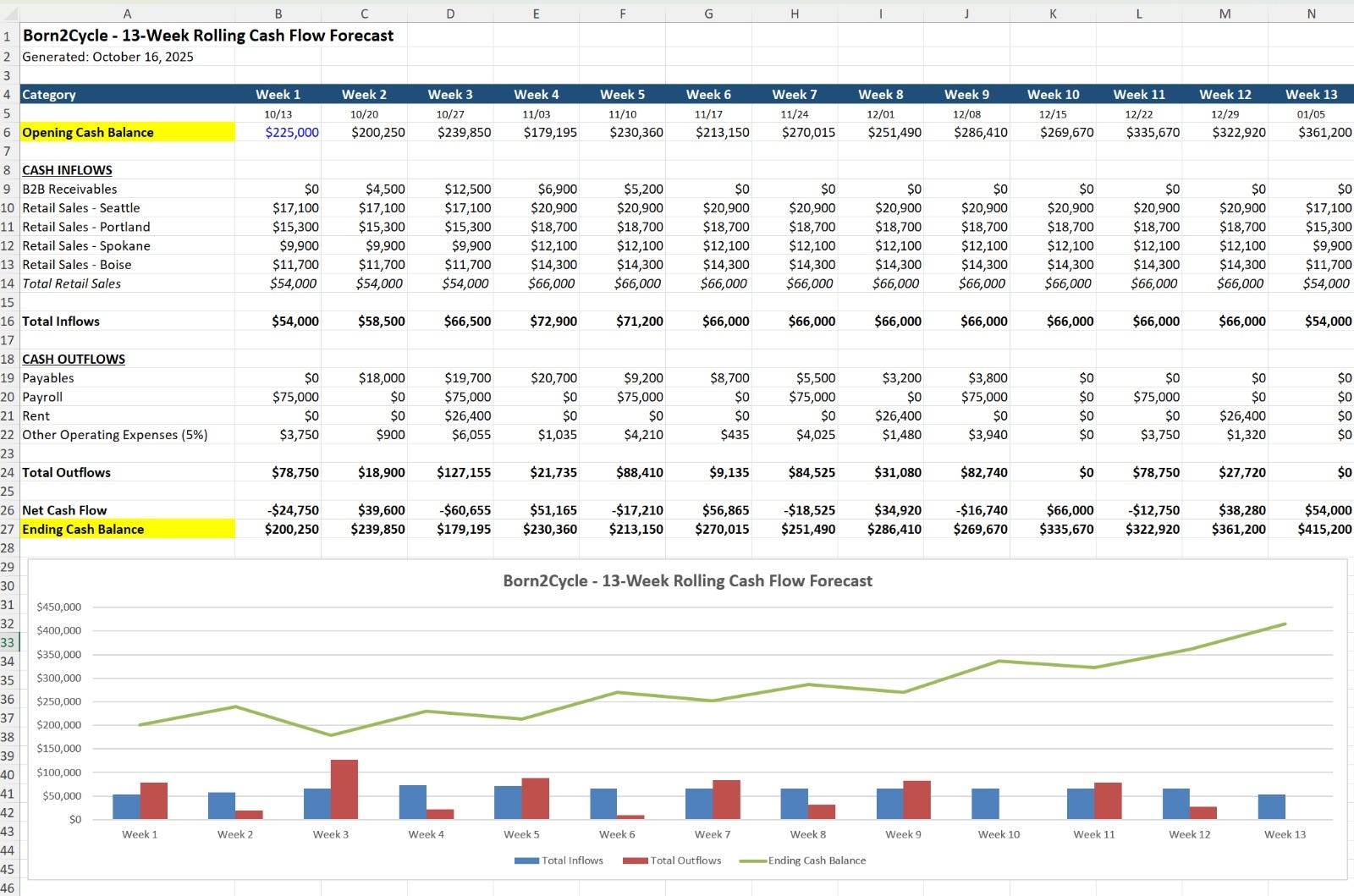
A weekly schedule provides a compromise between detail and maintenance. A rolling 13-week forecast is a common management approach for short- to medium-term liquidity planning because it provides a detailed view without requiring an entire year to be modeled at daily granularity.
A monthly schedule is generally easier to maintain and can support budgeting, operating planning, seasonal analysis, and management reporting. Twelve monthly periods also provide a useful balance between near-term detail and a full annual view.
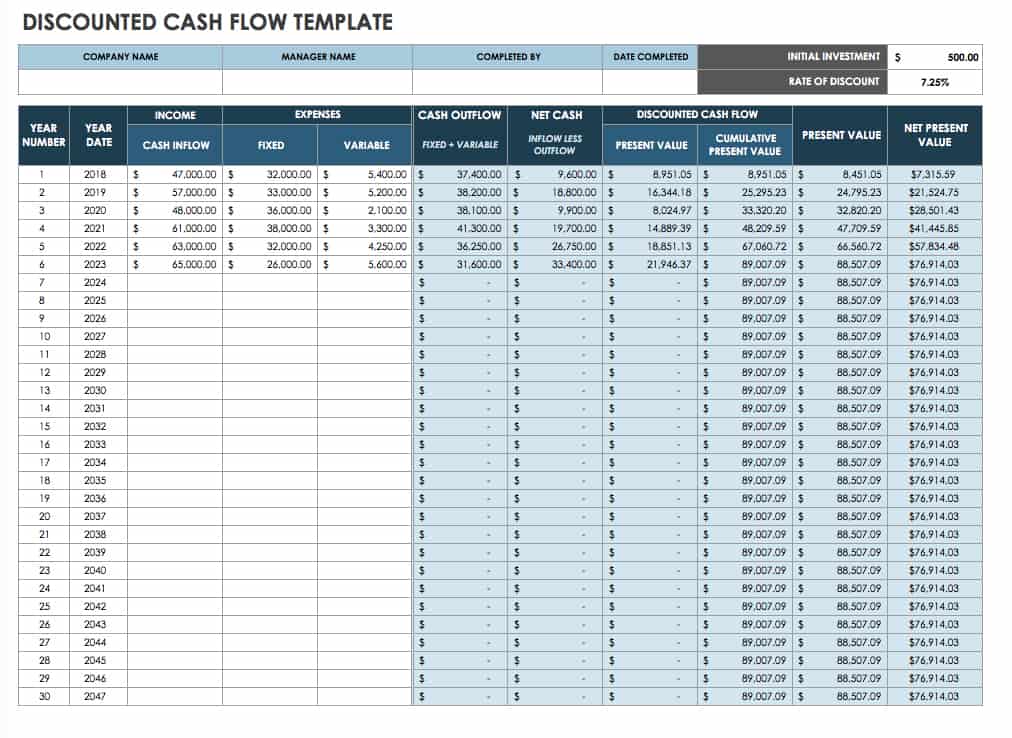
A multi-year schedule can support strategic planning, financing discussions, or investment analysis, but long-range figures depend heavily on assumptions. Smartsheet notes that one-year projections are commonly suited to short-term planning, while longer forecasts may be used for broader strategic or investor-oriented purposes. :contentReference[oaicite:12]{index=12}
The right horizon depends on the decision. If the question is whether payroll can be covered next Friday, use a short interval. If the question concerns seasonal working capital over the next year, monthly periods may be more appropriate.
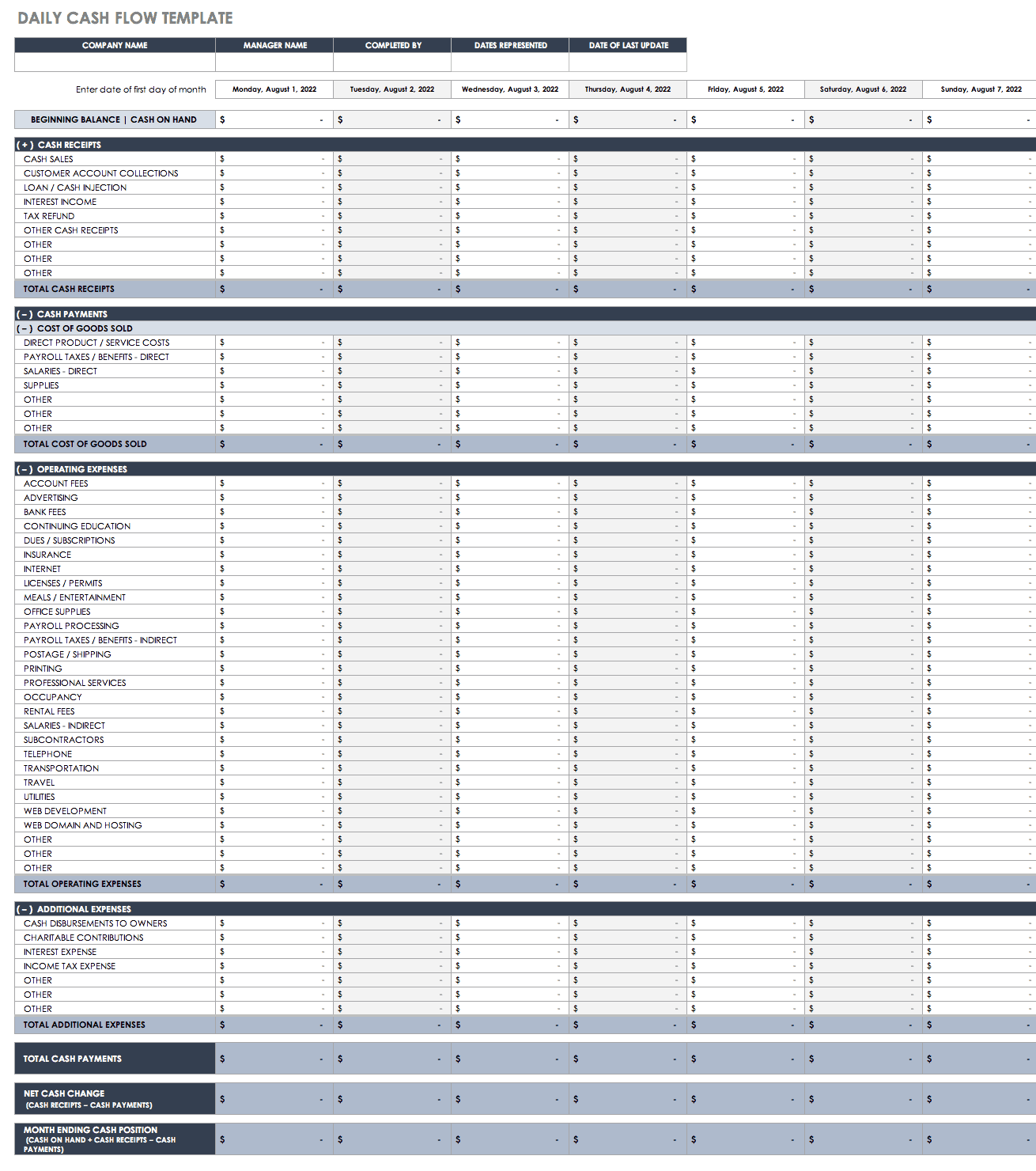
Building a Rolling Cash Forecast
A rolling forecast avoids the problem of allowing an annual spreadsheet to become outdated. Instead of creating one forecast at the beginning of the year and leaving it untouched, each completed period is replaced by actual results and a new future period is added.
For example, a 12-month forecast created in January might cover January through December. In February, January actuals replace January estimates, February is updated, and January of the following year is added to preserve the 12-month horizon.
This approach keeps the forecast focused on the future while continuously learning from actual performance. It also prevents the final months of an old annual budget from becoming increasingly disconnected from current business conditions.
Rolling forecasts are especially useful when sales volumes, supplier prices, staffing levels, or collection patterns change frequently. Instead of treating the original budget as permanent, management uses new evidence to improve future assumptions.
Smartsheet explicitly recommends adding a new period as each period passes to maintain a rolling forecast. The same source also recommends comparing estimates with actual outcomes and revising assumptions when differences become apparent. :contentReference[oaicite:13]{index=13}
Scenario Analysis: Base, Conservative, and Stress Cases
A single forecast can create false confidence if its assumptions are uncertain. Scenario analysis addresses this by allowing management to see how cash changes when important assumptions move in different directions.
A base case might use the most reasonable expected collection dates and expenses. A conservative case might assume slower customer payments, modestly lower receipts, or higher operating costs. A stress case can combine several unfavorable conditions to identify the point at which liquidity becomes uncomfortable.
Scenario analysis should focus on variables that actually matter. If customer payment timing drives most cash volatility, build scenarios around collection delays. If inventory purchases create the largest swings, model purchase timing and supplier terms.
The purpose is not to predict every possible outcome. It is to identify vulnerabilities and determine what management could do if a difficult scenario starts developing.
Smartsheet provides a cash flow analysis template that uses pessimistic, expected, and optimistic cases, illustrating how a structured scenario approach can help users examine potential cash shortfalls and compare different assumptions. :contentReference[oaicite:14]{index=14}
Practical Example: A Small Service Business
Consider a hypothetical consulting company beginning April with $40,000 in cash. The owner expects $55,000 of customer collections during April and anticipates $42,000 of operating payments, including payroll, contractors, rent, software, and other costs.
The April net cash flow would be $13,000, producing a projected closing balance of $53,000. That $53,000 becomes May’s opening balance if no other cash movement occurs between the periods.
Now suppose a major customer delays a $20,000 payment until June. The annual revenue expectation may remain unchanged, but April and May liquidity becomes weaker. The cash schedule reveals the timing problem immediately.
If the company also plans a $15,000 equipment purchase in May, the forecast becomes even more useful. Management can compare the May closing balance with its preferred minimum cash level and decide whether the purchase should proceed as planned.
This example shows why cash scheduling is different from simply adding annual income and subtracting annual expenses. The decision depends on when the money arrives, when obligations must be paid, and how much cash remains between those events.
Practical Example: Seasonal Retail Business
Imagine a hypothetical retailer whose sales increase sharply near the end of the year. The business may receive strong cash collections in November and December but must purchase inventory earlier to prepare for demand.
A basic annual budget could show attractive total sales and profit. However, a monthly cash schedule might show that September and October have the greatest liquidity pressure because inventory purchases occur before the strongest customer receipts.
Management can use that information to examine supplier terms, inventory purchasing schedules, promotional timing, and available financing. The schedule does not make the decision automatically, but it provides a more precise view of the cash consequences.
Seasonality should be modeled from actual business patterns whenever possible. If historical records show that a particular month repeatedly contains unusually large inventory payments, that payment should be represented explicitly rather than averaged across all months.
Forecasting guidance also emphasizes the importance of seasonality. Ignoring recurring seasonal fluctuations can distort the projected cash position and make an apparently strong forecast less useful for actual liquidity management. :contentReference[oaicite:15]{index=15}
Schedule for Cash Flow Template Excel Free Design Principles
When building a schedule in Excel, keep the workbook understandable to someone who did not create it. Use descriptive row labels, consistent period headings, and clear separation between assumptions, source data, calculations, and outputs.
Do not bury critical assumptions inside long formulas. If collections are expected to occur 30 days after invoicing, document that assumption where the forecast user can find it. If a particular cost is seasonal, record the reason rather than simply entering an unexplained number.
Use linked formulas for recurring relationships. For example, the opening cash balance for March should normally reference February’s closing cash balance. This creates a continuous chain that makes errors easier to detect.
Protect important formula cells when the workbook will be shared with several users. Data-entry areas should be obvious, while calculated cells should be harder to overwrite accidentally.
A free template can be a strong starting point, but “free” does not mean automatically suitable. Review the categories, formulas, assumptions, reporting period, and intended use before relying on a template for an important business decision.

Using a Cash Flow Schedule With Accounting Software
Accounting software can reduce manual data collection because transactions, invoices, bills, and account balances may already exist in a structured system. A spreadsheet can then serve as a planning layer rather than the sole source of financial records.
QuickBooks provides cash-flow reporting and educational examples that separate operating, investing, and financing activity. Its materials also show how a statement of cash flows can help explain differences between profit and actual cash movement. :contentReference[oaicite:16]{index=16}
The practical advantage of combining accounting records with a forecast is that actual data can replace assumptions as the reporting period progresses. Instead of retyping every transaction, the finance workflow can focus attention on future collections, payments, financing events, and unusual changes.
Care is still necessary when transferring information. A report designed for accounting may not have the same timing assumptions as a management forecast. Reconcile the opening balance and verify that the categories used in the planning schedule correspond to the underlying accounting information.
A schedule should complement accounting software rather than create a second uncontrolled version of the truth. Decide which system is authoritative for historical transactions and which workbook or forecast is responsible for forward-looking assumptions.
How to Analyze a Completed Cash Flow Schedule
Start by reviewing the ending cash balance, but do not stop there. A healthy ending balance may have resulted from borrowing, an equity contribution, or an asset sale rather than strong operating performance.
Next, examine operating cash flow. If operating activity repeatedly produces cash, the business may have a stronger internal funding base. If operating cash is consistently negative, management should understand why before interpreting financing inflows as evidence of underlying strength.
Review the lowest projected balance rather than only the final balance. A business can end a month with adequate cash while temporarily falling below its preferred minimum earlier in the period.
Compare expected and actual receipts and payments. Large variances may reveal inaccurate assumptions, customer payment delays, unexpected expenses, or changes in purchasing behavior.
Finally, examine the trend. One negative month does not necessarily indicate a structural problem, just as one positive month does not prove that the business is financially secure. Cash-flow analysis becomes more useful when trends and recurring drivers are considered over multiple periods.

Cash Flow Metrics Worth Monitoring
Net cash flow shows the difference between cash inflows and outflows for the selected period. It is useful for identifying whether cash increased or decreased during that period.
Ending cash balance shows the amount remaining after all modeled movements. This is often more actionable than net cash flow alone because a positive monthly change does not necessarily mean that the starting cash level was sufficient.
Minimum cash balance identifies the lowest point reached during the forecast horizon. Comparing this figure with an internal minimum-cash target can highlight periods requiring additional planning.
Operating cash flow helps separate cash generated by normal operations from cash provided by investing or financing activities. This distinction can prevent a loan or capital contribution from masking weak operating liquidity.
Forecast variance compares expected and actual results. Tracking variance by category can reveal whether the biggest forecasting problems come from collections, payroll, inventory, capital spending, taxes, or another driver.
Common Mistakes When Building a Cash Flow Schedule
One common mistake is treating revenue as if it were cash. Sales recorded on credit may not become cash until a later date. Forecasting collections according to realistic payment timing is essential for a liquidity-focused schedule.
Another mistake is assuming that every expense is paid evenly. Some costs are monthly, some quarterly, some annual, and others are triggered by specific events. Large irregular payments should be modeled in the periods when they are expected to occur.
Overly optimistic assumptions can also weaken the forecast. If every customer pays early, expenses remain exactly on budget, and no unexpected payments occur, the model may look reassuring while providing little protection against normal uncertainty.
Failure to update the schedule is another major problem. A forecast created months ago becomes less useful when actual sales, collections, supplier terms, staffing, or financing conditions have changed.
Finally, excessive complexity can make a schedule difficult to maintain. Forecasting guidance recommends starting with the most significant inflows and outflows, then adding detail as the process matures rather than building an elaborate model that nobody consistently updates. :contentReference[oaicite:17]{index=17}
Best Practices for Maintaining the Schedule
Assign ownership to the schedule. Someone should be responsible for updating inputs, checking formulas, reviewing variances, and communicating important changes. Shared responsibility without clear ownership can lead to stale or inconsistent information.
Set a regular review cycle. A small business might review the forecast weekly and update it monthly, while a business with tighter liquidity may require more frequent updates. The appropriate frequency depends on transaction volume and cash sensitivity.
Keep a record of significant assumption changes. If a major customer changes payment terms, a supplier extends credit, or an equipment purchase moves to another month, document the change so future reviewers understand why the forecast moved.
Reconcile actual cash periodically. A forecast should never drift away from reality because the opening balance is wrong. Check the relevant bank and accounting records before using the latest forecast for important decisions.
Use the schedule to make decisions, not merely to report numbers. A useful review ends with questions such as whether collections need attention, whether spending should be rescheduled, whether financing needs to be discussed, or whether a planned investment should occur now or later.
Practical Solution: Build a Repeatable Cash Flow Workflow
The most practical solution is to create a simple schedule first and make it reliable before adding advanced features. Begin with a 12-month view if the business primarily needs monthly planning, or use a shorter weekly horizon if near-term liquidity is the main concern.
Step 1: Establish the opening balance. Reconcile the starting cash figure to the appropriate financial record. Define which accounts and liquid funds are included so that the forecast starts from a consistent foundation.
Step 2: Build the inflow schedule. List the major sources of expected cash and assign realistic receipt dates. For customer collections, use invoice information and historical payment behavior rather than simply copying sales revenue into the cash forecast.
Step 3: Build the outflow schedule. List recurring expenses, supplier payments, payroll, taxes, debt service, capital purchases, and other material cash requirements. Put large irregular payments into their expected periods.
Step 4: Separate activity types when appropriate. For formal reporting, organize cash movements into operating, investing, and financing categories. For management forecasting, you can use additional subcategories that make the timing and drivers easier to understand.
Step 5: Add formulas. Calculate total inflows, total outflows, net cash flow, and ending cash automatically. Link each period’s opening balance to the preceding period’s closing balance.
Step 6: Add actual-versus-forecast tracking. Once a period closes, replace or preserve the original estimate and enter actual results. Calculate the variance and investigate meaningful differences rather than merely recording them.
Step 7: Add a minimum-cash warning. Establish an internal threshold appropriate to the business and flag periods in which projected cash falls below it. The threshold is a management control, not a universal accounting requirement.
Step 8: Create scenarios. Change the assumptions most likely to affect liquidity. Test slower collections, higher expenses, delayed sales, major purchases, or changes in financing to see whether the business has enough flexibility.
Step 9: Review the lowest point. Look beyond the final balance and identify when cash reaches its minimum. This is often the most important point for planning because a temporary shortfall can occur before the forecast ends.
Step 10: Roll the forecast forward. At each review cycle, replace completed periods with actual results, revise assumptions, and add a new future period. This creates a living schedule rather than an annual document that becomes obsolete.
This workflow is consistent with established cash-flow forecasting guidance: start with beginning cash, gather historical information, estimate inflows and outflows, calculate opening and closing balances, compare results with reality, and update the forecast regularly. :contentReference[oaicite:18]{index=18}
Reference Examples
The following reference examples correspond directly to the requested spreadsheet, online-sheet, free-template, PDF, and accounting-software formats. Availability, licensing, and download conditions can change, so the original source should always be reviewed before using a resource commercially.
schedule for cash flow template excel
Source: Vertex42
schedule for cash flow template google sheets

Source: Smartsheet
schedule for cash flow template free download

Source: Smartsheet
schedule for cash flow template free
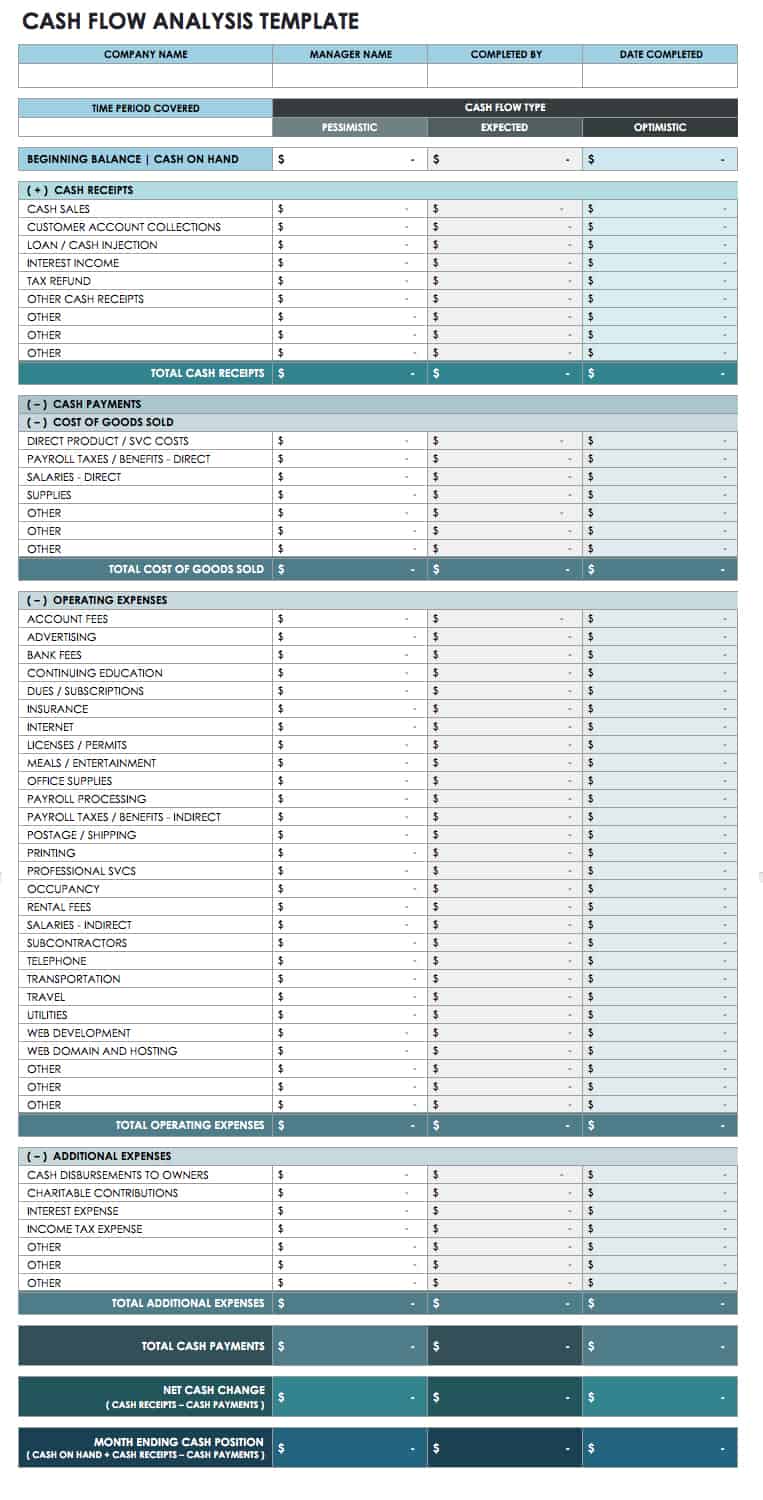
Source: Smartsheet
schedule for cash flow template excel free
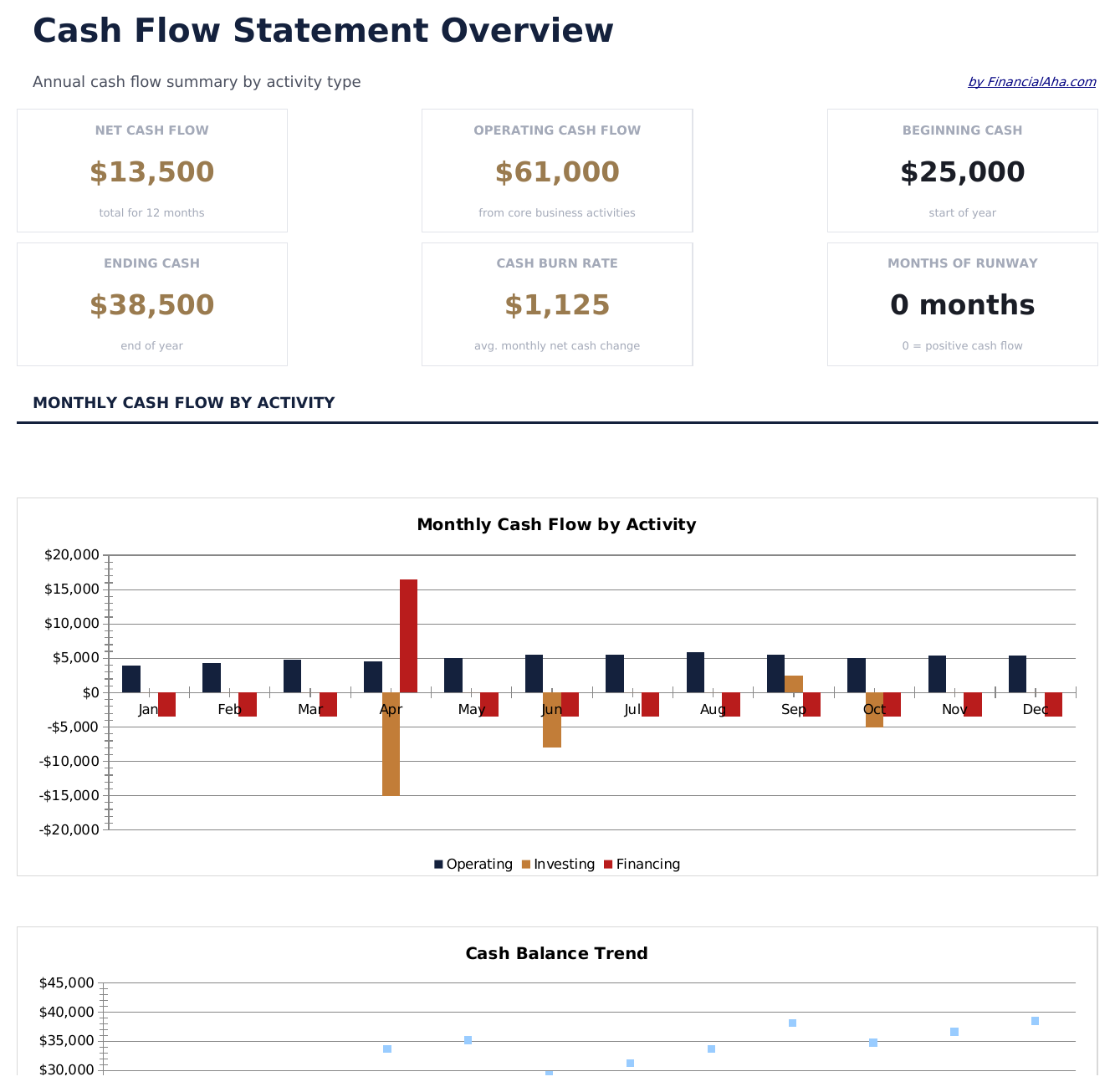
Source: FinancialAha
schedule for cash flow template pdf
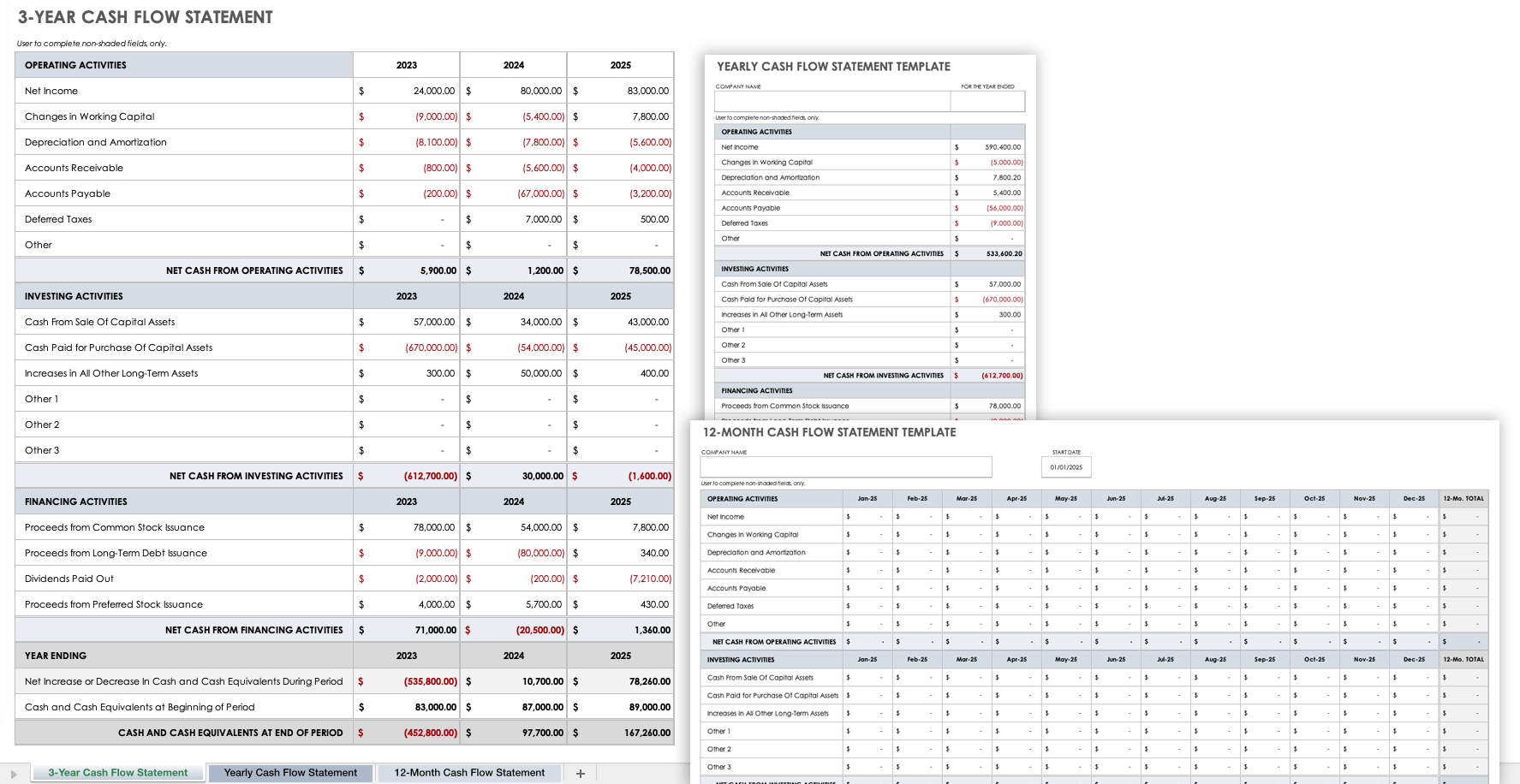
Source: Smartsheet
schedule for cash flow template quickbooks
Source: QuickBooks
cash flow schedule template
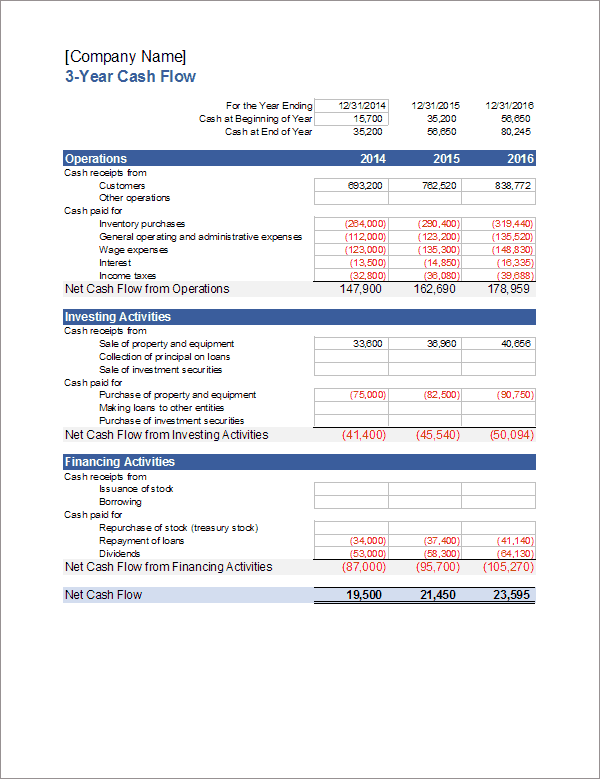
Source: Vertex42
Frequently Asked Questions
What should a cash flow schedule include?
At minimum, include the opening cash balance, expected or actual cash inflows, expected or actual cash outflows, net cash flow, and closing cash balance. A more detailed business schedule can separate operating, investing, and financing activities and include actual-versus-forecast comparisons.
How often should I update a cash flow schedule?
Update frequency should match the business’s liquidity needs. Monthly updates are practical for many businesses, while weekly or daily updates may be appropriate when payment timing is critical. A rolling forecast should be refreshed as actual results become available.
Is Excel better than Google Sheets for cash flow planning?
Neither is universally better. Excel can provide extensive modeling flexibility, while Google Sheets is useful when multiple people need shared access and collaboration. The quality of the underlying assumptions, formulas, controls, and review process matters more than the platform.
Can a free template be used for a business?
Yes, a free template can be a useful starting point, but it should be reviewed before use. Check its formulas, categories, reporting period, assumptions, licensing terms, and suitability for the business. A template should be customized rather than adopted blindly.
What is the difference between cash flow and profit?
Profit measures accounting income and expenses for a period, while cash flow focuses on movements in cash. Timing differences, credit sales, inventory purchases, depreciation, receivables, payables, financing, and capital expenditures can cause profit and cash movement to differ substantially.
Should accounts receivable be included in a cash flow schedule?
Yes, particularly when customers pay after the sale. The schedule should use expected collection timing so that receivables are translated into realistic future cash receipts rather than treating all invoiced revenue as immediately available cash.
Should loan proceeds appear in the cash forecast?
Yes, when the forecast is intended to show total cash movement. Loan proceeds are financing inflows, while principal repayments are financing outflows. Keeping financing separate from operating activity helps readers understand whether cash is being generated by the business itself or supplied by external funding.
What is the most important number in a cash flow schedule?
There is no single universal number. Net operating cash flow, ending cash, and the lowest projected cash balance each answer different questions. For short-term liquidity management, the minimum projected cash balance can be particularly important because it identifies the point of greatest cash pressure.
Conclusion
A schedule for cash flow template is most valuable when it turns financial information into a clear sequence of expected cash movements. The essential structure is straightforward: start with cash on hand, estimate or record inflows, identify outflows, calculate net movement, and carry the resulting balance into the next period.
The real improvement comes from accurate timing. Customer collections should be modeled when cash is expected, supplier payments should reflect payment dates, and irregular obligations such as taxes, equipment purchases, and debt repayments should be placed in the periods in which they are likely to affect liquidity.
For a reliable process, connect the schedule to accounting records, accounts receivable, accounts payable, and historical performance. Compare forecasts with actual results, investigate meaningful variances, and update assumptions instead of allowing the original forecast to remain unchanged.
Whether you build the workbook in Excel, maintain it collaboratively in Google Sheets, or use accounting software as the source of actual transactions, the objective remains the same: make future cash requirements visible early enough to support sound decisions.
A well-designed schedule for cash flow template does not guarantee that every forecast will be correct, but it creates a disciplined framework for seeing liquidity risks, planning commitments, evaluating scenarios, and responding before a cash problem becomes an emergency.
