The phrase construction health and Template points to a practical need: organizing construction health and safety information into a repeatable document structure. In real projects, a useful template is more than a blank page. It gives the project team a consistent way to identify hazards, assign responsibilities, record controls, prepare for emergencies, document training, and review whether safeguards are actually working.
For construction teams, the strongest document structure connects planning with field verification. OSHA construction guidance emphasizes management commitment, assigned responsibilities, hazard information, and mechanisms for correcting hazards. A template should therefore make those actions visible instead of becoming paperwork that sits separately from daily work.
The goal is not to create one universal form that fits every site. A high-quality construction template should be adapted to the project’s scope, location, trades, equipment, work sequence, environmental conditions, applicable law, client requirements, and contractor responsibilities. North Carolina’s 2026 example construction safety and health management program likewise states that its example should be modified to meet the needs of the organization.

What a Construction Health and Safety Template Should Accomplish
A construction health and safety template should establish a clear connection between hazards, controls, responsibilities, and evidence. The document normally begins with project identification, including the project name, location, scope, responsible organizations, key contacts, revision information, and approval status. These details prevent a safety document from becoming detached from the site it is intended to govern.
The next layer should describe how hazards are identified and controlled. OSHA’s construction safety and health program guidance addresses subjects such as management commitment, responsibility assignment, employee communication, and hazard information. A practical template can translate those principles into sections for hazard identification, risk evaluation, control measures, responsible persons, inspection frequency, and corrective actions.
A strong template also makes review visible. A document should show who prepared it, who reviewed it, when it was approved, when it must be revisited, and what changes require an update. This is particularly important when construction phases change. Excavation, structural work, roofing, electrical installation, finishing, and commissioning can introduce very different hazards, so the safety documentation should evolve with the work rather than remain static.
For readers comparing templates for construction projects, the most useful distinction is between a project-level plan and individual supporting records. The main plan explains the safety management approach, while supporting forms provide evidence that inspections, briefings, risk assessments, training, incident reviews, and corrective actions actually occurred.

Core Sections to Include in the Main Plan
Project information and document control
The opening section should identify the project and establish document control. Useful fields include project name, site address or location, client, principal contractor, major subcontractors, project manager, safety coordinator, document number, revision number, preparation date, review date, and approval information. These fields make it easier to determine whether the document being used in the field is the current version.
Document control should also explain how revisions are handled. A change in work sequence, equipment, site layout, contractor responsibilities, or hazard profile may require the relevant sections to be reviewed. Keeping a revision history can show what changed and why, while a distribution record can establish who received the updated version.
For a small project, document control may be simple. For a complex project, the same principle can be expanded into a formal register that connects the safety plan with risk assessments, permits, inspection records, training records, emergency procedures, and incident reports. The important point is consistency rather than unnecessary complexity.

Roles and responsibilities
A construction health and safety plan should clearly assign responsibilities instead of relying on vague statements such as “management is responsible for safety.” The document can identify the project manager, site supervisor, safety professional, competent persons, subcontractors, workers, visitors, and emergency contacts, then explain what each role is expected to do.
Responsibilities should include authority as well as duties. For example, the person assigned to inspect a work area needs an understood process for reporting hazards and initiating corrective action. Supervisors need enough authority to stop or modify unsafe work when required by the project’s procedures and applicable rules.
Employee participation is also important. OSHA’s recommended practices emphasize worker involvement as part of an effective safety and health program. A well-designed template therefore leaves room for worker observations, safety suggestions, toolbox discussions, hazard reports, and acknowledgement of important site instructions.

Hazard Identification and Risk Assessment
Hazard identification is one of the most important parts of a construction safety document because construction conditions can change quickly. A risk assessment section should allow the team to identify the task, hazard, people who may be exposed, possible consequences, existing controls, risk level, additional controls, responsible person, and review date.
A useful risk form should separate the hazard from the control. For example, “open excavation” describes a hazard, while barricading, access control, protective systems, inspection procedures, and utility verification describe controls. Keeping those ideas separate makes the assessment easier to review and prevents the form from becoming a list of generic precautions.
Risk ratings should use a clearly defined method. A project might use likelihood and severity categories, for example, but the chosen matrix should be explained in the document and applied consistently. The rating itself is not the control; it is a way to prioritize attention. The more important question is whether suitable controls have been selected and whether those controls are actually present at the work location.

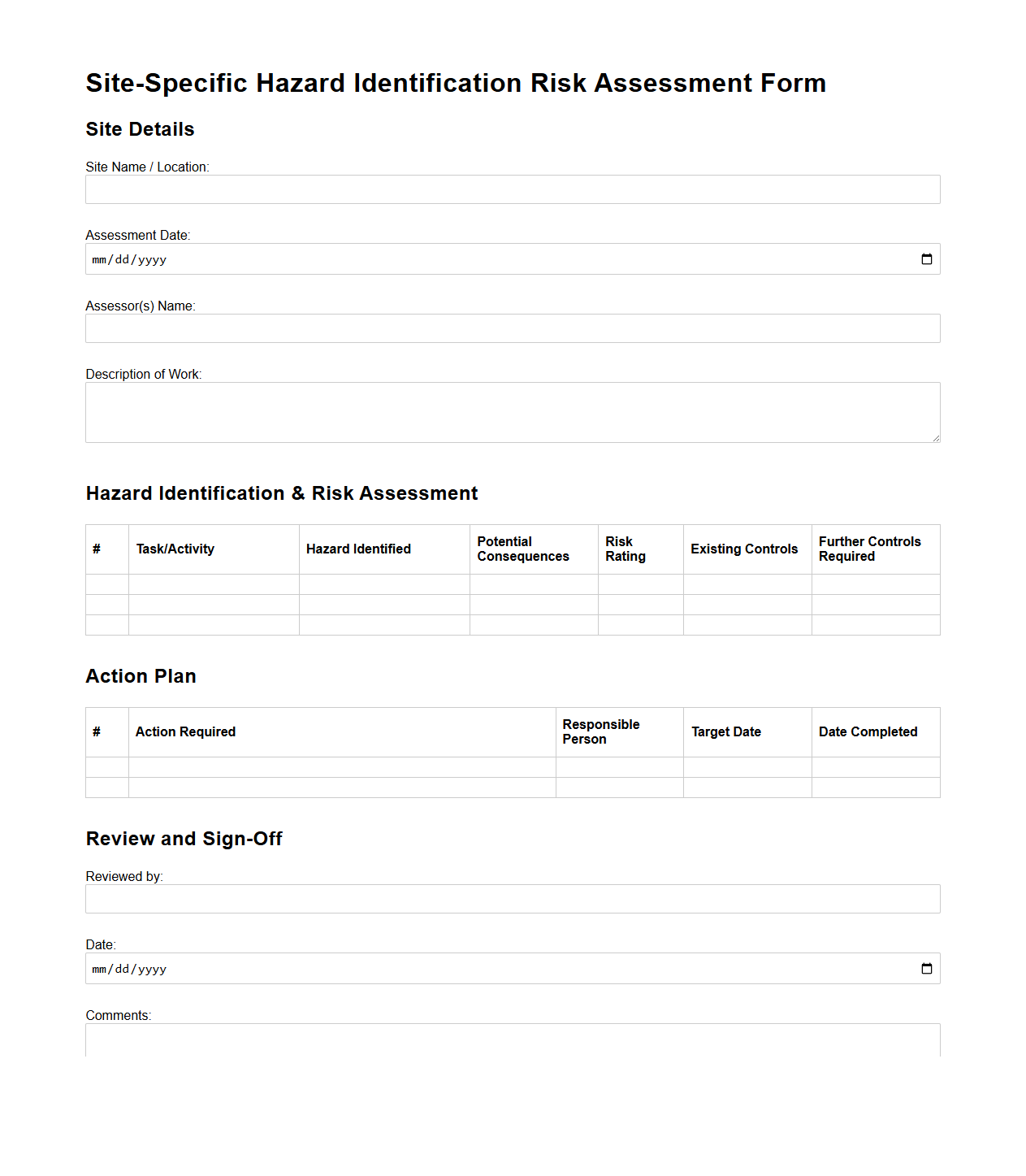
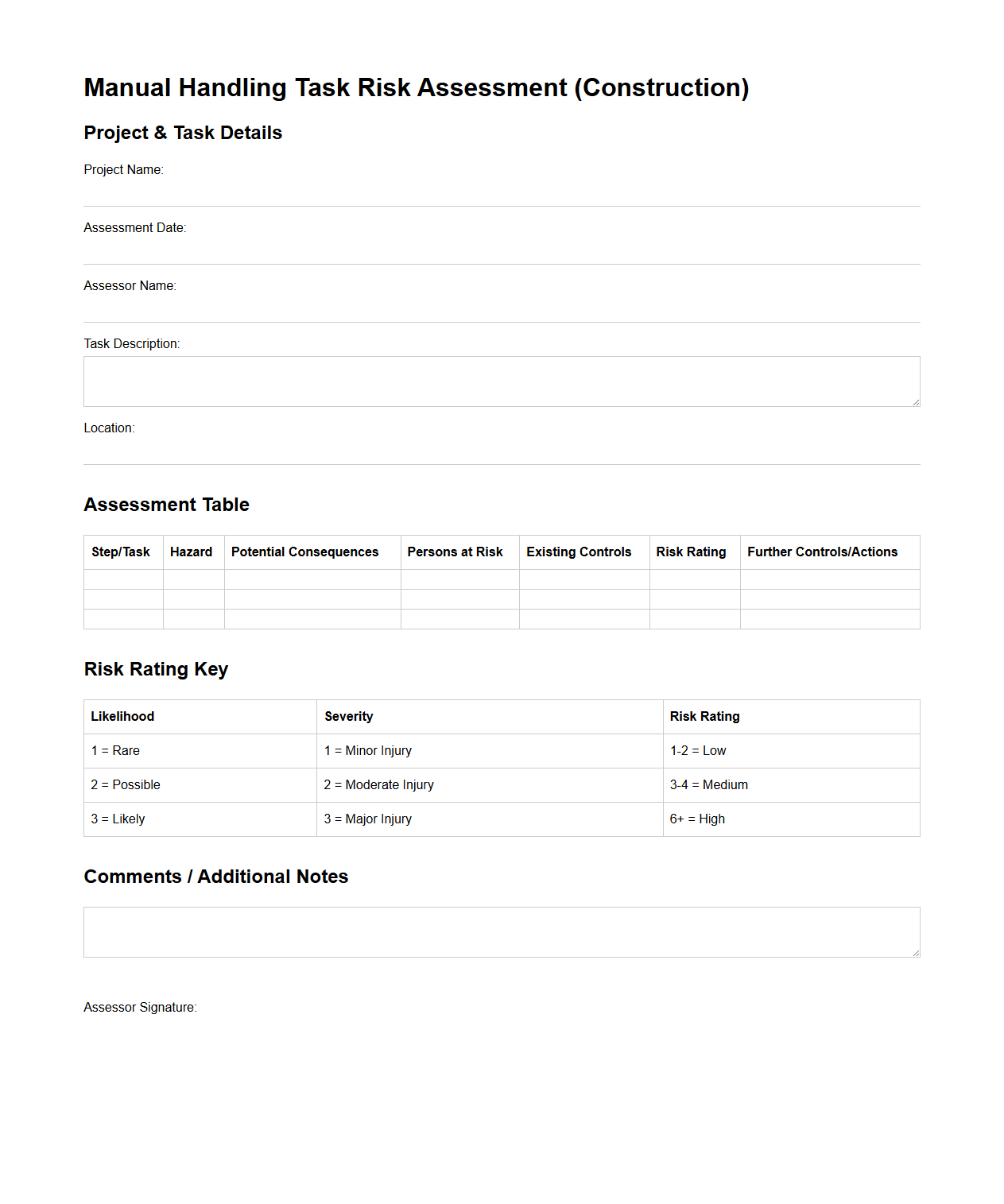
For a project with changing activities, task-specific assessments can sit underneath the main safety plan. This approach is especially useful when different crews perform excavation, lifting, scaffold work, electrical tasks, hot work, concrete placement, roofing, or demolition. Each assessment can reference the broader project requirements while addressing the hazards of the particular task.
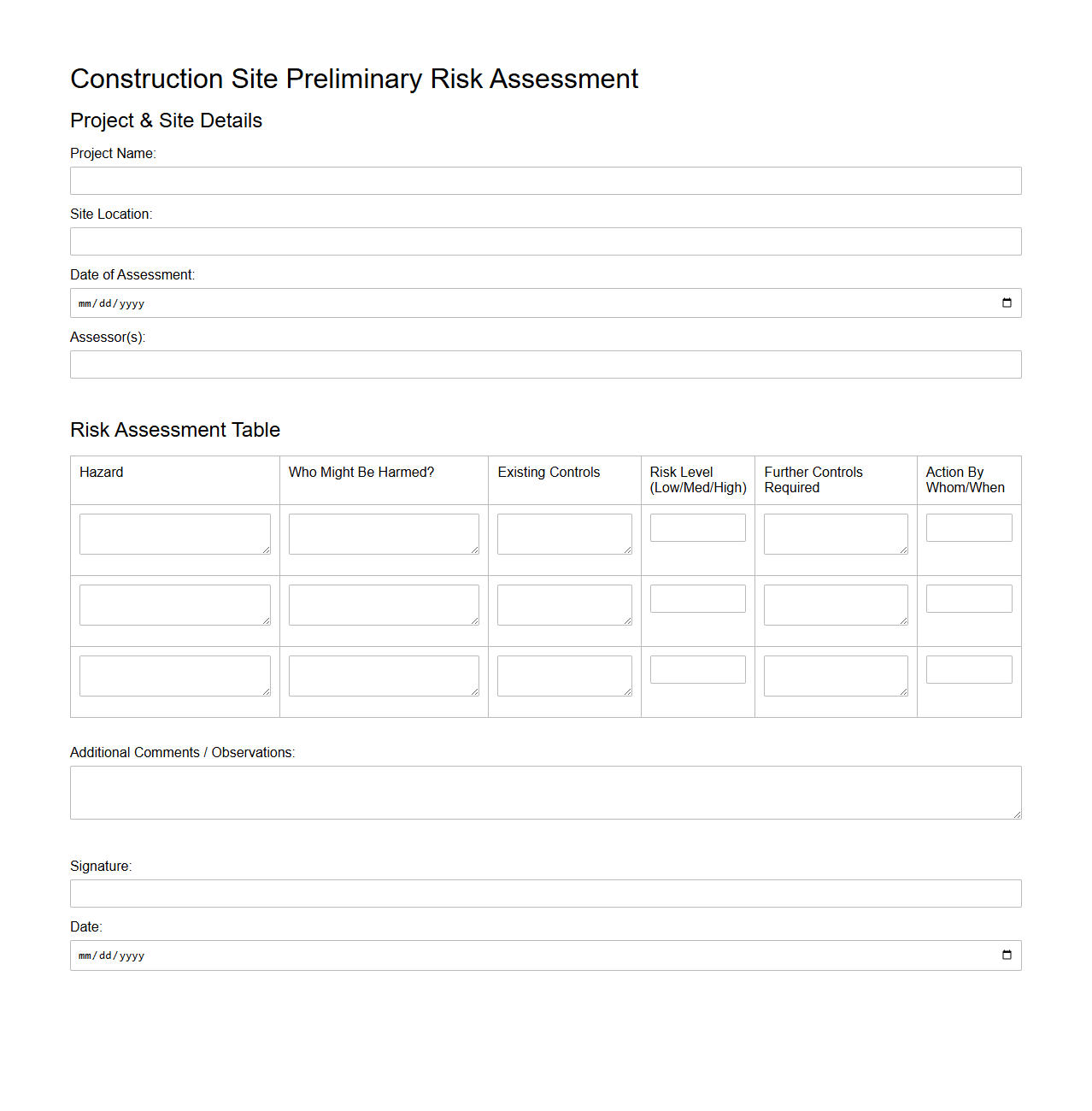
A construction safety and health plan becomes more useful when risk assessments are treated as living records. A major change in site conditions, weather, equipment, work sequence, or subcontractor activity can trigger a review. This makes the documentation more closely aligned with actual site conditions.
Task-Specific Controls and High-Risk Work
Some activities deserve their own sections because their hazards are highly specific. Working at height, excavation, scaffolding, electrical work, demolition, heavy equipment operations, hot work, and confined spaces may require detailed procedures beyond the general project plan.
A task safety analysis can divide the work into individual steps and then identify hazards and controls for each step. This makes the assessment easier to discuss during pre-task planning. It also helps supervisors compare the planned controls with the conditions actually present before work begins.
For example, a task analysis for material handling might consider the type of load, movement path, equipment, storage arrangement, potential struck-by hazards, manual handling demands, and communication requirements. The resulting controls should be specific enough that a supervisor can verify them rather than simply checking that a generic statement exists.

Working at height deserves particular attention because the documentation should connect hazard identification with prevention and protection measures. A dedicated assessment can cover the work location, task description, identified hazards, existing controls, further actions, emergency procedures, PPE requirements, and acknowledgement.
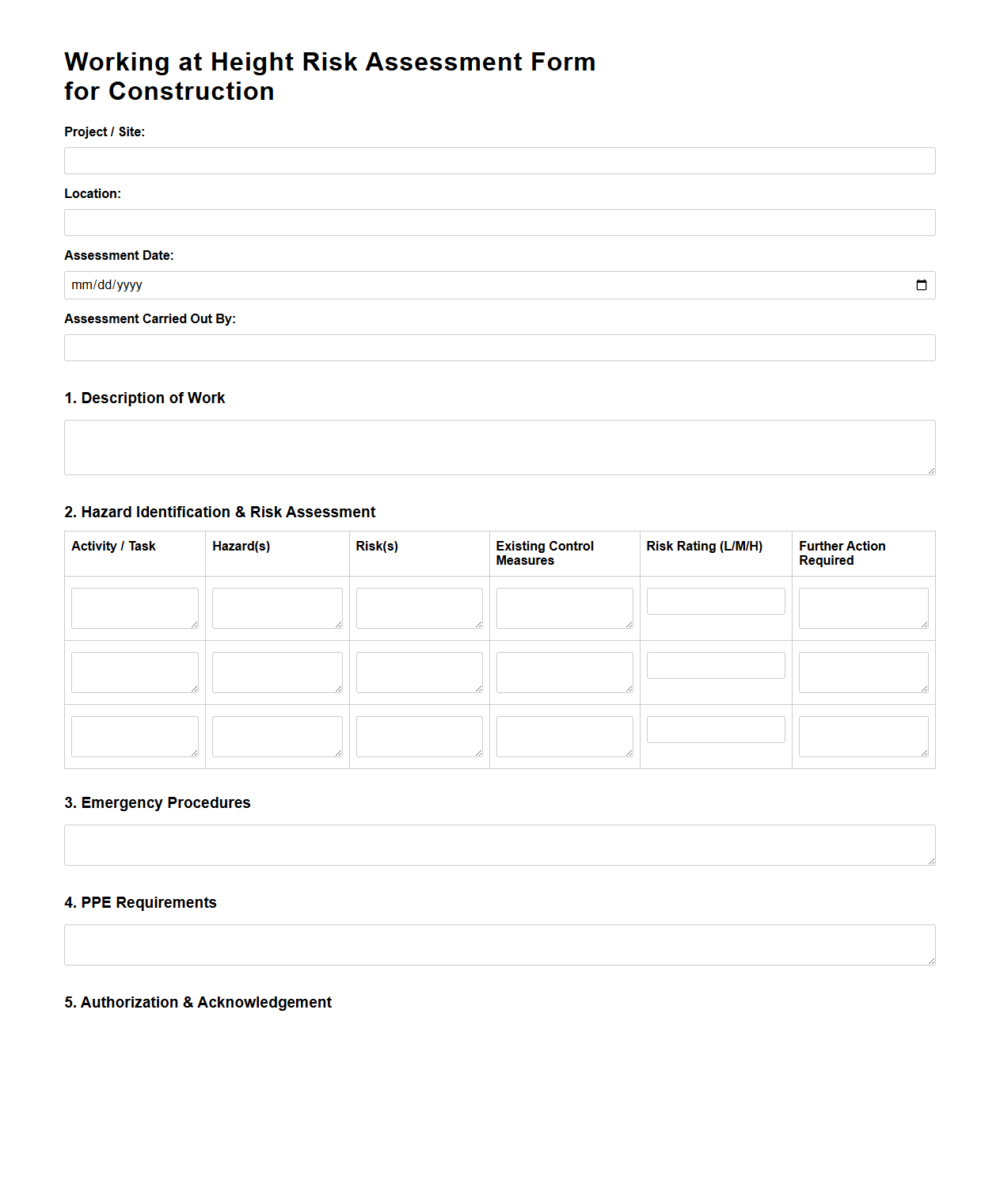
Scaffolding documentation can similarly focus on foundation and support, platforms, guardrails, access, bracing, visible damage, weather conditions, and corrective actions. A separate inspection record makes it easier to demonstrate that the scaffold was examined according to the project’s procedures.

Health Protection, PPE, and Worker Welfare
Construction health documentation should address more than immediate physical hazards. Occupational health considerations can include heat exposure, dust, silica, noise, hazardous substances, ergonomics, fatigue, sanitation, drinking water, welfare facilities, and other conditions associated with the project’s work activities.
PPE should be addressed according to the hazards it is intended to control. A useful document can identify required head, eye, face, hearing, hand, foot, respiratory, fall, and body protection, while also defining inspection, maintenance, storage, replacement, and training expectations. PPE is important, but it should not automatically replace higher-level controls where engineering or work-practice controls are reasonably available.
A PPE inspection record can make the safety system more practical. Instead of simply stating that protective equipment is required, the record can show what was inspected, when it was inspected, its condition, observations, and any corrective action. This turns a policy statement into verifiable site information.

A separate PPE policy can define responsibilities for management, supervisors, and workers. It can also describe training, inspection, maintenance, storage, and procedures for damaged equipment. The exact requirements should be adapted to the hazards and applicable rules for the project.

Heat Illness Planning for Construction
Heat exposure deserves dedicated treatment on projects involving outdoor work, hot indoor environments, roofs, paving, concrete, heavy physical activity, or protective clothing that increases heat load. NIOSH explains that occupational heat stress reflects the combined effect of metabolic heat, environmental heat, and clothing or PPE, and that heat exposure can contribute to heat-related illness and injuries.
A useful heat illness plan for construction should identify who oversees the program, how heat conditions are assessed, how workers are trained, how acclimatization is managed, where drinking water and suitable rest areas are located, how workers are monitored, and what emergency actions are required. NIOSH recommends engineering and administrative controls, heat monitoring, training, acclimatization, hydration, and appropriate protective measures.
OSHA also publishes a model heat-illness prevention plan that describes training, monitoring of environmental and workplace conditions, heat hazard assessment, acclimatization, water, shade, and rest as key parts of prevention planning. :contentReference[oaicite:6]{index=6} Requirements can differ by jurisdiction, so a project team should verify which rules apply before treating any example plan as a compliance document.
Searchers looking for construction health and template pdf resources should evaluate the substance of the document rather than its file format alone. A well-structured plan can be printed or maintained electronically, but its value comes from accurate hazard assessment, clear responsibilities, current controls, and evidence that the plan is implemented.
Emergency Response and Incident Documentation
An emergency section should explain how the project will respond to foreseeable emergencies. Depending on the site, this can include medical events, fire, hazardous substance releases, severe weather, structural instability, utility strikes, equipment incidents, evacuation, and other credible scenarios.
The emergency procedure should identify contact information, alarm or notification methods, evacuation routes, assembly areas, first-aid arrangements, emergency equipment, responsibilities, and communication procedures. The plan should be coordinated with the actual site layout so that the written instructions do not conflict with physical access routes or changing construction conditions.
Incident documentation is another important part of the system. A report should capture the date, time, location, event description, people involved, witnesses where relevant, immediate actions, medical response where applicable, notifications, contributing factors, corrective actions, and review information. The purpose is not merely recordkeeping; the information can be used to identify recurring hazards and improve controls.

A separate incident report can be useful when the event requires more detailed investigation. It should distinguish observed facts from assumptions and should focus on what happened, what conditions existed, what controls were expected, what controls were present, and what changes may reduce recurrence.

Emergency planning should also be tested. A document that has never been discussed or exercised may not reflect practical difficulties such as blocked access, unclear assembly locations, outdated contacts, or communication gaps. Review records can capture lessons from drills, inspections, and actual events.

Training, Toolbox Talks, and Daily Communication
Safety information needs a communication process. A project plan can identify required induction topics, refresher training, task-specific briefings, toolbox talks, competency checks, and records of attendance. The documentation should make it clear which topics apply to which workers and when additional instruction is required.
Toolbox talks are especially useful for short, task-focused communication. A record can include the date, location, supervisor, topic, hazards discussed, controls reviewed, attendee acknowledgement, and follow-up items. The record should support the discussion rather than become a substitute for meaningful communication.
For example, a ladder safety discussion can cover inspection, selection, setup, stable footing, safe climbing, and defect reporting. A scaffold discussion can address inspection, access, guardrails, platform condition, load limitations, and reporting concerns. These examples demonstrate how a broad safety plan can be supported by focused records.

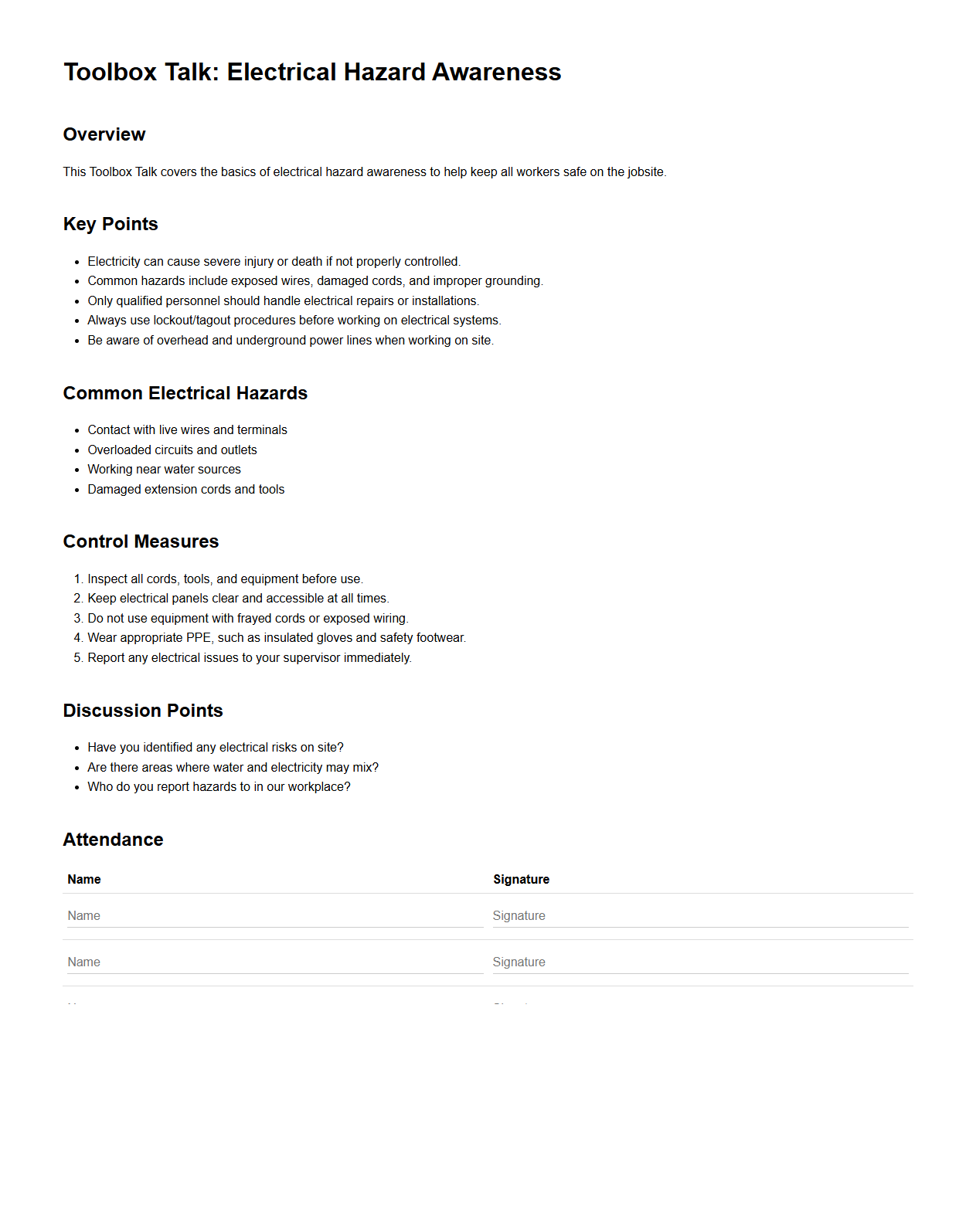
Electrical hazards deserve their own communication when electrical work or temporary power is present. A toolbox document can address damaged cords, grounding, electrical panels, isolation procedures, qualified personnel, and reporting of defects. The exact technical requirements should be aligned with applicable electrical standards and project procedures.
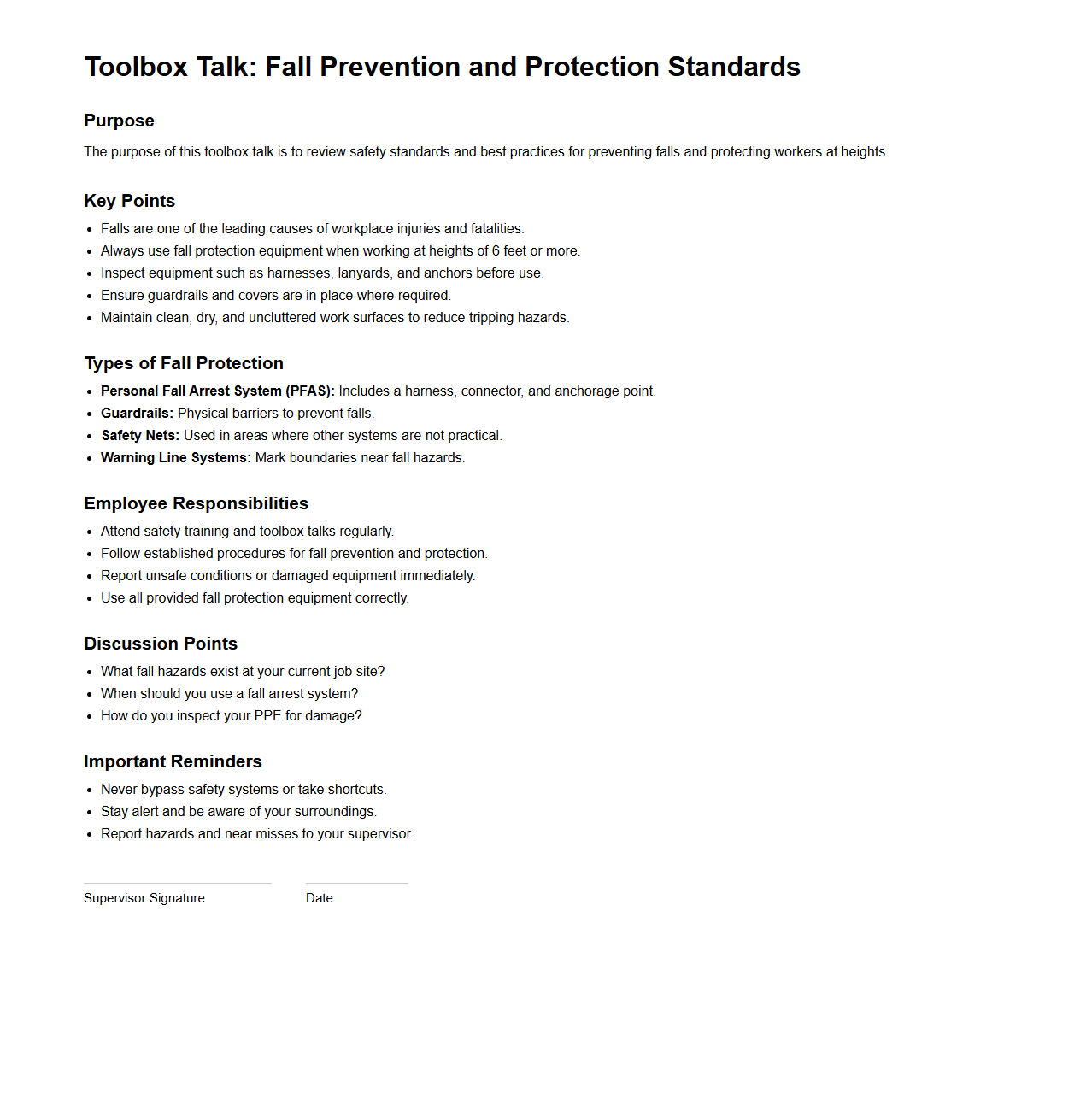
Fall prevention communication should likewise connect the project’s written requirements with the work actually being performed. Topics can include openings, edges, guardrails, fall arrest equipment, anchor points, inspection, and housekeeping. A short briefing record can document that the topic was addressed before relevant work began.
Inspection, Corrective Action, and Continuous Review
Inspection forms should not merely ask whether a site is safe. They should provide enough structure to identify the condition, record evidence, assign a corrective action, establish an owner, and set a completion date. This creates a clear path from observation to resolution.
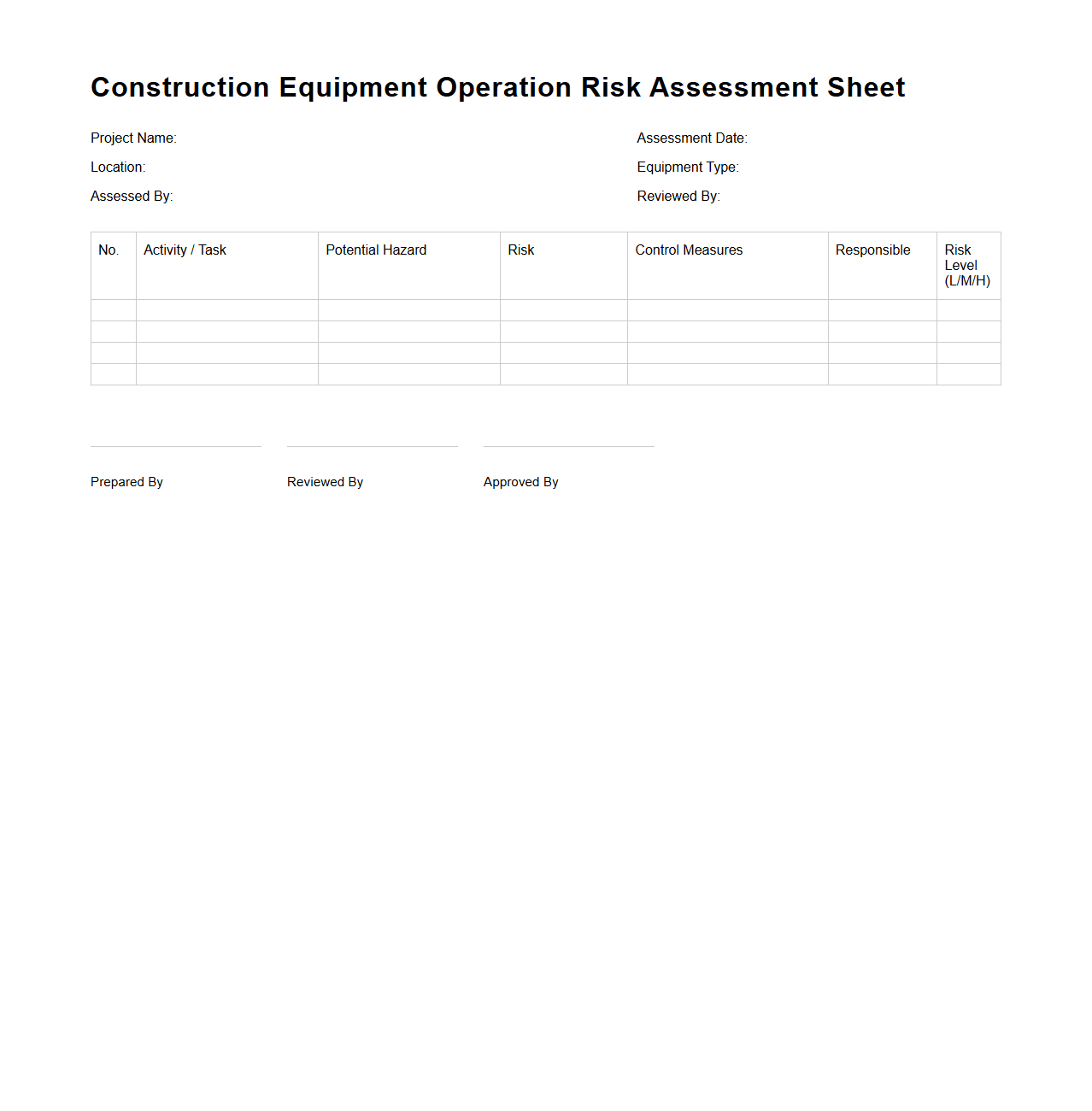
Equipment records are particularly useful because machinery and tools may change condition during a project. An inspection log can identify the equipment, inspection date, person conducting the check, result, observations, and sign-off. If a defect is identified, the project procedure should explain how the equipment is controlled until the issue is resolved.
Corrective action should be tracked to closure. A useful system distinguishes between an observation, the required correction, the responsible person, the target date, and verification that the correction was completed. This prevents safety documentation from becoming a collection of unresolved comments.
Electrical safety can also benefit from a dedicated review form. Such a record may cover system information, inspection checkpoints, isolation procedures, grounding, wiring protection, signage, PPE, hazard identification, controls, and reviewer recommendations.

Fall protection equipment should be inspected as part of the broader safety management process. The record can identify anchor points, harnesses, lanyards, connectors, labels, observations, corrective actions, and the inspector’s sign-off. The form should be adapted to the equipment and standards applicable to the project.

Reports, Safety Files, and Record Organization
Readers searching for a construction health and template report generally need a structure that can summarize what happened during a project period. A useful report can organize inspections completed, significant hazards identified, corrective actions, incidents and near misses, training activity, outstanding risks, and management observations.
A health and safety file should bring related records together logically. Depending on jurisdiction and project requirements, it may contain the principal safety plan, risk assessments, permits, inspection records, training evidence, emergency information, incident records, equipment checks, and other project-specific documents. It should be organized so an authorized reviewer can quickly locate evidence without searching through unrelated material.
For those comparing a construction health and safety file template, the important question is whether the structure reflects the project’s information needs. A file index can provide sections for project information, responsibilities, risk assessments, induction records, PPE, inspections, incidents, emergency arrangements, and supporting procedures. The exact contents should be checked against the applicable jurisdiction, contract, client requirements, and project scope.

A construction safety and health program sample can be useful as a starting point for understanding document architecture, but examples should not automatically be treated as legally sufficient for a particular project. OSHA specifically notes that sample safety and health programs are intended as guidance and should be customized to the workplace and applicable standards.
How to Choose the Right Template Structure
When comparing a construction health and safety plan template, start with the project’s complexity rather than the appearance of the document. A small renovation may require a concise plan supported by task assessments and inspection records, while a large multi-contractor project may require extensive document control, coordination procedures, detailed emergency planning, and numerous specialist assessments.
Next, check whether the template allows project-specific hazards to be identified. Generic language such as “follow safety rules” is less useful than a structured field asking what the hazard is, who may be exposed, what controls are required, who owns the action, and when the control must be verified.
Finally, check whether the structure supports review. A document that cannot easily show revision history, approval, inspection status, corrective actions, and outstanding items may create unnecessary administrative work. Good templates reduce ambiguity by making important information easy to find.

Practical Solution
The most practical approach is to build a layered construction health and safety document system. Begin with one main project plan containing project information, responsibilities, hazard-management principles, emergency arrangements, training expectations, inspection requirements, and document control. Then add supporting records for specific activities rather than making the main document excessively long.
Second, create a hazard register that is connected to the project’s work sequence. Before each major phase, review the hazards and confirm that the relevant controls, competent personnel, equipment, permits, and emergency arrangements are ready. When site conditions change, update the affected assessment rather than relying on an old generic record.
Third, establish a simple corrective-action workflow. Every significant inspection finding should have a description, responsible person, target date, status, and verification. This creates a practical feedback loop between the written plan and the physical site. It also makes management review much more useful because unresolved issues can be identified quickly.
Fourth, maintain a training and communication record. Use induction records for site-wide requirements and toolbox records for task-specific topics. The record should demonstrate what was discussed and who participated, while supervisors should continue to verify that the relevant controls are being followed in the field.
Fifth, schedule formal reviews. OSHA’s safety program principles emphasize ongoing hazard identification and prevention rather than treating safety as a one-time planning activity. A review can be triggered by a new construction phase, major incident, significant change in conditions, new equipment, new subcontractor, regulatory change, or recurring corrective-action issue.
For teams searching for construction health and template free download resources or construction health and template free examples, the safest approach is to inspect the source, determine whether the document is current, and verify whether its content fits the project’s jurisdiction and scope. A visually polished document is not necessarily an adequate safety program.
Similarly, a search for health and safety plan for construction pdf should focus on the document’s contents rather than its format. A useful plan should identify hazards, define controls, assign responsibilities, establish emergency procedures, explain training, and provide a mechanism for inspection and review. The PDF format itself does not make a plan suitable for a particular project.
When a team needs a construction safety and health program pdf, the same evaluation principle applies. The document should be treated as a framework that must be reviewed against current regulations, project specifications, client requirements, and actual site conditions. Official guidance and qualified safety professionals should take precedence when a legal or technical question arises.
Common Mistakes to Avoid
One common mistake is using a generic document without adapting it to the actual site. A plan that refers to hazards, equipment, emergency routes, or responsibilities that do not exist on the project can create confusion. Customization should remove irrelevant sections and strengthen the sections that matter for the actual work.
Another mistake is treating the document as complete once it has been signed. Construction conditions change continuously, so the plan should be reviewed as work progresses. Inspections, observations, incidents, changes in scope, and worker feedback can all reveal information that should influence the safety documentation.
A third mistake is separating safety records from corrective action. A checklist that identifies a serious issue but does not assign an owner or follow-up date does not create a complete management loop. Every important finding should move through identification, control, assignment, completion, and verification.
A fourth mistake is confusing a sample with an official requirement. OSHA’s sample-program guidance explains that sample programs are examples and should not be treated as substitutes for applicable standards. The same caution applies to templates from commercial publishers, professional websites, educational repositories, or other sources.
Reference Examples
The visual references below show how construction health and Template material can be organized into practical forms, reports, plans, checklists, and safety files. The strongest examples use recognizable document sections such as project identification, hazard assessment, responsibilities, controls, inspection criteria, emergency procedures, corrective actions, and sign-off. These structures help readers see how a broad construction health and safety system can be divided into smaller records without losing the connection between planning and field verification. A useful reference should therefore be judged by the clarity of its structure and the relevance of its fields to the intended construction activity.
These examples also illustrate why construction health and Template work is not limited to one document type. A project may use a central plan together with risk assessments, equipment records, emergency communication documents, incident records, heat-stress planning material, PPE inspections, and periodic reports. The following visuals are reference points rather than universal regulatory forms. They can help readers compare layouts and identify useful sections, while project teams should still verify current legal, contractual, and site-specific requirements before relying on any document for compliance.
GA27 Health and Safety File Template

Source: Construction Industry Training Board
Emergency Response Planning Checklist

Source: Scribd

Construction Project Daily Safety Report Template
Source: Template.net

Communication Plan for Construction Site Emergency Response
Source: Letterin
Construction Incident Report Form

Source: Scribd

Contractor Pre-Task Risk Assessment Form
Source: documentof.com
North Field Expansion Heat Stress Mitigation Plan

Source: Scribd
Equipment Safety Verification Log
Source: documentof.com
Electrical System Safety Review Form for Construction
Source: documentof.com
Fall Protection System Inspection Report
Source: documentof.com
