Creating a clear and professional medical presentation can be challenging, especially when the subject involves medicines, treatment, safety, and patient care. An effective and medicines medical presentation should organize complex information into a format that is easy to understand, visually appealing, and suitable for students, healthcare professionals, educators, and general audiences.
A well-designed medical presentation template can make this process much easier. Instead of starting with a blank slide, you can use a structured layout to present medicine-related information logically. From medicine types and benefits to safe-use guidelines and precautions, the right template helps readers follow the topic without becoming overwhelmed by too much information.
Whether you are preparing a classroom assignment, healthcare presentation, educational project, or medical awareness presentation, a clean template provides a practical foundation for communicating important information effectively.
What Is an And Medicines Medical Presentation?
An and medicines medical presentation is a presentation format designed to communicate information about medicines and their role in healthcare. It can cover subjects such as medication categories, common uses, benefits, precautions, dosage guidance, side effects, and responsible medicine use.
Medical subjects often contain technical terminology and detailed information. A presentation template helps organize that information into clear sections so that the audience can identify the most important points quickly.
A professional medicine presentation may include:
- Introduction to medicines and their purpose
- Different forms and types of medicines
- Common medical uses and benefits
- Safe medicine-use practices
- Potential precautions and risks
- General storage and handling guidance
- Key takeaways for the audience
Why Use a Medical Presentation Template?
Design is especially important when presenting healthcare information. A crowded slide can make even accurate information difficult to understand. A structured medical presentation template provides visual organization while allowing the presenter to focus on the content.
Improves Information Organization
A template gives each topic a logical place. Instead of placing all information on one slide, you can divide the subject into sections such as overview, medicine types, benefits, precautions, and safe-use recommendations.
Makes Complex Topics Easier to Understand
Medical information can contain unfamiliar terms and concepts. Headings, icons, short paragraphs, and bullet points can make the information easier to scan and remember.
Creates a Professional Appearance
A consistent color palette, typography, spacing, and visual hierarchy can make a presentation look more polished. This is useful for school projects, healthcare education, seminars, workshops, and professional presentations.
And Medicines Medical Presentation Template
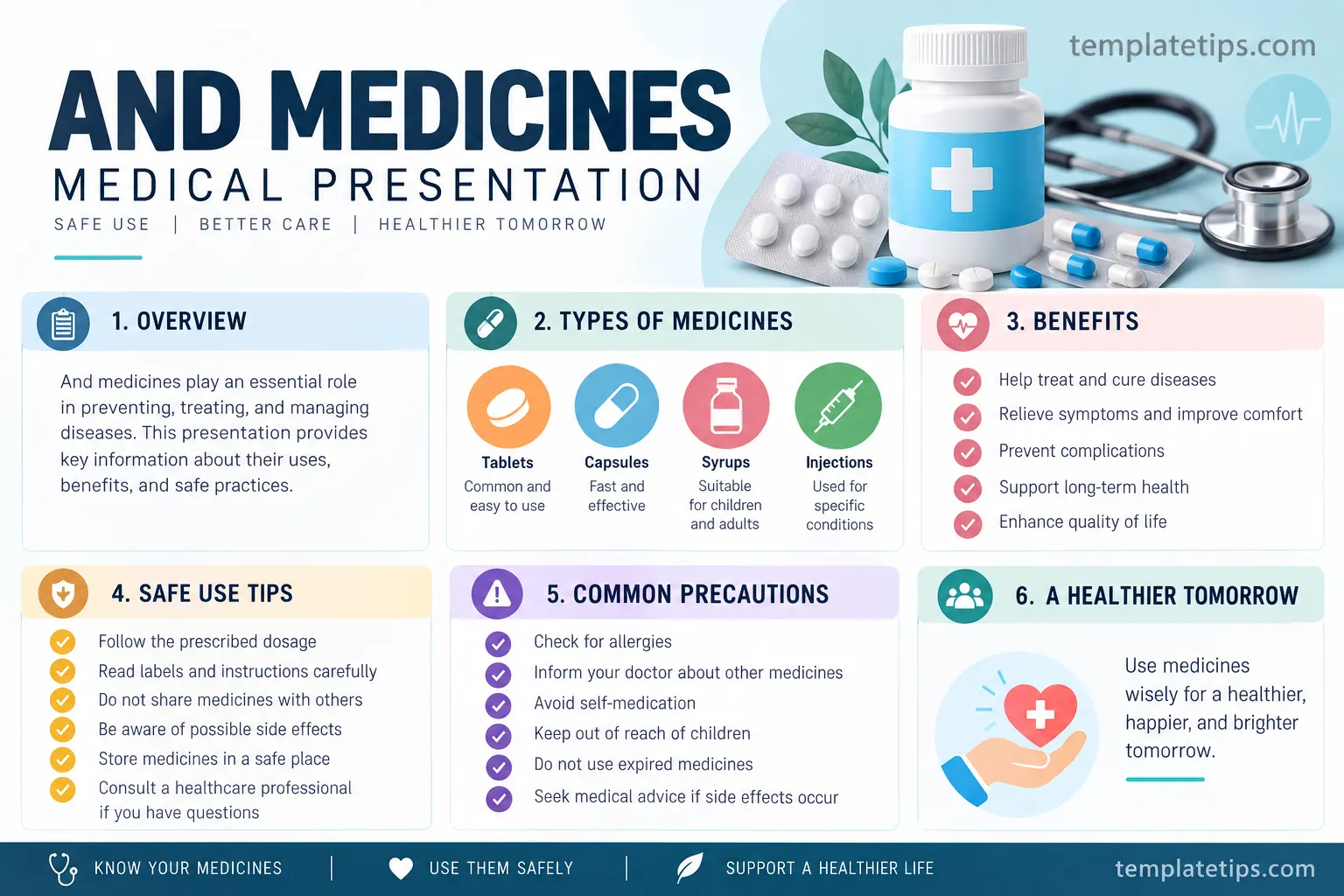
The template created for this article uses a clean, printable medical design with organized information panels. Its visual structure is suitable for presentations about medicines, healthcare education, pharmaceutical topics, and medication safety.
It combines medical-themed illustrations with clearly separated content areas. The design uses visual cues such as medicine bottles, tablets, capsules, a stethoscope, healthcare symbols, checklists, and simple section icons to reinforce the subject without making the layout unnecessarily complicated.
Key Sections to Include in a Medicines Presentation
A useful medicine presentation should present information in a logical sequence. The following sections can provide a strong structure for a healthcare-focused presentation.
1. Overview of Medicines
Begin with a simple explanation of what medicines are and why they are used. Medicines can be used to prevent, manage, diagnose, or treat certain health conditions, depending on the specific medicine and its intended purpose.
Keep the introduction concise. The goal is to give the audience enough context to understand the rest of the presentation.
2. Types and Forms of Medicines
Medicines are available in different forms and formulations. Examples can include tablets, capsules, liquids, creams, inhaled medicines, and injections. The appropriate form depends on the medicine, the condition being treated, and the instructions provided by a healthcare professional.
A visual presentation can make these differences easier to understand. Using simple icons alongside short descriptions can communicate the information more effectively than long blocks of text.
3. Benefits and Uses
The next section can explain the intended purpose of the medicines being discussed. Depending on the topic, this may include treatment of specific conditions, symptom management, prevention of complications, or support for long-term disease management.
Always keep claims specific to the medicine being discussed. Medicines can have different indications, limitations, and safety considerations, so general statements should not be treated as individualized medical advice.
Safe Medicine Use Tips
Medicine safety should be an important part of any educational presentation about medication. The exact instructions for taking a medicine depend on the individual medicine and the person’s circumstances, so official product information and advice from qualified healthcare professionals should take priority.
General safety principles that can be presented include:
- Follow the directions provided by a doctor, pharmacist, or medicine label.
- Read the instructions carefully before using a medicine.
- Use the prescribed or recommended amount rather than changing the dose yourself.
- Tell healthcare professionals about other medicines, supplements, or allergies when relevant.
- Do not share prescription medicines with other people.
- Store medicines according to their specific storage instructions.
- Keep medicines away from young children and other people who should not access them.
- Ask a qualified healthcare professional if you are unsure about how a medicine should be used.
Common Precautions to Discuss
A strong and medicines medical presentation should also explain that medicines can have precautions and potential adverse effects. The information varies considerably from one medicine to another.
Allergies and Sensitivities
Some people may have allergies or sensitivities to particular medicines or ingredients. Patients should tell their healthcare professional about known allergies before starting a new medicine.
Medicine Interactions
Some medicines can interact with other medicines, foods, beverages, or supplements. For this reason, it is useful to provide healthcare professionals with a complete and accurate list of medicines being taken.
Possible Side Effects
Different medicines can produce different side effects. A presentation should avoid implying that every person will experience the same reaction. Instead, explain that users should read the relevant medicine information and seek professional advice when they have concerns about unexpected or serious symptoms.
Storage and Expiration
Medicine storage requirements vary. Some products may need protection from heat, light, or moisture, while others may have specific temperature requirements. The original packaging and product instructions should be followed whenever possible.
How to Make a Medical Presentation More Engaging
Good medical presentation design is not only about decoration. Every visual element should help the audience understand the information.
Use Short, Focused Text
Avoid filling slides with long paragraphs. Use concise sentences, bullet points, and descriptive headings to make important information easier to scan.
Use Consistent Visual Elements
Choose a consistent typography system, spacing pattern, and color palette. Medical presentations often benefit from clean layouts and restrained visual elements because the information itself should remain the primary focus.
Highlight Important Information
Use emphasis selectively for safety warnings, key definitions, important instructions, and major takeaways. Too much emphasis can make every point appear equally important.
Keep Medical Information Accurate
Visual design should never replace reliable medical information. When creating educational content about medicines, use trustworthy sources such as official medicine labeling, healthcare organizations, pharmacists, doctors, and other qualified medical professionals.
Who Can Use an And Medicines Medical Presentation Template?
This type of template can be adapted for several educational and professional purposes. Students can use it for healthcare assignments, while educators can use it to introduce basic medicine-related concepts.
Other possible uses include:
- Medical and healthcare education
- Pharmacy presentations
- Classroom assignments
- Health awareness projects
- Healthcare training sessions
- Medicine safety education
- Pharmaceutical topic presentations
- General medical information sessions
Tips for Creating a Professional Medicine Presentation
Before presenting, review the entire slide deck from the perspective of someone who is unfamiliar with the subject. Each slide should have a clear purpose and connect naturally to the next section.
- Start with a clear introduction and objective.
- Use descriptive headings for every major topic.
- Break complicated information into smaller sections.
- Use diagrams or icons where they improve understanding.
- Keep terminology appropriate for your target audience.
- Check spelling, grammar, and medical terminology.
- Verify medicine-related claims against reliable sources.
- End with a concise summary of the main points.
Conclusion
An and medicines medical presentation can turn complex healthcare information into a structured and accessible learning experience. A clean medical presentation template provides a practical starting point for explaining medicine types, uses, benefits, precautions, and safe-use principles.
The most effective presentations combine accurate information with thoughtful visual organization. By using concise text, meaningful headings, consistent design, and appropriate medical visuals, you can create a presentation that is easier to understand and more professional in appearance.
Whether you are preparing a classroom project, healthcare presentation, educational seminar, or medicine awareness resource, a structured template can save time while helping you communicate important information clearly and responsibly.
