A security service infographic can make complex information about safety, protection, and risk management easier to understand at a glance. Whether you are preparing workplace materials, creating an employee training guide, explaining security responsibilities, or designing educational content, a well-organized infographic can communicate essential security information without overwhelming the reader.
Professional security services involve much more than simply watching an entrance or monitoring a property. Security personnel may be responsible for access control, patrols, incident response, emergency communication, reporting, and helping maintain a safe environment. A clear visual guide can bring these responsibilities together while showing why professional security support matters to businesses, organizations, employees, visitors, and property owners.
This guide explains the main elements commonly included in a security service infographic, along with practical information about security responsibilities, benefits, best practices, and important skills.
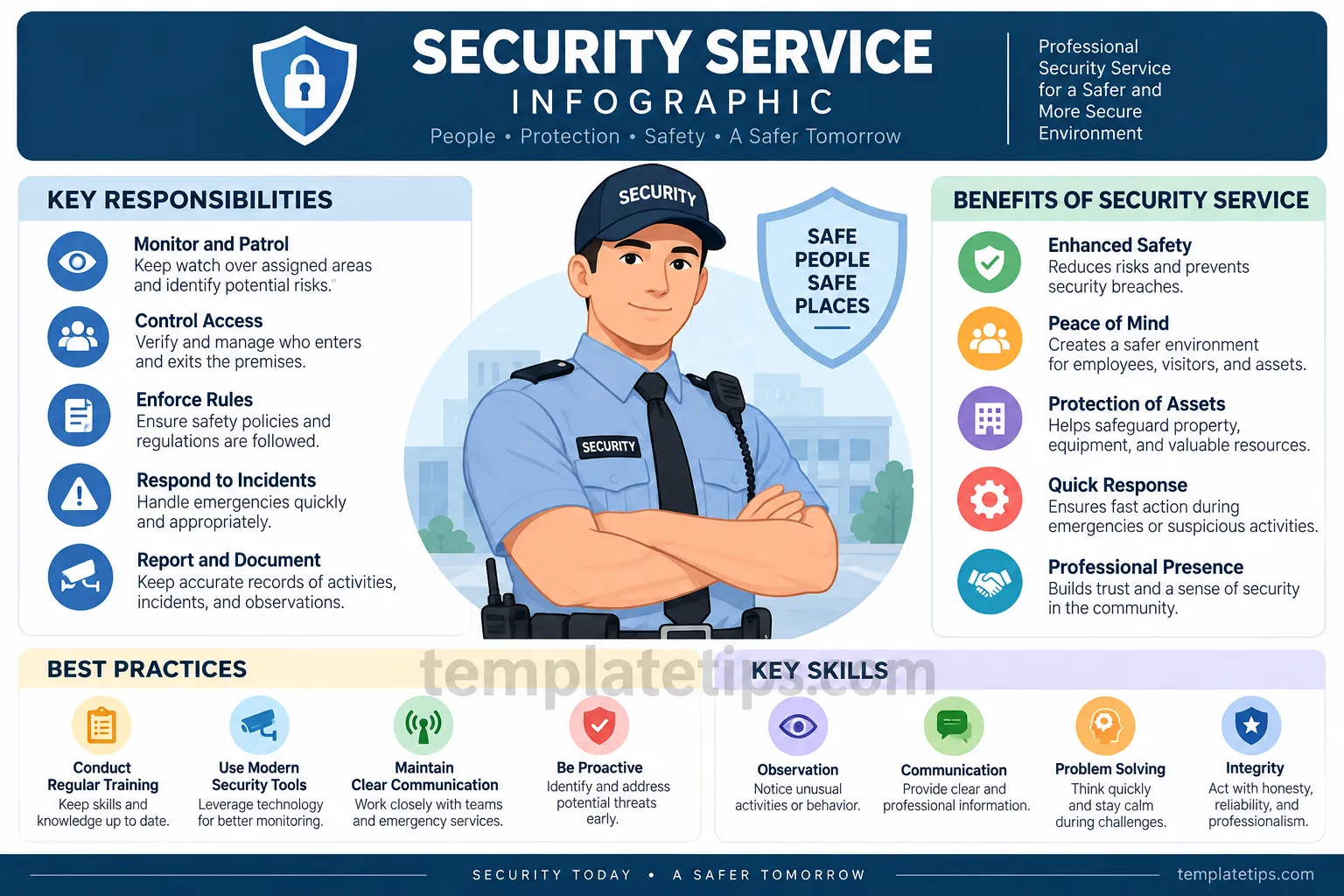
What Is a Security Service Infographic?
A security service infographic is a visual document designed to present important security-related information in a simple and organized format. Instead of explaining every responsibility in long paragraphs, an infographic can use headings, icons, short descriptions, and visual sections to help readers quickly identify the information they need.
Security infographic templates are particularly useful when information needs to be understood quickly. For example, a business may use one to introduce security procedures to new employees, while a property manager may use one to explain access control and visitor safety procedures.
A useful infographic should be clear, accurate, easy to scan, and visually balanced. It should also avoid unnecessary technical language when the intended audience includes people without a security background.
Key Responsibilities of Security Services
Although security duties vary depending on the location and organization, several responsibilities are common across professional security services.
Monitor and Patrol
Monitoring and patrols help security personnel maintain awareness of what is happening around an assigned property or facility. Regular observation can help identify unusual activity, safety hazards, unauthorized access, or other potential risks.
Patrol procedures should be based on the needs of the location. Some facilities may require scheduled patrols, while others may rely more heavily on access monitoring, surveillance systems, or a combination of security measures.
Control Access
Access control is another important part of security operations. Security personnel may verify identification, manage visitor entry, monitor restricted areas, and ensure that only authorized individuals enter certain locations.
Effective access control can help organizations protect people, equipment, confidential areas, and other valuable resources. Clear procedures also make it easier for employees and visitors to understand where they are permitted to go.
Enforce Safety Rules
Security personnel can help reinforce established safety policies and site regulations. This may include checking restricted areas, supporting workplace safety procedures, and reminding people about rules designed to reduce risks.
Rules should always be communicated professionally and consistently. A security service infographic can help summarize important policies so that employees and visitors can understand them quickly.
Respond to Incidents
Security teams may be among the first people to respond when an incident occurs. Their role can include assessing the situation, communicating with supervisors or emergency services, protecting people from additional risks, and following established response procedures.
Emergency response responsibilities should be clearly defined before an incident happens. Organizations should also make sure personnel receive appropriate training for the situations they may encounter.
Report and Document
Accurate documentation is an important part of professional security work. Security reports can record incidents, unusual observations, visitor activity, property concerns, and other relevant events.
Good documentation should be factual, clear, timely, and easy for authorized personnel to review. Consistent reporting can also help organizations identify recurring problems and improve their security procedures.
Benefits of Professional Security Services
A professional security service can support an organization’s broader safety strategy. The exact benefits depend on the location, risk level, staffing, and security procedures involved, but several advantages are commonly associated with organized security operations.
Enhanced Safety
Visible and properly managed security measures can help reduce certain risks and support a safer environment. Security personnel can monitor activity, identify concerns, and respond according to established procedures.
Peace of Mind
Employees, visitors, customers, and property owners may feel more comfortable when appropriate security measures are in place. Clear procedures can also reduce uncertainty about what to do when an unusual situation occurs.
Protection of Assets
Businesses often need to protect buildings, equipment, inventory, documents, technology, and other valuable resources. Security services can support these efforts through access control, monitoring, patrols, and incident reporting.
Quick Response
When an incident occurs, having designated security personnel can help ensure that established response procedures are activated quickly. Security staff can communicate important information and coordinate with appropriate personnel when necessary.
Professional Presence
A trained security presence can communicate that safety and access procedures are taken seriously. Professional conduct is especially important in offices, commercial properties, educational facilities, residential communities, and public-facing environments.
Best Practices for Effective Security Services
Good security depends on more than simply having personnel present. Organizations should combine trained staff, clear procedures, appropriate technology, communication, and regular review.
- Conduct regular training: Keep security personnel familiar with procedures, communication protocols, reporting requirements, and relevant safety practices.
- Use modern security tools: Where appropriate, combine trained personnel with surveillance, access control, communication systems, alarms, and other security technologies.
- Maintain clear communication: Make sure security teams know how to communicate with employees, supervisors, emergency responders, and other relevant parties.
- Be proactive: Identify potential risks before they become incidents and address recurring security concerns through appropriate procedures.
- Review procedures regularly: Security requirements can change as buildings, staffing, technology, and operational needs change.
Essential Skills for Security Personnel
A strong security team requires a combination of practical knowledge and professional skills. These qualities help personnel perform their responsibilities consistently and communicate effectively.
Observation
Security personnel need to pay attention to their surroundings and notice unusual activities, environmental hazards, or changes that may require further attention.
Communication
Clear communication is essential during routine operations and emergencies. Security staff should be able to provide concise information, listen carefully, and communicate professionally with different types of people.
Problem Solving
Security situations may not always follow a predictable pattern. Personnel may need to evaluate available information, follow established procedures, and determine the appropriate next step while remaining calm and professional.
Integrity
Trust is fundamental to security work. Personnel may have access to sensitive areas, information, property, or operational details. Reliability, honesty, confidentiality, and professional conduct are therefore important qualities.
How to Use a Security Service Infographic
A security service infographic can be adapted for many practical situations. Its usefulness depends largely on how well the information matches the audience and purpose.
- Employee orientation: Introduce new employees to basic security responsibilities and access procedures.
- Security training: Use visual summaries as supporting material during training sessions.
- Office communication: Display security information in staff areas where employees can easily review it.
- Property management: Explain visitor management, access control, and safety responsibilities.
- Educational content: Turn complicated security concepts into easy-to-follow visual learning material.
- Presentations and reports: Use infographic content to summarize security operations for stakeholders.
Tips for Creating a Clear Security Infographic
When creating a printable security infographic template, prioritize readability over decoration. A strong design should allow readers to identify the main message quickly and then explore supporting details.
Start with a clear title that explains the subject immediately. Group related information into sections such as responsibilities, benefits, best practices, and skills. Use short descriptions rather than large blocks of text, and choose icons that support the meaning of each section.
Typography also matters. Headings should be easy to distinguish from supporting text, while body copy should remain comfortable to read when printed. Consistent spacing, alignment, and visual hierarchy can make the document appear more professional.
Finally, review every statement before publishing the infographic. Security information should reflect the actual policies and procedures of the organization using it. A general template can provide a useful starting point, but it should be customized when specific operational or legal requirements apply.
Why Printable Security Templates Are Useful
Printable templates provide a convenient way to share information without requiring readers to navigate a digital platform. They can be posted on notice boards, included in training materials, distributed during orientations, or saved as part of internal documentation.
A printable security service infographic also gives organizations a consistent visual format. Instead of presenting security information differently across multiple documents, teams can use a structured template to maintain a recognizable and organized communication style.
Conclusion
A well-designed security service infographic can turn important safety information into a format that is easier to understand, remember, and share. By covering responsibilities such as monitoring, access control, incident response, and reporting, while also explaining benefits, best practices, and essential skills, an infographic can serve as a practical communication and training resource.
The most effective security materials combine clear information with a simple visual structure. Whether you need a security infographic for employee training, workplace communication, property management, or educational content, a clean printable template provides a useful foundation that can be customized to suit your specific needs.
