For contractors, the proposal often sits between the estimating process and the formal construction agreement. The internal estimate helps determine what a project should cost, while the client-facing proposal explains what the contractor intends to provide and the commercial basis for doing so. A formal agreement may then establish the broader legal obligations. Keeping these documents conceptually separate makes the proposal easier to understand and reduces the temptation to turn one document into an overly complicated catch-all.
Construction proposal resources commonly organize the document around project identification, scope of work, costs, terms, schedule, and acceptance. Current template collections also show that contractors may choose among Word, Excel, PDF, Google Sheets, and other editable formats depending on how the proposal is prepared and delivered. The best format is therefore not simply the one that looks attractive; it is the one that supports accurate estimating, easy editing, clear presentation, and reliable recordkeeping.
This guide explains how to build a contractor proposal from the ground up, how to adapt a reusable template for residential and commercial work, how to use spreadsheets without exposing unnecessary internal calculations, and how to turn a basic estimate into a persuasive client document. It also covers common mistakes, practical examples, document formats, review procedures, and a step-by-step workflow you can use repeatedly.
The goal is not to make every proposal longer. The goal is to make every important statement easier to find, understand, verify, and act on. A strong proposal should make the client think, “This contractor understands the job, the boundaries are clear, the price makes sense, and I know what happens next.”
A proposal works best when its visual hierarchy mirrors the client’s decision process. The reader should quickly discover who is submitting the proposal, what project is being discussed, what outcome is proposed, what is included, what is excluded, what it costs, how payment works, how long the work is expected to take, and how acceptance proceeds.
That structure also benefits the contractor. A consistent proposal reduces the likelihood that an important section will be forgotten when several estimates are being prepared simultaneously. It gives estimators, sales staff, project managers, and owners a common framework for reviewing the same information.
Construction work is especially sensitive to scope ambiguity because the finished result depends on drawings, specifications, existing conditions, material selections, access, sequencing, subcontractors, inspections, and many other variables. A proposal cannot eliminate every uncertainty, but it can make known assumptions visible before the project moves forward.
For example, instead of writing “renovate kitchen,” a stronger proposal might identify demolition, cabinet installation, countertop installation, plumbing reconnection, electrical work, flooring, painting, cleanup, and the specific items supplied by the owner. That level of detail gives the client a much better basis for comparing proposals and gives the contractor a clearer boundary around the quoted work.
The proposal should also distinguish facts from assumptions. If the price depends on an accessible work area, an approved material selection, existing electrical capacity, or information shown in a particular drawing revision, state that dependency. Clear qualifications are generally more useful than vague promises because they tell the client exactly what the price is based on.

What Is a Marketing Proposal Template for Contractors?
A marketing proposal template for contractors is a reusable document framework that combines sales presentation with project-specific information. The template normally contains predefined sections for company information, client details, project understanding, scope, materials, pricing, schedule, terms, and acceptance. Each new proposal is created by replacing generic fields with information gathered during the sales and estimating process.
The word “marketing” matters because a proposal does not merely document numbers. It communicates why the contractor is a suitable choice. That may involve experience with a particular type of project, a disciplined project-management approach, responsiveness, workmanship practices, communication procedures, specialized capabilities, or a service model that solves an important client concern.
At the same time, a construction proposal should not become a marketing brochure that hides the commercial substance. The strongest documents balance persuasion with precision. A short company introduction can establish credibility, but the client still needs enough information to understand the proposed work and evaluate the price.
Modern construction proposal templates often include sections for scope, exclusions, assumptions, pricing, payment milestones, timelines, company information, and signatures. These components are useful because they transform a generic sales document into something directly connected to project execution. They also create a natural transition from proposal preparation to contract discussions.
A reusable template should therefore be treated as a controlled business process rather than a decorative document. The master version should contain standard language and formatting, while the working copy should contain project-specific details. This separation helps prevent accidental changes to standard sections and makes future proposals faster to prepare.
Why Contractors Need a Structured Proposal
Price alone rarely tells the whole story of a construction project. Two contractors can provide different prices because they have interpreted the drawings differently, included different materials, made different assumptions, or allocated responsibilities differently. A structured proposal gives the client a way to see those differences rather than comparing unexplained totals.
A clear proposal also helps defend the price. Instead of asking the client to accept a single figure, the contractor can connect that figure to a defined set of deliverables. The client can see what the contractor will do, what materials are anticipated, what services are excluded, and what schedule assumptions have been made.
Consistency is another major benefit. If every proposal follows the same sequence, staff members are less likely to omit basic information such as the proposal date, project address, validity period, exclusions, payment expectations, or acceptance instructions. A template becomes a checklist embedded inside the sales process.
Templates also make revisions easier. If a client changes the project from a basic bathroom renovation to a more extensive remodel, the contractor can update the affected scope and pricing sections without rebuilding the entire document. Version numbers or revision dates can then be used to distinguish the current proposal from earlier drafts.
Finally, a professional proposal improves the client experience. Clients may not understand estimating terminology, construction sequencing, or every technical detail in a drawing set. A well-organized proposal translates the contractor’s internal planning into language that a decision-maker can review without needing to reconstruct the project from scattered notes.
A proposal should answer six fundamental questions: Who is proposing the work? What project is being discussed? What exactly will be delivered? What will it cost? What conditions affect that price or schedule? What does the client need to do next?
The answers should be easy to locate. Important information buried inside dense paragraphs creates friction. Use headings, concise tables, short sections, and consistent terminology so that a client can scan the document first and read the details second.
The proposal should also be tailored. A roofing contractor does not need exactly the same structure as a general contractor proposing a commercial fit-out. A small repair proposal may be one or two pages, while a complex design-build pursuit may require a much more detailed document.
Good templates therefore establish a consistent foundation without forcing every project into an identical shape. The master structure should be standardized; the amount of detail should reflect project complexity.
One useful way to think about the document is as a bridge between technical estimating and client decision-making. The estimator works from quantities, rates, labor assumptions, supplier information, drawings, and production considerations. The client needs a clear explanation of outcomes, responsibilities, price, timing, and next steps.

Core Sections of a Contractor Proposal
1. Cover and Proposal Identification
The first section should identify the proposal immediately. Include the contractor’s business name, contact information, client name, project name, project address, proposal number, proposal date, and, where appropriate, the date through which the proposal is valid.
A proposal number is particularly useful when several versions circulate. A simple convention such as a project identifier followed by a sequential number can make internal filing easier. If a proposal is revised, use a revision indicator rather than creating confusion about which document is current.
The cover does not need to be elaborate. A clean layout with a recognizable brand, project title, client information, and a concise project description usually provides enough orientation. The purpose is to help the reader identify the document instantly.
2. Executive Summary or Project Understanding
This section should demonstrate that the contractor understands what the client is trying to accomplish. Instead of repeating the project title, describe the intended result and the major constraints that influence delivery.
For a residential remodel, the summary might explain that the proposed work will modernize a kitchen while maintaining access to adjacent living areas. For a commercial project, it might explain that the contractor will coordinate demolition, framing, mechanical systems, electrical work, finishes, and inspections around the client’s operational requirements.
Keep the summary client-focused. Internal estimating language, margin calculations, production rates, and supplier negotiations usually do not belong in this section. The client needs confidence that the contractor understands the outcome, not a copy of the estimator’s worksheet.
3. Company Profile and Qualifications
The company section establishes credibility. Include relevant experience, specialties, service area where useful, project-management capabilities, and other qualifications that genuinely help the client evaluate fit.
Avoid turning this section into an autobiography. The strongest information is directly relevant to the project. If the proposal is for a complex renovation, explain experience with occupied buildings, coordination, phased work, or similar project conditions. If it is for roofing, emphasize the capabilities that matter to roof evaluation, material installation, protection, and closeout.
4. Scope of Work
The scope is usually the most important technical section of the proposal. It should describe the work in terms that a client can understand while remaining precise enough to establish a meaningful boundary.
Organize the scope logically. Depending on the project, useful groupings include preconstruction, demolition, site work, concrete, framing, roofing, exterior work, mechanical systems, electrical, plumbing, interior finishes, fixtures, testing, inspections, cleanup, and closeout.
Each scope item should answer what will be done, where it will be done, and, when relevant, what standard or material is assumed. Avoid vague language such as “complete as needed” unless the intended meaning is genuinely clear from another referenced document.
The scope should also identify owner-supplied items and responsibilities. If the client is supplying appliances, fixtures, finish materials, equipment, or design services, make that explicit. Otherwise, the client may reasonably assume those items are included in the contractor’s price.
Exclusions belong near the scope rather than being hidden at the end. State important exclusions plainly. Typical examples might include hazardous-material remediation, concealed structural damage, utility upgrades, design changes after approval, owner-supplied material defects, or work performed by other contractors.
The purpose of exclusions is not to create an adversarial document. Proper exclusions make the base proposal more understandable. They also provide a starting point for discussing optional work instead of allowing omitted items to become assumptions.

Building a Strong Scope of Work
Start the scope from the project documents rather than from memory. Review the drawings, specifications, site observations, client communications, photographs, measurements, and other available information before writing the client-facing description.
Then divide the work into logical packages. A contractor preparing a residential addition might use sections such as site preparation, foundation, framing, roofing, windows and doors, exterior finishes, electrical, plumbing, HVAC, insulation, drywall, flooring, painting, fixtures, cleanup, and final walkthrough.
For each package, identify the actual deliverables. “Electrical” is too broad by itself. A better description might identify rough-in, device installation, lighting connections, panel work, testing, and coordination with inspections, provided those tasks are genuinely included in the project.
Be careful with quantities. If the proposal is based on measured quantities, state the basis where useful. If quantities are allowances or estimates, identify them as such. A client should not have to guess whether a number is fixed, provisional, or subject to field verification.
Finally, compare the written scope against the estimate before sending the proposal. Every priced item should have a corresponding scope location, and every major scope commitment should have a pricing basis. This cross-check catches many errors before the client sees the document.
Construction drawings provide the technical foundation for this process. Drawings can communicate dimensions, layouts, materials, systems, details, and relationships between building components. Reviewing the relevant drawing revisions before pricing is therefore an important part of proposal preparation.
Do not assume that a familiar project type always has the same scope. A kitchen renovation in one property may require extensive plumbing relocation, while another may only require fixture replacement. Existing conditions can materially affect labor and material requirements.
A site visit can improve the scope when the project permits one. Record access restrictions, working-hour limitations, staging areas, existing conditions, protection requirements, demolition concerns, and client expectations. These observations can become useful assumptions or qualifications in the proposal.
If drawings are incomplete, do not hide that limitation. Instead, identify what the proposal is based on and which items remain subject to clarification. Transparent uncertainty is more useful than false precision.
Use consistent terminology between the estimate, proposal, schedule, and eventual agreement. If one document calls an item “site cleanup” and another calls it “final debris removal,” staff and clients may wonder whether they refer to the same obligation.

Pricing: How to Present the Numbers Clearly
Pricing should be easy to understand without exposing internal information that the client does not need. The appropriate level of detail depends on the project and the contractor’s commercial strategy.
A simple project may use three categories: labor, materials, and other direct costs. A larger project may use a schedule of values or phase-based pricing. The key is that the structure should help the client understand what the total represents.
Line-item pricing can be useful when clients need to compare alternatives. For example, a remodeling proposal could separate demolition, cabinets, countertops, plumbing, electrical, flooring, painting, and cleanup. The contractor can then add optional upgrades without rebuilding the entire pricing presentation.
However, not every proposal needs to reveal the contractor’s internal cost structure. Supplier discounts, production costs, internal labor burden, target margins, and other sensitive calculations may be better kept in the estimating system rather than the client-facing proposal.
A good practice is to reconcile the client-facing total against the internal estimate immediately before delivery. The subtotal, allowances, taxes where applicable, discounts, and final proposal amount should be mathematically consistent. If a spreadsheet contains formulas, check that no hidden or changed cell causes the total to differ from the intended price.
Allowances deserve special attention. An allowance is generally useful when the final selection or quantity is not known but the proposal needs a reasonable budget placeholder. The document should explain what the allowance represents and what happens if the actual selected item costs more or less.
Alternates are another useful pricing tool. Instead of changing the base proposal repeatedly, list an alternative such as upgraded flooring, an additional window, a different roofing material, or an optional electrical package. Clearly distinguish accepted base work from optional alternatives.
Discounts should also be understandable. If a contractor offers a promotional discount, show the basis and make sure the discounted total matches the calculation. Avoid presenting a misleading “original price” unless it represents a genuine price basis.
For long-duration proposals, remember that material pricing, subcontractor quotes, availability, taxes, and other conditions can change. Rather than making an unsupported promise about future costs, explain the commercial assumptions that affect validity and confirm them against applicable contract terms.

Payment Terms and Project Schedule
A proposal should tell the client how payment is expected to work. Depending on the project, this might involve an initial payment, progress payments tied to milestones, monthly billing, a schedule of values, or a final payment after defined completion activities.
Do not insert arbitrary payment percentages simply because they appear in another template. Payment arrangements can depend on project size, jurisdiction, contract type, client requirements, and the parties’ negotiated terms. Use the contractor’s established commercial policy and obtain appropriate professional advice where required.
The schedule section should be realistic rather than promotional. A contractor can identify an anticipated start, major phases, estimated duration, and important dependencies. If the schedule depends on permits, owner selections, material availability, design information, or other external factors, say so.
Milestones should be understandable. Examples include design completion, permitting, demolition, foundation completion, framing completion, rough inspections, substantial completion, final inspection, and client walkthrough. The exact milestones should reflect the project.
A schedule also provides a useful test of the proposal. If the scope includes ten major work packages but the schedule only mentions “construction” for the entire period, the document may be too vague. Connecting scope categories to schedule phases helps demonstrate that the contractor has thought through execution.
Construction scheduling templates often use tables and Gantt-style views to show planned start dates, finish dates, durations, status, dependencies, and responsible parties. A proposal does not always need the full internal schedule, but a simplified client-facing timeline can communicate the intended sequence effectively.
When preparing the schedule, identify dependencies rather than simply adding optimistic dates. For example, cabinet installation may depend on measurements, manufacturing, delivery, drywall completion, flooring conditions, and site readiness. A realistic proposal acknowledges the relationship between those events.
Schedule language should also distinguish estimated dates from guaranteed dates. Unless the contractual arrangement says otherwise, an estimated timeline should be presented as an expectation based on the stated assumptions rather than an unconditional promise.
When a client requests a faster schedule, treat acceleration as a project change rather than quietly compressing every activity. Additional crews, overtime, expedited materials, or resequencing may affect price and risk. The proposal should make those implications visible.

Choosing the Right File Format
PDF for Final Client Delivery
PDF is often useful as the final presentation format because it preserves the intended layout across devices and makes it easier to identify a specific version of a proposal. A contractor can prepare the source document in another application and export a final PDF after review.
Before exporting, inspect page breaks, tables, headings, signatures, totals, and footers. A spreadsheet or word-processing document can look correct during editing and still create an awkward final PDF if a table splits at an inconvenient point.
Word for Narrative Editing
Word is well suited to proposals that contain substantial narrative content. Contractors can create reusable sections for cover letters, company information, project understanding, scope descriptions, qualifications, terms, and acceptance.
A Word-based workflow is particularly useful when different team members contribute written sections. Use styles rather than manually formatting every heading so that revisions remain consistent.
Excel for Estimating and Calculations
Excel is useful when the proposal depends on calculations, quantities, rates, labor hours, material costs, markups, taxes, or other structured numerical information. Spreadsheet templates can automate subtotals and totals and reduce repetitive manual calculations.
However, an estimating spreadsheet and a polished proposal are not necessarily the same document. The internal workbook may contain cost and margin information that should remain internal. A common workflow is to use Excel for estimating, reconcile the final price, and then transfer the approved client-facing information into a proposal document or controlled output.
Google Sheets and Cloud-Based Workflows
Cloud-based spreadsheets can be useful when multiple authorized team members need access to current estimating information. They can also support collaboration during proposal preparation, although access controls, version management, and document ownership should be handled carefully.
The choice of format should ultimately follow the workflow rather than the keyword. A contractor may prepare a detailed estimate in Excel, write the narrative in Word, and send the final proposal as a PDF. That combination can be more practical than forcing the entire process into one file type.

How to Create a Contractor Proposal Step by Step
Step 1: Gather the Project Information
Collect the client’s name, project address, contact details, project type, drawings, specifications, site notes, requested completion timing, known selections, and relevant correspondence. The proposal should be based on a documented information set rather than memory.
Record the date and revision of important project documents. If the price is based on a specific drawing set, identify that basis in the proposal where appropriate. This becomes particularly important when plans are revised between estimating and construction.
Separate confirmed information from open questions. For example, a client may have confirmed the room layout but not selected tile, lighting fixtures, or appliances. Those unresolved items should become allowances, exclusions, questions, or follow-up tasks depending on the project.
Review site conditions where possible. Note access, staging, demolition, existing services, protection requirements, occupied areas, and other factors that may influence labor or scheduling.
Finish the information-gathering stage with a short internal checklist. Do not begin polished proposal writing until you know which information is confirmed, which information is assumed, and which information still needs clarification.
Step 2: Build or Update the Estimate
Prepare the internal estimate using the contractor’s normal process. Break the work into meaningful cost categories and include the labor, materials, equipment, subcontractors, permits or fees where appropriate, and other direct costs that belong in the project calculation.
Use current project information and verified supplier or subcontractor inputs where available. If a cost is provisional, mark it internally so that the proposal does not accidentally present it as a fixed certainty.
Check quantities and units carefully. A material measured by square foot should not be confused with a linear-foot quantity, and a labor allowance should not be mistaken for a fixed production commitment.
Reconcile the estimate before creating the proposal narrative. If the estimate changes later, update the proposal rather than trying to remember which sections need manual correction.
Finally, compare the estimated cost with the intended commercial price. The proposal should communicate the approved selling price, not an accidental intermediate calculation.
Step 3: Write the Client-Facing Scope
Translate the estimate into language the client can understand. Keep technical terminology where it adds precision, but explain specialized terms when a typical client may not recognize them.
Use headings that mirror the actual work. A residential remodel might use “Demolition,” “Cabinetry,” “Countertops,” “Plumbing,” “Electrical,” “Flooring,” “Painting,” and “Final Cleanup.” A commercial project may require more detailed divisions.
Include exclusions and assumptions immediately after the relevant scope sections when practical. This reduces the chance that a client will read a broad heading and assume that everything associated with that trade is included.
Use owner-responsibility language carefully. State exactly what the owner is expected to provide, select, remove, approve, or coordinate when those responsibilities affect the contractor’s price or schedule.
Then perform a scope-to-estimate cross-check. If a scope item appears in the proposal but has no corresponding pricing basis, investigate it before sending.
Step 4: Add Value Without Overpromising
Explain what differentiates the contractor. This might be a specialized process, a strong communication system, an experienced project manager, detailed documentation, a relevant portfolio, or a disciplined approach to site coordination.
Do not promise impossible outcomes simply because the proposal is a marketing document. Avoid absolute claims such as guaranteed completion dates, guaranteed savings, or perfect conditions unless those statements are genuinely supported by the project and contract.
Instead, connect capabilities to client benefits. For example, a documented communication process can be presented as a way to keep decisions visible. A phase-based schedule can be described as a way to make progress easier to understand.
Use evidence where available. Relevant project examples, qualifications, references, licenses, insurance information, or certifications can be more persuasive than generic claims about being the “best” contractor.
Keep this section proportional. The client should not have to read several pages of company history before reaching the scope and price.

Using Research and Data to Improve Proposal Quality
Proposal preparation benefits from research, but the research should answer practical project questions rather than produce decorative market commentary. Useful research can include project-document review, site observations, client interviews, supplier information, subcontractor quotes, historical company data, and competitive proposal analysis.
Start with first-party project information. Drawings, specifications, measurements, client requirements, and documented communications are usually more valuable for a specific proposal than generic industry assumptions.
Next, collect external information where it materially affects the proposal. Supplier availability may influence material assumptions. Subcontractor input may clarify specialized work. Local project conditions may affect logistics. The contractor should distinguish verified information from assumptions throughout the estimating process.
Client interviews can also reveal priorities that are not obvious from drawings. One client may prioritize minimizing disruption, while another may prioritize speed, material quality, or predictable communication. These priorities can influence the proposal’s value proposition.
Competitor research should focus on proposal structure rather than copying wording. Review how other professional proposals communicate scope, alternatives, schedules, qualifications, and next steps. Then create original content suited to your own business and project.
Internal historical data can be especially useful. Contractors can review previous proposals to identify which scope items were repeatedly clarified, which exclusions frequently generated questions, and which project phases commonly changed.
For example, suppose a contractor notices that several past bathroom remodels generated questions about concealed plumbing. The next proposal template could include a clearer existing-conditions qualification. The research has then improved the document rather than merely adding more text.
Proposal performance can also be tracked internally. Useful fields might include proposal date, project type, proposal value, client decision, accepted or declined status, revision count, time spent preparing, and reason for loss when known.
Do not treat internal observations as universal market statistics. A contractor may discover that a particular type of proposal performs well within its own business, but that does not automatically establish a general industry benchmark.
Data analysis is most valuable when it leads to a specific change. If proposals are frequently revised because clients do not understand allowances, improve the allowance section. If staff repeatedly forget a document attachment, add an attachment checklist. If pricing errors occur during manual transfer, improve the estimating-to-proposal workflow.

Proposal Design and Readability
A professional proposal should be easy to scan. Use a consistent hierarchy of headings, subheadings, tables, and short paragraphs. The reader should be able to locate the scope, price, schedule, and acceptance section without searching through dense pages.
Keep typography consistent. Use one primary type family or a restrained combination, consistent heading levels, predictable spacing, and readable table layouts. Branding should support readability rather than compete with it.
Tables are especially useful for pricing and schedules. A pricing table can show description, quantity, unit, rate, and amount where appropriate. A schedule table can show phase, estimated duration, milestone, and notes. Avoid tables so wide that they become unreadable on the final page.
Use visual emphasis for important totals, but do not make every number bold and oversized. If everything is highlighted, nothing is highlighted.
Finally, test the document as a client would. Open it on a normal computer or tablet, inspect the first page, scroll through the entire document, and look for confusing page breaks, clipped tables, inconsistent terminology, or missing fields.
Good design also includes restraint. A contractor proposal should look like a professional business document, not an advertising flyer. Photographs of relevant completed projects can be useful, but they should support credibility and context rather than crowd out the commercial information.
For longer proposals, consider a contents page or a short summary table. This is particularly useful when the document includes multiple scopes, alternates, qualifications, project examples, or appendices.
Keep the most decision-critical information near the front. Clients should not have to read ten pages before discovering the proposed scope or price.
Make the acceptance section visually distinct. It should be obvious what the client is being asked to approve, what document governs the relationship, and what action is required next.
Before delivery, create the final PDF from the approved source and store the final version using a consistent naming convention. Avoid having several files with ambiguous names such as “proposal-final,” “proposal-final2,” and “proposal-final-new.”
Practical Examples
Example: Residential Kitchen Renovation
Imagine a contractor preparing a proposal for a hypothetical kitchen renovation. The client wants new cabinets, countertops, lighting, flooring, and painting while keeping the existing refrigerator and range.
The project summary could explain the intended transformation and the major coordination requirement. The scope could then separate demolition, cabinetry, countertops, electrical work, flooring, painting, appliance reconnection, and cleanup.
The proposal might explicitly state that the refrigerator and range are owner-supplied and that hidden damage discovered after demolition is not included in the base price. A material allowance could be used for fixtures that the client has not yet selected.
The schedule could show preconstruction, material ordering, demolition, rough-in work, cabinetry, countertops, finishes, and final walkthrough. Rather than guaranteeing a specific completion date without supporting information, the contractor could state an estimated duration based on the stated assumptions.
The pricing section could provide a base project total plus clearly labeled optional upgrades, such as premium hardware or an alternative countertop selection. This allows the client to make decisions without confusing the base proposal.
Example: Small Commercial Fit-Out
Consider a hypothetical office fit-out where the contractor is responsible for partitions, ceilings, electrical modifications, lighting, flooring, painting, and coordination of inspections.
The proposal could begin with a concise understanding of the client’s need to prepare the space for occupancy while coordinating work around building access requirements. The company section could highlight relevant commercial renovation experience.
The scope would then be organized by trade or phase. The pricing could use a schedule of values, while the schedule could identify major milestones such as mobilization, demolition, framing, rough-in, ceiling work, finishes, testing, inspections, and closeout.
Exclusions might identify work by the building owner, tenant-supplied equipment, design changes after approval, or work outside the described premises. The exact exclusions would depend on the hypothetical project documents and should not be copied blindly into another job.
The acceptance section would then explain the next administrative step, while the proposal itself would remain clearly distinguished from the formal construction agreement where the contractor uses a separate contract.
Example: Specialty Trade Proposal
A specialty contractor may need a shorter proposal. An electrical contractor, for example, might focus on the customer information, existing-condition assumptions, proposed electrical work, fixture or equipment information, exclusions, price, schedule, warranty information where appropriate, and acceptance.
The same template principles still apply. The document should identify exactly what is being proposed, what is not included, what information the price is based on, and what the client needs to do next.
The contractor should resist the temptation to reuse a general construction template without adaptation. A specialty proposal becomes more persuasive when the structure reflects the client’s actual decision criteria.
A roofing proposal might need a roof evaluation, material specification, tear-off assumptions, deck-condition qualification, installation scope, cleanup, warranty information, and payment terms. A painting proposal might instead emphasize surface preparation, number of coats, products, colors, protection, repair assumptions, and cleanup.
The template is the framework; the project-specific scope is what makes the document meaningful.

Common Contractor Proposal Mistakes
Being Too Vague
“Complete renovation” sounds simple but can create significant uncertainty. A client may interpret it broadly while the contractor intended a much narrower scope. Replace broad labels with specific deliverables.
Using the Same Proposal for Every Job
A master template should be reusable, but the final proposal must be customized. Removing irrelevant sections is often better than leaving generic language that does not apply.
Forgetting Exclusions
Exclusions are not merely defensive clauses. They explain the boundary of the price. When important exclusions are missing, clients may assume that related work is included.
Presenting an Unclear Price
A total without a meaningful description can make the client wonder what is included. Conversely, too much internal detail can overwhelm the reader. Use the level of cost breakdown that supports the client’s decision without exposing unnecessary internal information.
Making Unsupported Promises
A proposal should be confident but accurate. Avoid guarantees that depend on information or events outside the contractor’s control unless those guarantees are genuinely supported by the applicable agreement.
Ignoring Version Control
If a client receives multiple versions with different prices or scopes, confusion can arise quickly. Use proposal numbers, revision numbers, dates, and consistent file names.
Failing to Reconcile the Numbers
Manual copying between an estimate and a proposal can create arithmetic or transcription errors. Always compare the final proposal total with the approved estimate immediately before delivery.
Writing Too Much Company History
Clients generally want evidence of capability, not several pages of biography. Keep company information relevant to the project and move detailed qualifications or supporting information into an appendix when appropriate.

Best Practices for a High-Quality Proposal
Start with the client’s objective. A proposal that begins by showing an understanding of the desired outcome feels more relevant than one that immediately lists the contractor’s services.
Use plain language wherever possible. Technical precision matters, but unnecessary jargon can create confusion. When a technical term is necessary, explain it in context.
Keep inclusions and exclusions close together. This makes the boundary of the proposal easier to understand.
Use consistent units and terminology. If pricing uses square feet in one section and square meters in another, confirm that the distinction is intentional. Similarly, use the same names for project phases throughout the document.
Include a clear next step. The client should know whether the next action is to approve the proposal, schedule a meeting, provide selections, sign a separate agreement, or complete another documented step.
Make internal review mandatory before delivery. At minimum, review client details, project address, scope, exclusions, price, schedule, assumptions, attachments, validity date, and acceptance instructions.
Use checklists for repetitive work. A checklist can include project identification, drawing revision, estimate reconciliation, scope review, exclusions, allowances, payment terms, schedule, attachments, and final PDF inspection.
Keep the master template controlled. Only authorized staff should change standard language, pricing formulas, or document structure. Project-specific edits should normally happen in a working copy.
Review successful and unsuccessful proposals periodically. If clients repeatedly ask the same question, the proposal probably needs a clearer section. If certain sections never influence decisions, consider whether they should be shortened.
Remember that a proposal is part of the customer experience. A clear document communicates organization before the contractor performs any physical work.

Practical Solution: A Repeatable Contractor Proposal Workflow
The most practical solution is to create a standardized proposal workflow that connects information gathering, estimating, writing, review, delivery, and follow-up. The objective is to reduce errors without turning every proposal into a rigid document.
First, create a master template. Build standard sections for the cover, project understanding, company information, scope, exclusions, assumptions, pricing, schedule, terms, and acceptance. Keep standard text separate from project-specific fields.
Second, create a project intake checklist. Capture client information, project address, project type, drawings, specifications, site-visit notes, requested schedule, selections, known exclusions, and required attachments. Do not rely on scattered emails as the only source of project information.
Third, prepare the internal estimate. Break the project into logical cost categories and verify quantities, labor, materials, subcontractor inputs, equipment, and other relevant costs. Keep internal margin information separate from the client-facing document when appropriate.
Fourth, translate the estimate into scope. For every major priced category, write a client-readable description. Add assumptions and exclusions where the price depends on specific conditions.
Fifth, add the value proposition. Explain why your business is a suitable choice for this project. Use relevant experience, process strengths, communication practices, qualifications, or project examples instead of generic superlatives.
Sixth, build the client-facing price. Decide whether the proposal should show a lump sum, phase-based values, line items, alternatives, allowances, or another structure. Reconcile the final number with the approved estimate.
Seventh, add schedule information. Show anticipated phases and dependencies. Identify conditions that could affect timing, such as selections, permits, material availability, access, inspections, or changes.
Eighth, conduct a four-part review. The first review checks factual accuracy. The second checks scope and pricing. The third checks presentation and readability. The fourth checks that the final document contains the correct version, attachments, and acceptance information.
Ninth, export and inspect the final version. Do not assume the source document and PDF are identical. Inspect every page after export, especially tables, totals, signatures, page breaks, and footers.
Tenth, record the proposal. Store the final version using a consistent project naming system. Record the date sent, proposal amount, revision, and client status in the company’s normal tracking system.
This workflow turns the template into a repeatable operating process. It is faster than recreating proposals from scratch and safer than relying on memory.
For small contractors, the workflow can be managed with a Word document and spreadsheet. For larger teams, the same logic can be implemented inside estimating or project-management software. The technology can change; the information flow remains essentially the same.
The most important control is reconciliation. Before the proposal leaves the business, the scope, price, schedule, assumptions, and attachments should tell the same story. If the estimate says one thing and the proposal says another, the template has failed its primary purpose.
Finally, review the workflow itself every few months. Remove unnecessary fields, clarify recurring questions, improve calculations, and update standard sections when business practices change. A proposal template should evolve with the company rather than becoming a document nobody trusts.
Reference Examples
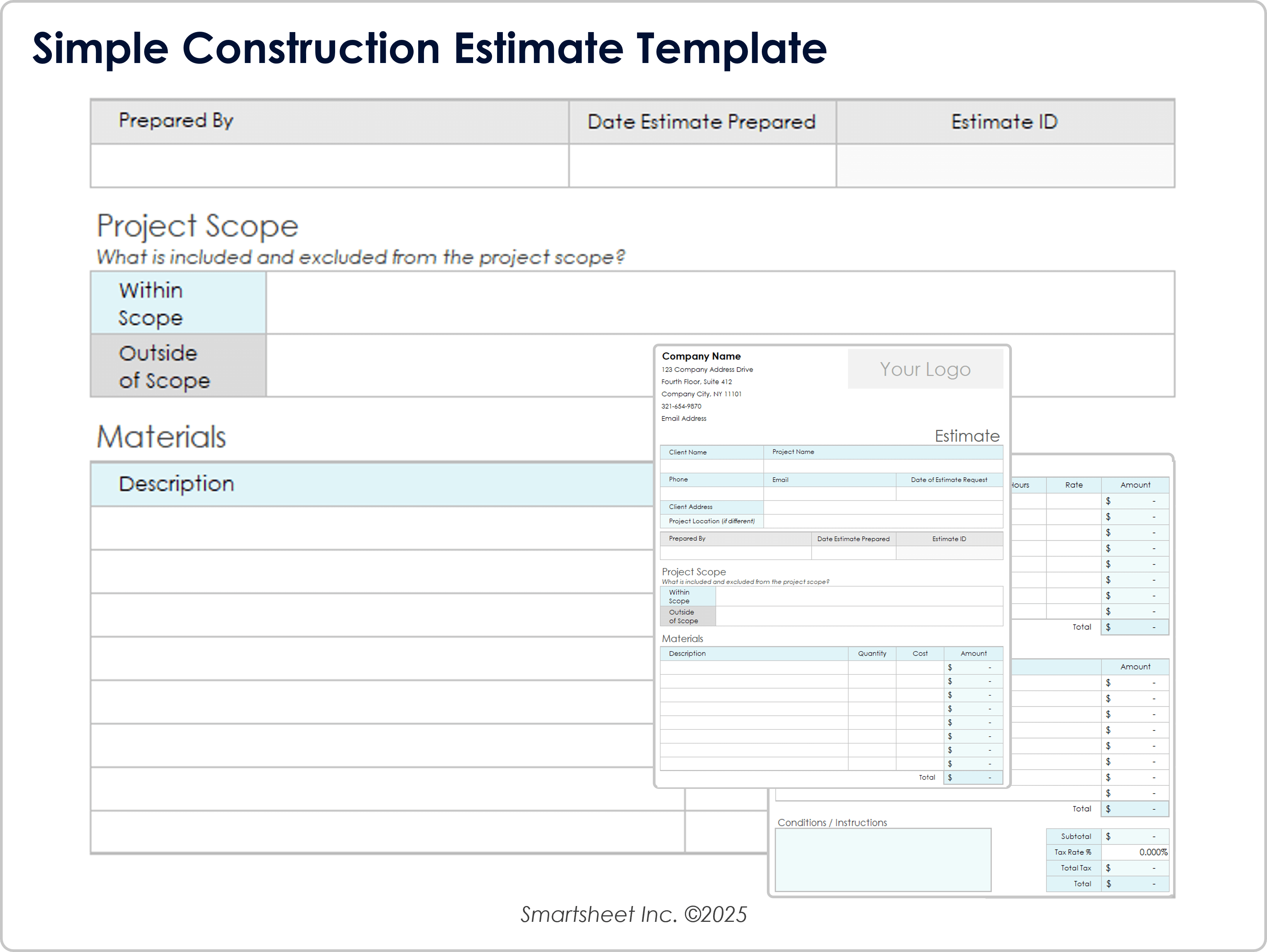
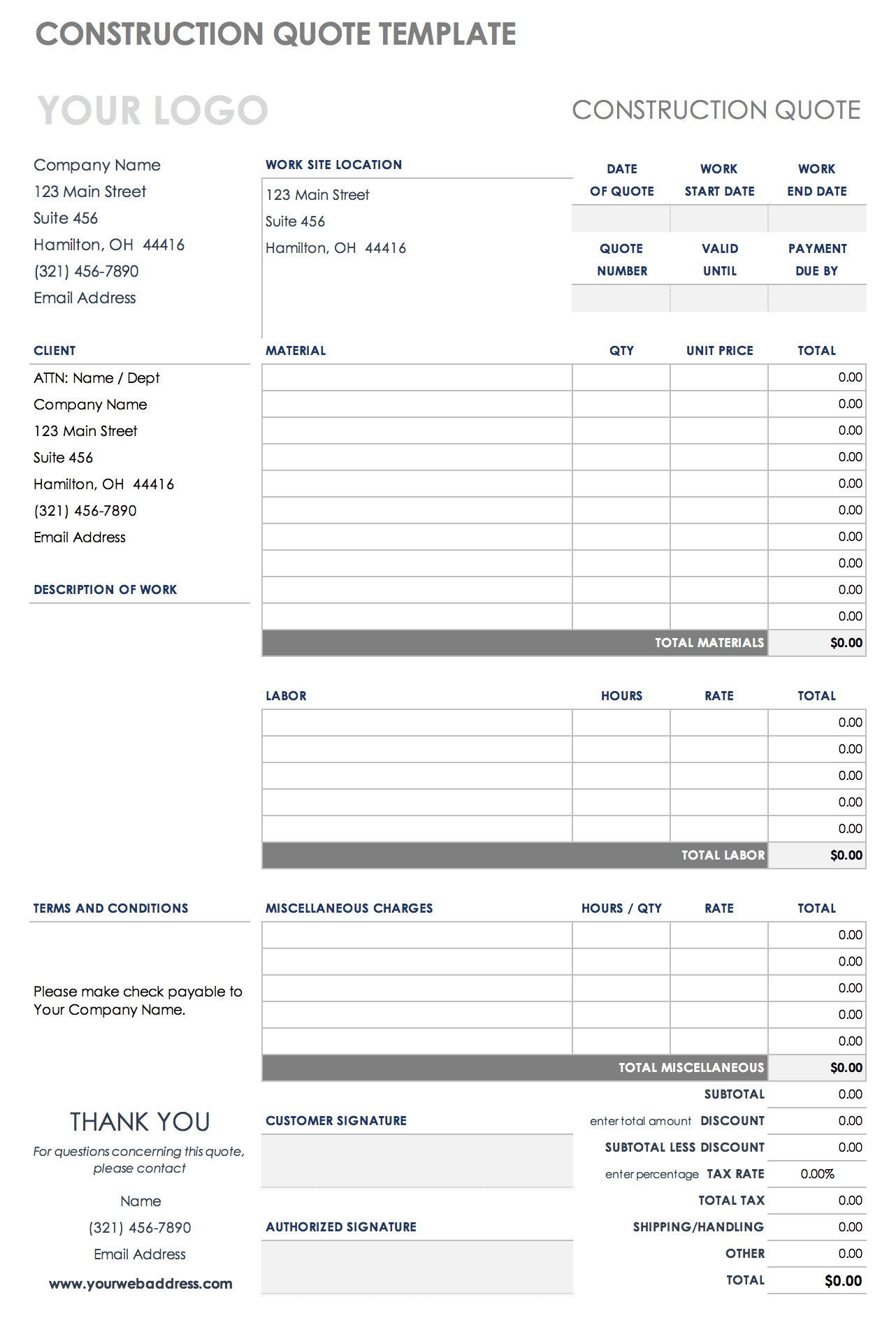
The following reference examples correspond to the requested document and template formats. They are visual examples of the types of proposal, estimate, schedule, and contractor documents discussed above. Availability, licensing, pricing, and download conditions can change, so the source should always be checked before relying on a specific resource.
marketing proposal template for contractors pdf
Source: Smartsheet
marketing proposal template for contractors free
Source: Cobrief
marketing proposal template for contractors free download

Source: Smartsheet
marketing proposal template for contractors word
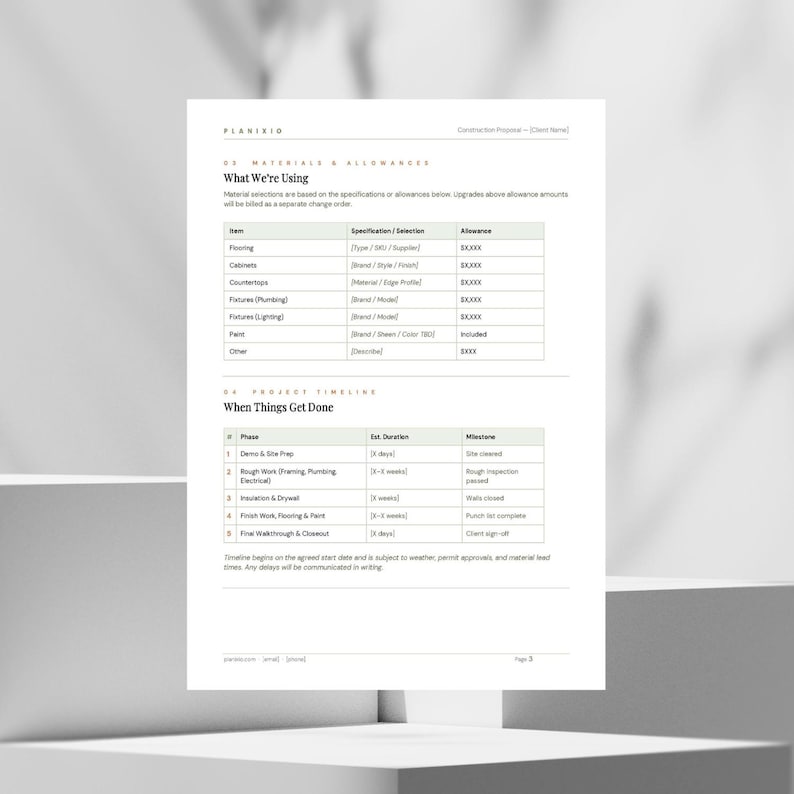
Source: Etsy
marketing proposal template for contractors word document

Source: Etsy
marketing proposal template for contractors excel
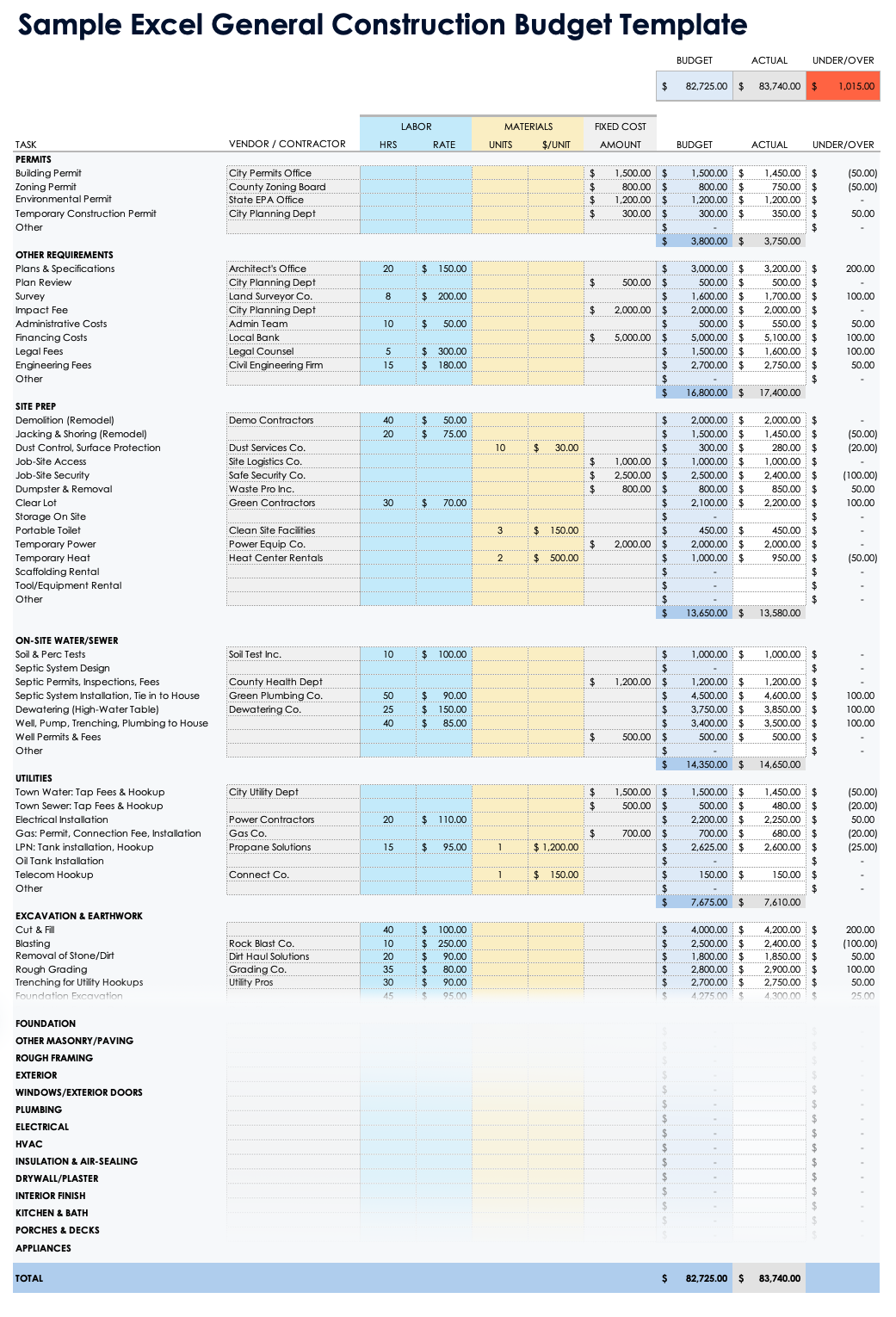
Source: Smartsheet
free contractors proposal template

Source: Etsy
contractors proposal template free printable
Source: Etsy
contractor proposal template for construction

Source: Construction Proposal Templates
contractor proposal template free
Source: Smartsheet
contractor proposal template free sample

Source: SlideTeam
free job proposal template for contractors
Source: Smartsheet
Frequently Asked Questions
What should a contractor proposal include?
A strong contractor proposal normally includes project identification, client and contractor information, project understanding, detailed scope of work, inclusions, exclusions, assumptions, pricing, payment information, schedule expectations, relevant qualifications, terms, and an acceptance or next-step section. The exact structure should be adapted to the project.
Is a proposal the same as a construction estimate?
No. An estimate primarily helps determine expected costs and pricing, while a proposal is a client-facing document that explains the proposed work, price, conditions, and next steps. A formal construction agreement may contain additional legal and commercial terms.
Should contractors use Word or Excel for proposals?
Both can be useful. Word is often convenient for narrative-heavy proposals, while Excel is useful for calculations, quantities, rates, and structured estimating. Many contractors use a spreadsheet internally and deliver the final client proposal as a PDF.
Should a contractor proposal include exclusions?
Yes, when exclusions affect the client’s understanding of the price or responsibilities. Clear exclusions help define what the quoted amount does not cover and can reduce misunderstandings.
How detailed should the scope of work be?
The scope should be detailed enough for a reasonable client to understand what is included and excluded without having to guess. More complex projects generally require more detailed scope descriptions, while small jobs can often use a concise task list.
Should pricing be completely itemized?
Not necessarily. Some clients benefit from line-item pricing, while others prefer a clear lump-sum price supported by a scope and selected alternatives. Choose the level of detail that supports transparency and the contractor’s normal commercial process.
What is the best way to handle allowances?
Identify the item, state the allowance basis, and explain how the final selection or actual cost will be handled under the applicable agreement. Do not make an allowance look like a confirmed product selection when it is not.
Should the proposal include a project schedule?
When timing matters, yes. A high-level schedule with phases and milestones can help the client understand the intended sequence. Identify important dependencies and distinguish estimated timing from contractual commitments where appropriate.
How can contractors make proposals more persuasive?
Focus on the client’s objective, demonstrate project understanding, explain the proposed approach, provide relevant qualifications, define the scope clearly, present pricing transparently, and make the next step obvious. Persuasion is strongest when it is supported by specific project information rather than generic claims.
Can a free template be used for a professional proposal?
Yes, a free template can provide a useful starting structure. The contractor should customize it, remove irrelevant sections, verify all terms, reconcile pricing, and ensure that the final document accurately reflects the project. A template is a framework, not a substitute for professional judgment.
Should a proposal become the construction contract?
That depends on the contractor’s established documents and applicable requirements. Some businesses use proposal acceptance as part of their contracting process, while others use a separate formal agreement. Do not assume that a generic template creates the legal effect required for a particular project or jurisdiction.
How often should a contractor update a proposal template?
Review it periodically and whenever recurring problems appear. If staff repeatedly omit information, clients repeatedly ask the same question, or pricing and approval workflows change, the template should be revised. Legal or contractual language should be reviewed by an appropriately qualified professional.
Conclusion
A well-designed marketing proposal template for contractors should make the contractor easier to understand, not merely make the document look attractive. The strongest template connects project information, scope, pricing, schedule, assumptions, exclusions, qualifications, and next steps into one coherent client experience. Use Word when narrative flexibility matters, Excel when calculations are central, and PDF when presenting the approved final version. Most importantly, build a repeatable review process so that every proposal says exactly what the contractor intends to deliver and charges exactly the amount that has been approved. When the template becomes part of a disciplined workflow rather than a document copied from one job to another, it can save preparation time, improve consistency, support clearer client decisions, and provide a much stronger foundation for moving from opportunity to approved construction work.
