The strongest business Thanksgiving greetings combine three things: a clear seasonal message, a genuine statement of appreciation, and enough brand consistency to make the communication unmistakably yours. A template can provide the structure, but the final result should still feel written for the recipient rather than copied from a stock design.
Businesses can use these greetings as printed cards, postcards, letters, email graphics, downloadable documents, or digital messages. The right format depends on the audience, the size of the recipient list, the available production time, and whether the communication is intended to feel personal or broadly corporate.
This guide explains how to choose and customize a template, how to write an effective Thanksgiving message, how to handle Word, Google Docs, and PDF workflows, and how to avoid common mistakes. It also provides practical examples and research-backed design considerations so that a seasonal greeting supports the relationship rather than turning into an unwanted sales pitch.
Whether you are preparing a small batch for important accounts or a larger campaign for customers, the objective is the same: make appreciation the focus, keep the language natural, and make the recipient feel that the company values the relationship beyond a single transaction.

What Is a Business Thanksgiving Greeting Template?
A business Thanksgiving greeting template is a pre-structured design or writing framework used to create a professional Thanksgiving message. It may be a folded card layout, postcard, letter, email graphic, editable document, or digital greeting. The template normally provides space for a headline, appreciation message, company identification, recipient personalization, and closing.
The main advantage is consistency. Instead of designing every card from an empty page, a business can establish a recognizable format and then customize the details. This is particularly helpful when several employees are preparing greetings or when a company needs to communicate with a large list of customers.
A useful template should not dictate every word. Good templates leave room for personalization, because a message to a long-standing client may need a different tone from a general greeting sent to hundreds of customers. The structure should make customization easier rather than encouraging identical messages for everyone.
Visual templates also establish hierarchy. The reader should immediately understand the occasion, see the appreciation message, and identify the sender. Seasonal illustrations can support the mood, but they should not overwhelm the actual communication.
In practical terms, a template is best viewed as a framework rather than a finished greeting. The design solves part of the formatting problem; the sender still needs to make thoughtful decisions about wording, audience, branding, timing, and delivery.
Why Thanksgiving Greetings Matter in Business Communication
A Thanksgiving message can create a useful pause in ordinary business communication. Instead of discussing an order, invoice, renewal, project, or promotion, the company can simply acknowledge the relationship and express appreciation.
This distinction matters because recipients can recognize when a supposedly personal greeting is actually a disguised sales message. A professional Thanksgiving card works better when its primary purpose is gratitude. A commercial offer, if included at all, should be secondary and restrained.
Thanksgiving also provides a natural reason to recognize continuity. Businesses depend on repeat customers, trusted suppliers, professional partners, referrals, and long-term relationships. A short seasonal greeting can acknowledge that those relationships are valued without requiring a complicated campaign.
Printed communication can be especially useful for recipients who receive large volumes of digital messages. A physical card has a different presence from an ordinary promotional email, although the cost and logistics of printing, addressing, and mailing should be considered before choosing that format.
Digital greetings can serve the same relationship-building purpose when the audience is geographically distributed or when speed is more important than physical presentation. The key is not whether the greeting is printed or digital; it is whether the message feels sincere, appropriate, and relevant.
Core Elements of an Effective Business Thanksgiving Greeting
The headline should make the occasion obvious without requiring the recipient to interpret the design. Simple phrases such as “Happy Thanksgiving,” “With Gratitude at Thanksgiving,” or “Thankful for Your Partnership” work because the purpose is immediately clear.
The appreciation statement is the most important part of the message. Rather than relying only on “thank you for your business,” consider what the relationship represents. A company might appreciate continued trust, collaboration, support, loyalty, referrals, partnership, or the opportunity to serve.
Recipient relevance is another important element. A client who has worked with the company for years can receive a warmer and more specific message than a prospect who has never purchased anything. Segmenting the audience improves both tone and usefulness.
Branding should be visible but restrained. A logo, company name, brand color, or familiar typeface can identify the sender without turning the card into an advertisement. Thanksgiving designs often benefit from generous whitespace and seasonal colors that complement rather than replace the company’s visual identity.
The closing should sound human. “Warm Thanksgiving wishes,” “With sincere appreciation,” or “Wishing you and your family a wonderful Thanksgiving” can work depending on the relationship. The sender’s name is often more personal than an anonymous corporate sign-off.
Message Formula
A simple formula is: greeting + appreciation + relationship-specific detail + seasonal wish + sign-off. For example, a consulting firm could thank a client for their continued trust and collaboration, then wish the recipient and their family a peaceful Thanksgiving.
This structure is flexible enough for different industries. A retailer can emphasize customer loyalty, a professional services firm can emphasize trust, a supplier can emphasize partnership, and a nonprofit can emphasize support for its mission.
The message should generally be shorter than a business letter unless the relationship justifies more detail. A greeting card is usually strongest when the recipient can understand the entire message quickly.
When writing for multiple audiences, keep the basic framework consistent while changing one or two sentences for each segment. This produces efficiency without sacrificing personalization.
The most effective test is simple: remove the company name and ask whether the message could have been sent by almost any business. If the answer is yes, add a more specific expression of appreciation.

Choosing the Right Format
Different formats solve different communication problems. A folded card creates a traditional personal touch, while a postcard uses less material and provides a simpler presentation. A letter gives more room for a detailed message, while a digital graphic is convenient for email or social communication.
For a small list of high-value business relationships, a folded card with a personalized note can be appropriate. For a large customer database, a postcard or digitally distributed greeting may be more practical.
The production workflow should influence the choice. If several people need to edit the message, an editable document may be easier to manage. If the design has already been approved and should not change, a PDF can provide more consistent visual output.
Printing requirements should also be considered early. A design that looks attractive on screen may require different margins, bleed settings, paper stock, or color handling for professional printing.
For digital delivery, check the design at normal screen size. Decorative elements that look elegant on a large monitor can become distracting on a mobile device. Keep the central message legible without requiring the recipient to zoom.
Using Word for a Business Thanksgiving Greeting
Microsoft Word remains useful for organizations that want a familiar editing environment. A business thanksgiving greeting template word workflow is practical when the content is primarily text-based and several people need to make revisions.
Word is particularly useful for letters because it supports headings, addresses, signatures, logos, tables, and structured text. A company can create a master document and save a clean version before distributing personalized copies.
When designing a card in Word, avoid excessive text boxes and complicated decorative elements that may shift unexpectedly between computers. Use consistent margins and test the document on the actual printer or export it to a fixed format before production.
File naming should also be systematic. For example, a company could use a format such as “Thanksgiving_ClientName_Year” internally. This reduces confusion when several versions are being prepared.
Word is most effective when the design is relatively simple. If the greeting depends on advanced illustration, complex typography, or professional print production, a dedicated design application may offer better control.
Using Google Docs for Collaborative Editing
Google Docs can be useful when multiple people need to collaborate on wording, proofreading, recipient segmentation, or approval. A business thanksgiving greeting template google docs workflow can reduce the need to email different versions of a document between team members.
The strongest use of collaborative editing is usually content development rather than complicated visual design. Teams can agree on the greeting, review tone, check names, and approve final copy before transferring the content to the production format.
Shared documents also make it easier to maintain a standard message library. A marketing or communications team can keep approved variations for customers, clients, partners, suppliers, and employees in one organized location.
Permissions matter. The master template should not be casually overwritten, particularly when it will be reused from year to year. Keep an approved master and create working copies for individual campaigns.
Before printing or distributing the final greeting, export and inspect the final file. Collaborative editing is valuable, but the final output should still receive a visual quality check.

PDF, Printable, and Digital Workflows
PDF is often the preferred final format when visual consistency matters. A business thanksgiving greeting template pdf can preserve fonts, positioning, spacing, and graphics more reliably than an editable document when the recipient or printer uses different software.
A PDF is also useful as a distribution format for print-ready files. However, the presence of a PDF does not automatically mean that the file is suitable for professional printing. Resolution, page dimensions, margins, bleed, and color requirements still need to be checked.
For internal editing, an editable source file is usually better. For final approval and distribution, a PDF can provide a stable reference version. Keeping both versions can make future updates easier.
Digital PDFs should be tested on phones and desktop screens if they will be emailed. Make sure the message remains readable and that any included links or contact information work as intended.
A printable version should also account for paper. Light backgrounds, strong contrast, and restrained graphics are usually easier to reproduce consistently than highly detailed designs with large areas of saturated color.
How to Create a Business Thanksgiving Greeting Step by Step
Step 1: Define the Audience
Start by deciding who will receive the greeting. Possible groups include current clients, customers, former customers, business partners, suppliers, referral sources, employees, or professional contacts.
Audience definition affects the message. A client relationship might call for appreciation of trust and collaboration, while a general customer greeting may emphasize continued support.
Do not assume every recipient should receive exactly the same greeting. Even one customized sentence can make a large batch feel more considered.
Review your mailing or contact list before designing the final file. Incorrect names, outdated addresses, and duplicate recipients can undermine an otherwise polished campaign.
For large campaigns, create a simple segmentation field so that the appropriate message version can be matched to each recipient group.
Step 2: Choose the Tone
Professional does not have to mean cold. A Thanksgiving message can be warm, sincere, and approachable while remaining suitable for business communication.
Formal industries may prefer restrained wording, while creative companies may use a more conversational style. The best tone usually matches the company’s existing communication style.
Avoid exaggerated claims about the relationship. If a recipient has only interacted with the company once, a message about a “deep and enduring partnership” may feel artificial.
Similarly, avoid overly casual humor unless the company already has an established relationship that supports it. Seasonal greetings should feel comfortable for the broadest reasonable portion of the audience.
The goal is authenticity rather than cleverness. A straightforward thank-you can be more memorable than an elaborate phrase that sounds manufactured.
Step 3: Write the Core Message
Begin with the reason for writing. “We are grateful for your continued trust” immediately communicates appreciation and establishes the purpose of the card.
Add a relationship-specific idea. For example, a professional services firm might thank a client for the opportunity to support an important project, while a retailer could thank customers for choosing the business throughout the year.
Keep sales language out of the central paragraph. Thanksgiving is an opportunity to recognize the recipient rather than pressure them to make another purchase.
End with a seasonal wish. A brief wish for a joyful, peaceful, or restful Thanksgiving gives the message a natural conclusion.
Finally, use a named sign-off where appropriate. A greeting signed by the owner, account manager, or leadership team can feel more personal than a generic corporate signature.
Step 4: Add Branding Carefully
Place the logo where it is easy to recognize but does not compete with the message. The company name can also appear in the closing if the design is intentionally minimal.
Brand colors should be used as supporting elements. Thanksgiving naturally provides a palette of warm neutrals, golds, oranges, greens, and deep reds, but not every brand needs to adopt all of them.
Typography should remain readable. Decorative script can work for a short headline, while body copy generally benefits from a simpler typeface.
Whitespace is an important design tool. Leaving enough empty space around the headline and message often makes a greeting look more premium than filling every available area with decorations.
Review the design at its final physical size. A font that appears comfortable on a desktop monitor may be too small on a five-by-seven-inch card.
Step 5: Proof and Personalize
Proofreading should include names, company names, punctuation, capitalization, dates, addresses, and the spelling of Thanksgiving. Personalized communications deserve more careful checking than generic marketing copy.
Print one physical proof if the greeting will be mailed. Check alignment, margins, color, folding position, and whether the message sits correctly on the finished card.
For digital versions, test the file on multiple screen sizes. Look for text that becomes difficult to read, graphics that crop unexpectedly, or files that take too long to load.
If the greeting contains a QR code or website reference, test it before distribution. A broken destination can make a polished greeting feel unfinished.
Keep a final approved version separate from the working files. This creates a reliable reference for the campaign and helps prevent accidental edits after approval.

Writing Thanksgiving Greetings for Clients
A business thanksgiving greeting template for clients should emphasize the relationship rather than the transaction. The strongest messages recognize trust, cooperation, loyalty, communication, or the opportunity to serve.
For a long-term client, personalization can be specific. A company might mention appreciation for continued collaboration during the year or thank the client for trusting the firm with an important responsibility.
For newer clients, keep the language accurate. “Thank you for choosing us” may be more appropriate than implying a long history together.
Client greetings should generally avoid aggressive calls to action. If the company wants to mention future collaboration, a gentle sentence such as “We look forward to continuing to work together” is enough.
The closing can also be adjusted by relationship level. An account manager may sign personally, while a larger company may use “The [Company] Team.” Both can work when the presentation matches the relationship.
Examples of Professional Thanksgiving Messages
Short Client Message
“Thank you for your continued trust and support throughout the year. We are grateful for the opportunity to work with you and wish you and your family a wonderful Thanksgiving.”
Long-Term Partnership Message
“This Thanksgiving, we want to express our sincere appreciation for your continued partnership. Your trust and collaboration mean a great deal to our team. Wishing you a peaceful and enjoyable Thanksgiving.”
Customer Appreciation Message
“We are thankful for every opportunity to serve you. Your support helps our business grow, and we sincerely appreciate having you as a customer. Happy Thanksgiving from our entire team.”
Professional Services Message
“At Thanksgiving, we are especially grateful for the trust our clients place in us. Thank you for allowing our team to contribute to your goals. We wish you a relaxing and meaningful Thanksgiving.”
Simple Corporate Message
“With sincere appreciation, we wish you a happy Thanksgiving. Thank you for being an important part of our year and for the trust you place in our company.”
These examples are starting points rather than scripts that must be copied word for word. The strongest final message should reflect the sender’s normal voice and the actual relationship with the recipient.

Design Styles That Work Well for Business Thanksgiving Cards
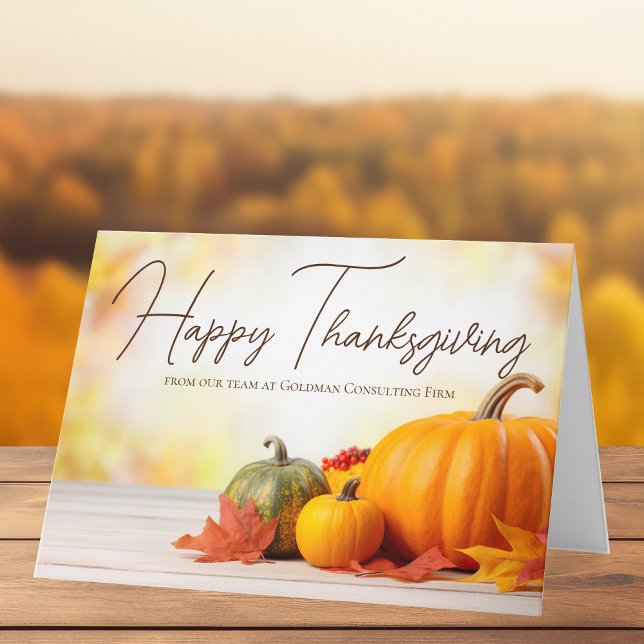
Traditional autumn designs use leaves, pumpkins, acorns, wheat, berries, and warm colors. They communicate the season immediately and can work particularly well for companies that want a familiar Thanksgiving aesthetic.
Minimalist designs use fewer illustrations and more whitespace. These are useful for professional brands that want a sophisticated appearance without losing the seasonal theme.
Typography-led designs make the greeting itself the visual centerpiece. Large words such as “Thankful,” “Grateful,” or “Thanksgiving” can create a strong design while leaving room for a concise message.
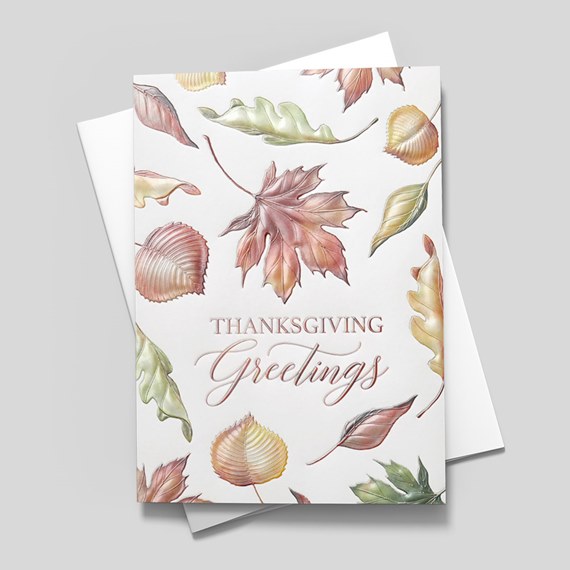
Botanical designs use leaves and branches instead of larger holiday illustrations. They can create a refined appearance and may be suitable for professional services, consulting, finance, real estate, and other industries where restraint is important.
Photo-based designs can also work, but they should be selected carefully. A relevant product, location, architectural detail, landscape, or seasonal still life can reinforce the company’s identity without turning the greeting into a conventional advertisement.
How to Evaluate a Template Before Using It
Start with editability. Determine whether the template allows the text, logo, colors, and relevant design elements to be changed. A beautiful template is less useful if the important components cannot be customized.
Next, examine the intended output. A template designed for social media may not be suitable for a printed folded card. Likewise, a letter template may not translate well into a postcard.
Check whether the design leaves enough room for your actual message. Placeholder text can make a layout appear balanced, but your final copy may be longer or shorter.
Consider licensing and usage rights before publishing a design commercially. A template being visible online does not automatically mean that every element can be reproduced without restriction.
Finally, consider whether the template fits the company’s existing identity. Seasonal communication should feel like an extension of the brand rather than a completely unrelated visual style.
Research and Data Collection for a Thanksgiving Greeting Campaign
A successful campaign benefits from simple operational research. Before writing anything, determine how many recipients are being contacted, which groups they belong to, what format they prefer, and how much personalization is practical.
A contact spreadsheet can include recipient name, company, relationship category, preferred delivery method, mailing address where applicable, account owner, and personalization notes. Sensitive information that is not needed for the campaign should not be collected.
The purpose of this data collection is not to create a complex research project. It is to reduce avoidable mistakes and make the greeting more relevant.
After distribution, the company can record operational outcomes such as delivery problems, returned mail, duplicated recipients, or requests to update contact details. Digital campaigns can also track ordinary engagement metrics when appropriate.
Do not interpret a Thanksgiving greeting primarily through sales attribution. The purpose is relationship communication, so the most useful evaluation may include response quality, recipient feedback, successful delivery, and whether the process improved future communication records.
Data Analysis and Reporting
A simple campaign report can show the number of recipients, number of printed cards, number of digital messages, production cost, delivery issues, and the percentage of records requiring correction.
If the company uses multiple message variations, compare operational results rather than assuming one design caused a particular business outcome. Small seasonal campaigns rarely provide enough evidence to establish strong causal conclusions.
For example, if one group receives a personalized message and another receives a standard message, differences in response may be influenced by the type of recipient, account size, relationship history, or delivery method.
Reporting should therefore focus on practical learning. Which workflow produced fewer errors? Which format was easier for employees to personalize? Which design was easiest to print? Which audience required a different tone?
The result can become a reusable process for future seasonal communications. Good campaign documentation saves time the next year because the team does not need to rediscover the same production steps.

Common Mistakes to Avoid
Making the Greeting Too Promotional
A Thanksgiving card that immediately offers a discount, pushes a product, or promotes a sale can weaken the feeling of appreciation. If a commercial message is necessary, keep it visually and verbally secondary.
Using the Same Message for Everyone
Mass communication is sometimes unavoidable, but identical wording can feel impersonal when recipients have very different relationships with the company. Even basic segmentation can improve relevance.
Overloading the Design
Too many fonts, colors, illustrations, borders, and messages can make the card difficult to read. A clear hierarchy usually produces a more professional result.
Ignoring the Mailing Schedule
A Thanksgiving greeting should arrive around Thanksgiving rather than appearing so late that the seasonal context has disappeared. Build time into the process for editing, printing, addressing, and delivery.
Failing to Proof Personalized Information
A misspelled recipient name can undermine the entire purpose of a personalized greeting. Assign responsibility for final verification instead of assuming that a spreadsheet or mail merge will catch every problem.
Choosing a Template Without Checking Rights
Template availability and licensing are separate issues. Review the relevant usage terms before using a design, illustration, photograph, or font in a commercial campaign.
Best Practices for Professional Thanksgiving Greeting Cards
Keep the central message focused on gratitude. The recipient should not have to search through promotional copy to understand why the company sent the card.
Use a design that supports the message. Seasonal decoration should establish mood and visual interest without making the actual words difficult to read.
Personalize according to relationship strength. A small amount of accurate personalization is generally more valuable than a large amount of generic text.
Keep production practical. A design that requires extensive manual editing may not be appropriate for hundreds of recipients. Automation and standardized workflows can reduce errors while preserving selected personalized fields.
Finally, preserve the approved template and campaign documentation. The next Thanksgiving campaign can then start from a tested process instead of an empty page.

Practical Solution: A Repeatable Thanksgiving Greeting Workflow
The most practical solution is to create one approved master template, then build controlled variations for different audiences. Start by defining the brand treatment, card size, headline, logo position, body-copy length, and sign-off style.
Next, create three or four approved message versions. One can be written for customers, one for long-term clients, one for business partners, and one for a general professional audience. Keep the core sentiment consistent while adjusting the relationship language.
Prepare the recipient database separately from the design file. Include only information needed for personalization and delivery. Before merging the data, check for duplicates, missing names, obvious formatting errors, and outdated contact details.
Produce a proof batch before committing to the full campaign. Review one example from every message segment, inspect the print or digital output, and confirm that the personalized fields appear correctly.
After approval, distribute the campaign according to the selected channel. Record production dates, delivery issues, and any useful feedback so that the process can be improved next year.
A practical internal checklist is: audience confirmed, message approved, design approved, licensing checked, recipient data reviewed, personalization tested, proof reviewed, delivery schedule confirmed, final files archived, and campaign results documented.
This workflow turns a seasonal greeting into a manageable communication process. It also prevents the common mistake of treating the template as the entire solution when the real quality of the campaign depends on audience selection, wording, personalization, production, and timing.
Reference Examples
The following examples illustrate different approaches to business Thanksgiving cards, editable templates, client messages, and professional seasonal layouts. They are useful as visual references rather than claims that every listed format or design is free or licensed for unrestricted commercial reuse.
business thanksgiving greeting template free

Source: Template.net
business thanksgiving greeting template free download

Source: CardsDirect
business thanksgiving greeting template free printable

Source: The Gallery Collection
business thanksgiving greeting template word

Source: PosterMyWall
business thanksgiving greeting template google docs
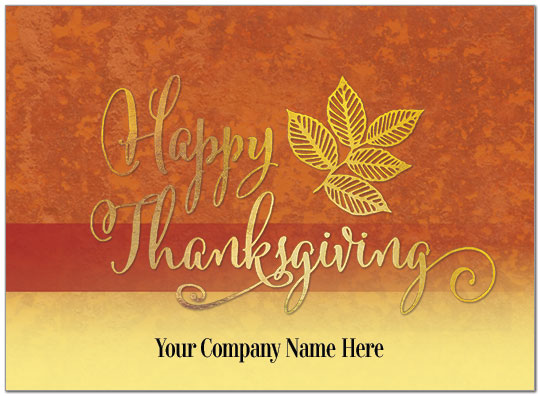
Source: Posty Cards
business thanksgiving greeting template pdf

Source: CardsDirect
business thanksgiving greeting template free pdf
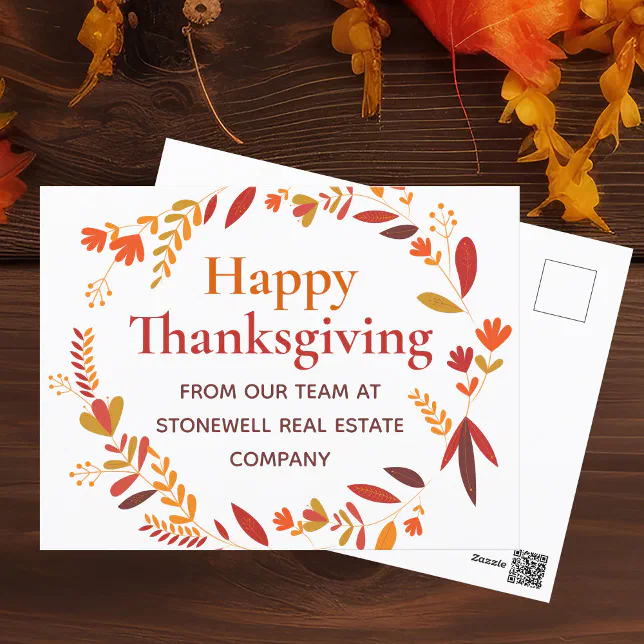
Source: Zazzle
business thanksgiving greeting template for clients

Source: Etsy
thanksgiving greeting cards for business
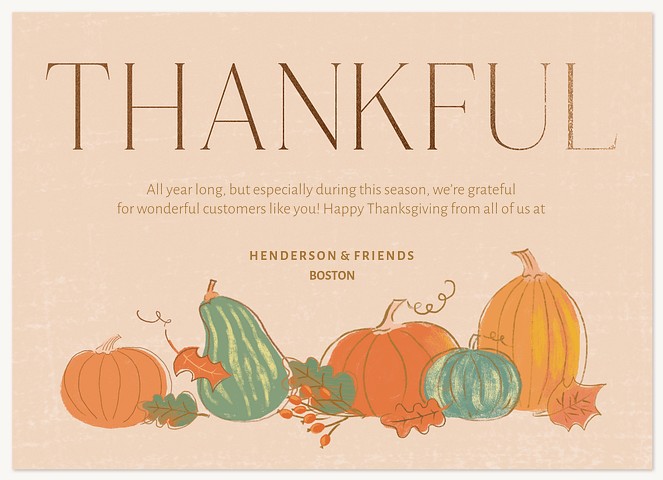
Source: Simply to Impress
business thanksgiving cards templates

Source: CardsDirect
thanksgiving greeting for business clients

Source: CardsDirect
business thanksgiving cards ideas

Source: Brookhollow Cards
Frequently Asked Questions
What should a business Thanksgiving greeting say?
A strong message should thank the recipient for a genuine aspect of the relationship, such as trust, support, loyalty, collaboration, or the opportunity to serve. End with a sincere Thanksgiving wish and an appropriate sign-off.
How long should a business Thanksgiving card message be?
For most cards, a short paragraph of two to five sentences is enough. Longer messages can work for clients with whom the company has a substantial relationship, but clarity is more important than length.
Should a Thanksgiving greeting include a sales promotion?
It can, but gratitude should remain the primary purpose. If an offer is included, it should be secondary and should not overwhelm the seasonal appreciation message.
Is a printed card better than an email?
Neither format is universally better. Printed cards can create a tangible personal touch, while email is faster and easier to distribute at scale. Choose according to the audience, relationship, budget, and communication habits of the business.
Can a Thanksgiving greeting be sent to customers and clients?
Yes. The wording should simply reflect the relationship. Customers may receive a general appreciation message, while clients may receive language focused on trust, collaboration, or ongoing partnership.
What file format is best for printing?
PDF is commonly useful for final distribution because it can preserve the intended layout. However, print suitability still depends on dimensions, resolution, margins, bleed, color settings, and the requirements of the printer.
How can a business personalize hundreds of Thanksgiving cards?
Use a master template and a structured recipient list containing approved personalization fields. Test a small batch first, proof the merged output, and keep a controlled final version of the design.
What design style is most professional?
There is no single best style. Minimalist, botanical, typography-led, traditional autumn, and refined photographic designs can all work when the layout is readable and consistent with the company’s brand.
When should businesses prepare Thanksgiving greetings?
Preparation should begin early enough to allow for message approval, personalization, printing, addressing, and delivery. Starting well before the holiday reduces the risk of rushed production and late arrival.
Should every recipient receive the same Thanksgiving message?
Not necessarily. A consistent design can be paired with several approved message variations so that customers, long-term clients, partners, and other audiences receive language that accurately reflects the relationship.
Conclusion
The best business Thanksgiving greeting template is not necessarily the most elaborate design. It is the one that gives the company enough structure to work efficiently while leaving enough flexibility to make the final message feel genuine and appropriate for the recipient.
Successful Thanksgiving communication combines a clear seasonal greeting, sincere appreciation, restrained branding, readable design, accurate personalization, and a realistic production workflow. Whether the final format is a printed card, editable document, PDF, postcard, or digital message, the same principles apply.
For organizations preparing larger campaigns, the most useful improvement is often process discipline: segment the audience, approve message variations, maintain clean recipient data, test personalization, proof the final output, and document what worked. This makes future seasonal communications faster and more reliable.
A thoughtful Thanksgiving greeting should leave the recipient with a simple impression: the business noticed the relationship and took the time to say thank you. When a business thanksgiving greeting template supports that goal instead of replacing it, the result can be professional, warm, memorable, and genuinely useful as part of a broader relationship-building strategy.
For that reason, treat the template as the starting point rather than the finished product. Choose a format that fits the audience, write in the company’s natural voice, personalize where it matters, and keep gratitude at the center of the message. That approach produces a business Thanksgiving greeting that feels intentional rather than automatic.
As a final quality check, review the greeting from the recipient’s perspective: Is the purpose immediately clear? Does the message sound sincere? Is the design easy to read? Is the company identity recognizable without dominating the card? If the answer to each question is yes, the finished business thanksgiving greeting template has done its job.
The most valuable Thanksgiving greeting is ultimately a simple expression of appreciation delivered thoughtfully. With a well-planned template, careful wording, and disciplined execution, businesses can create seasonal communications that respect the recipient, reinforce professional relationships, and communicate gratitude without turning a sincere occasion into another sales message.
