AI adds another layer by helping a clinician turn accurate encounter information into a clear draft. That can reduce repetitive formatting work, improve consistency, and make it easier to produce documents in formats such as Word, Google Docs, or PDF. The important distinction is that AI can assist with drafting, while the responsible healthcare professional remains accountable for reviewing the content and deciding what the final document should say.
Search interest around an ai doctor note template also reflects several different needs. Some people want a blank form, some want a printable document, some want a work or school absence format, and others are researching AI documentation tools. These are not interchangeable use cases, and a template suitable for internal clinical documentation may be inappropriate for an employer or school.
This guide explains how these templates work, what a useful document should contain, how AI can fit into a legitimate clinical workflow, how work and student versions differ, and what to consider when choosing a free or paid format. It also addresses privacy, accuracy, verification, document integrity, and common mistakes.
A key principle runs through the entire article: an AI-generated draft should never be presented as a genuine medical certificate unless it has actually been reviewed and issued by an appropriately authorized healthcare professional. A visually convincing document is not the same thing as authentic medical documentation.
What Is an AI Doctor Note Template?
An AI doctor note template combines two concepts: a structured medical-document format and an AI-assisted drafting process. The template supplies the document architecture, while an AI system may help organize information into readable language. In legitimate use, the information comes from an actual consultation, examination, or documented medical encounter.
A basic note may contain the patient’s name, date of evaluation, provider information, purpose of the note, recommended absence period, return date, restrictions, and authentication details. More detailed clinical notes can contain history, findings, assessment, treatment, and follow-up information. The appropriate level of detail depends on the document’s purpose.
The term “doctor note” can also describe several different documents. A work excuse may simply confirm that a patient was evaluated and should be away from work for specified dates. A return-to-work document may focus on fitness and restrictions. A school note may verify an absence or identify accommodations. A clinical progress note has a different purpose and normally belongs in the patient’s medical record.
AI is potentially useful because these documents often contain predictable structural elements. Instead of composing the same administrative language repeatedly, a clinician can work from a standardized format and allow software to produce a draft from information already documented in the encounter.
The safest model is therefore source information → structured template → AI-assisted draft → human clinical review → authorized signature or issuance. Skipping the clinical-review stage creates a fundamental reliability problem because language-generation software cannot independently establish that a patient was examined, determine whether a patient is medically fit, or authenticate a provider.
Why the Template Structure Matters
A template is valuable when it reduces ambiguity rather than simply making a document attractive. A clear heading, consistent field order, adequate whitespace, and an obvious distinction between patient information and provider information can make a note easier to understand and verify.
Good templates also prevent common omissions. For example, a work-related document may need a clear date of evaluation, dates of recommended absence, expected return date, and any applicable restrictions. A school document may need absence dates and return guidance rather than a detailed clinical history.
Clinical documentation has an additional requirement: information must accurately reflect the encounter. A polished template cannot compensate for missing or invented facts. If a clinician did not assess something, the template should not encourage the user to fill the gap with an assumption.
Templates should therefore use explicit fields and neutral prompts. Fields such as “Date of evaluation,” “Recommended absence period,” “Return date,” and “Restrictions, if applicable” are safer than prewritten claims that assume a particular diagnosis or outcome.
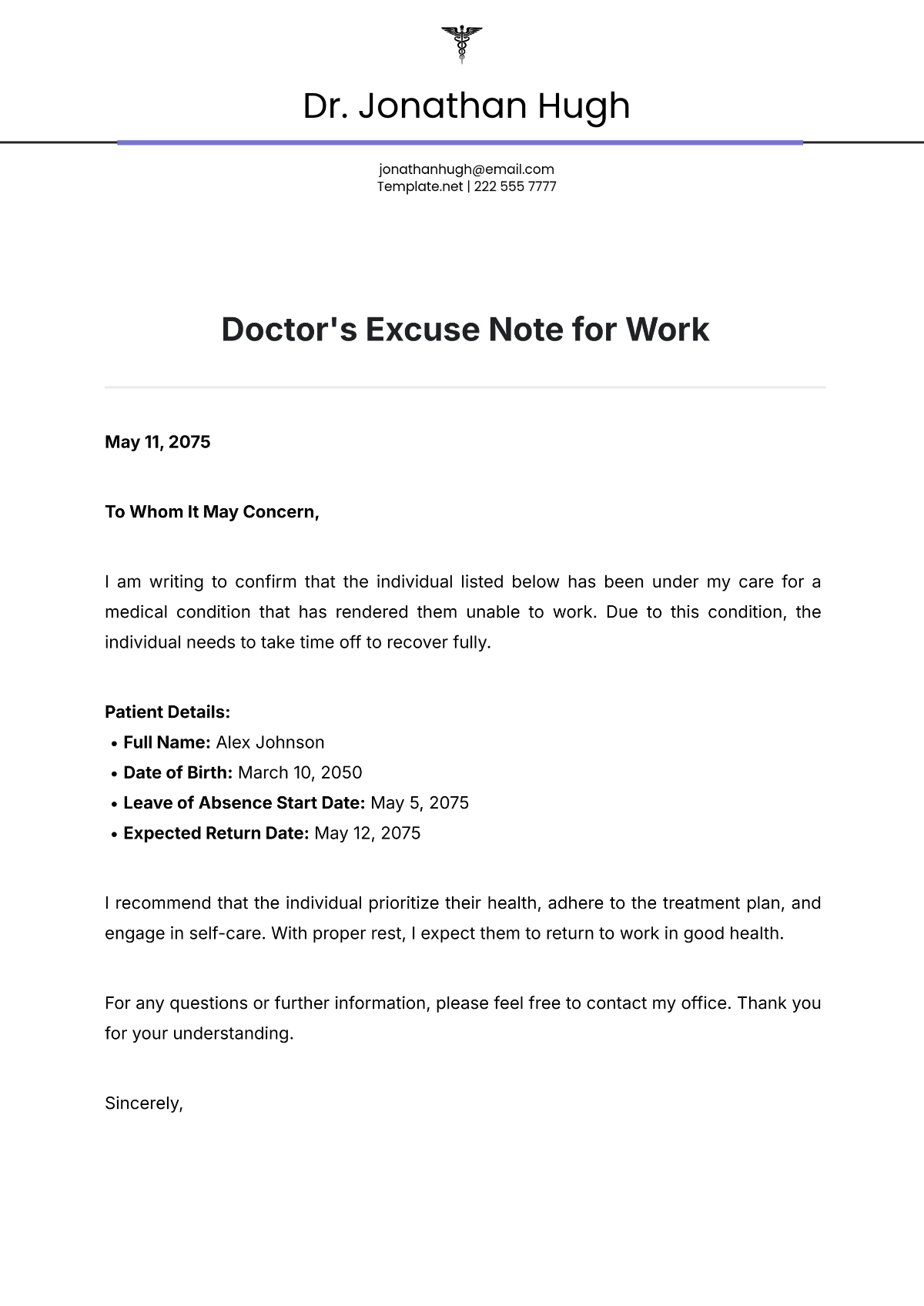
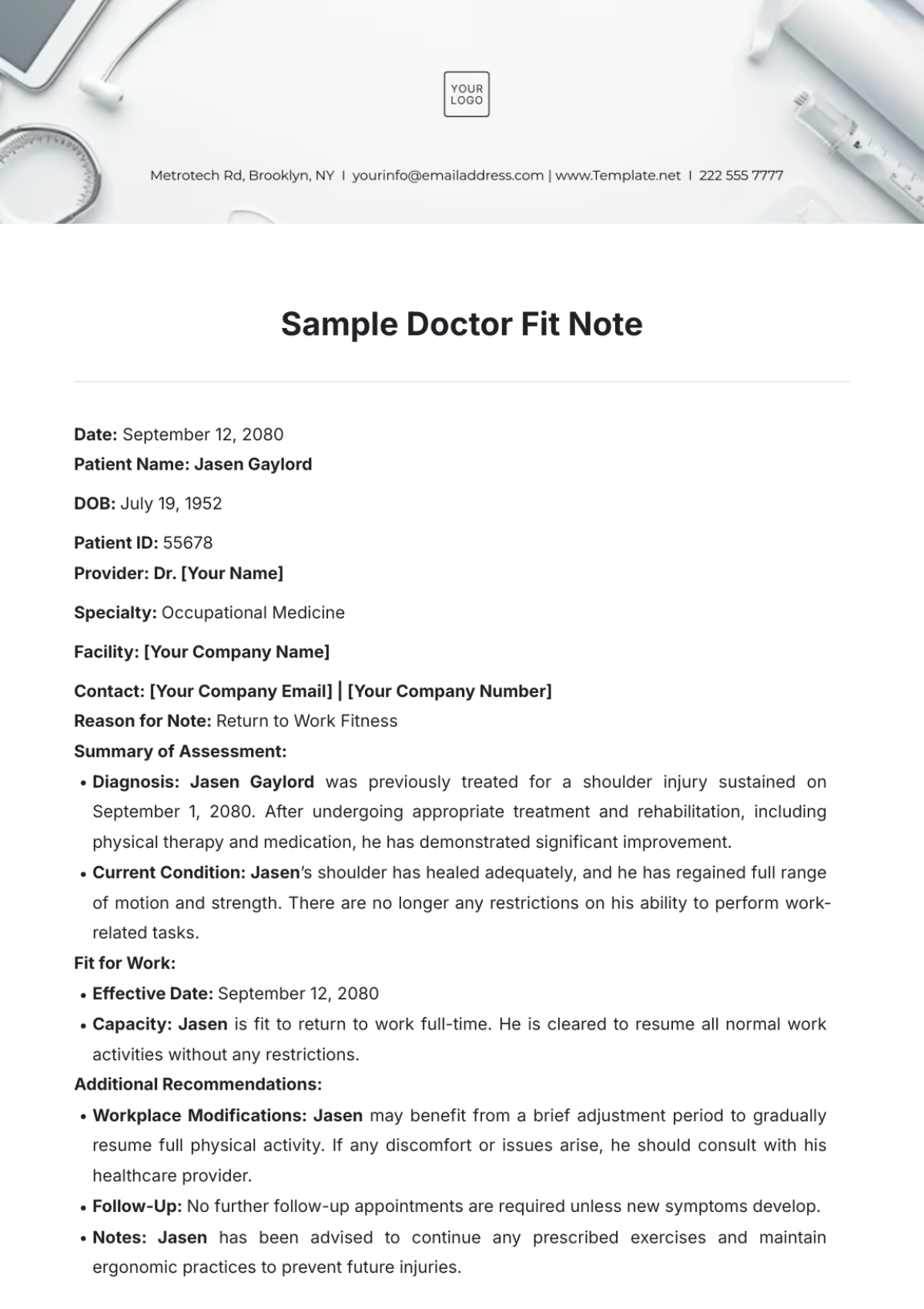
The following example illustrates why a work-oriented structure is different from a generic letter. It separates patient identification, clinical evaluation, absence dates, return guidance, and provider authentication rather than blending them into a single paragraph.

What Should an AI Doctor Note Template Include?
The exact fields vary by jurisdiction, organization, specialty, and purpose, so there is no universal checklist that makes every medical note valid. Nevertheless, a useful template generally makes the important categories visible without requiring unnecessary information.
The first category is provider information. Depending on the document and local practice, this may include the clinician’s name, professional designation, practice or facility name, address, telephone number, and other information used for legitimate verification.
The second category is patient information. The document should identify the correct patient without unnecessarily exposing sensitive data. A full name is often relevant, while additional identifiers should only be included when they are genuinely necessary for the intended recipient.
The third category is encounter information. This normally includes the date of evaluation or appointment and, when relevant, the type of encounter. It should never imply that an examination occurred when no such examination or consultation took place.
The fourth category is the administrative recommendation. Depending on the situation, this might state that the patient should be absent from work or school during a specified period, may return on a particular date, or should follow specified restrictions. These statements should reflect the clinician’s actual assessment.
A fifth category is authentication. A genuine medical document normally needs an authorized provider’s approval, signature, electronic signature, or equivalent process where required. AI-generated text by itself does not establish authenticity.
Patient Identification
Patient identification should be sufficient for the recipient to associate the document with the correct individual, but it should not become an excuse to disclose an entire medical record. A school administrator or employer may not need the same information that another healthcare professional requires.
Good templates distinguish between required and optional identifiers. A patient ID may be useful inside a healthcare organization but unnecessary on an external absence letter. Date of birth can sometimes help identify a patient, but whether it belongs on an employer-facing document depends on the circumstances and applicable privacy practices.
AI should not be allowed to invent identifiers. If a field is unavailable, the correct response is to leave it incomplete for authorized review rather than allowing the system to create a plausible-looking value.
Templates should also avoid placing sensitive details in large, prominent areas when a less revealing statement would meet the administrative purpose. For example, an external document may only need to communicate fitness status or absence dates rather than a detailed diagnosis.
A carefully designed form keeps identification functional and proportionate. That makes the document easier to process while reducing unnecessary disclosure.
Dates, Absence Periods and Return Dates
Date fields are among the most important parts of an absence document. A note should distinguish between the date the patient was evaluated, the period of recommended absence, and the date the patient may return, when such a return date can be determined.
AI can help format these dates consistently, but it should not infer them. If the clinical record says that a patient was evaluated on one date and advised to remain away from work for a specific period, the software should preserve those facts without extending or shortening them.
Templates should also make date ranges visually obvious. Ambiguous phrases such as “for several days” may create unnecessary administrative questions. Specific dates are generally easier for employers, schools, and administrative offices to interpret when those dates are clinically appropriate.
Return guidance can also include conditional language. A clinician may determine that a patient can return on a certain date provided that symptoms or functional limitations meet specified criteria. Such wording should come from the provider rather than being automatically generated as a generic promise.
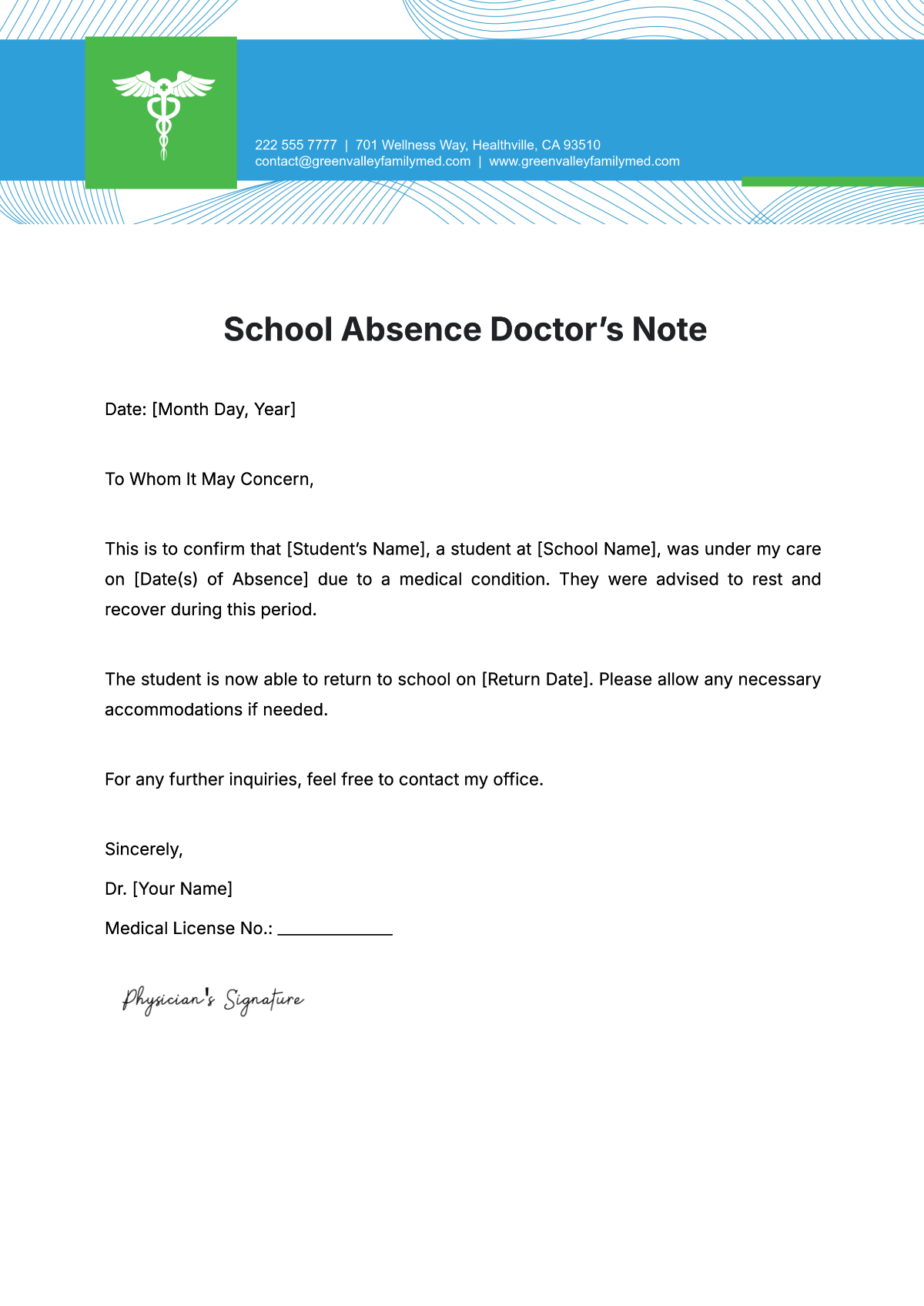
The next visual demonstrates a more formal student-oriented structure, showing how dates, patient information, provider information, and the reason for an absence can be organized without turning the document into a complete medical record.

AI Doctor Notes for Work: What Employers Usually Need
A work note generally has an administrative purpose: communicating that a healthcare professional evaluated the employee and, where appropriate, provided guidance concerning absence, return, restrictions, or accommodations. The exact information requested varies among employers and jurisdictions.
An ai doctor note template for work should therefore avoid assuming that every employer wants the same information. Some may only need confirmation of an appointment or absence dates. Others may have formal processes for leave, disability accommodation, or return-to-work clearance.
For legitimate clinical use, AI can help transform encounter information into a concise administrative letter. The clinician can select an appropriate template, review the generated wording, remove unnecessary clinical information, and confirm that all dates and restrictions are accurate before issuing the document.
A work note should not automatically disclose a detailed diagnosis simply because a template has a diagnosis field. The appropriate amount of information depends on the purpose of the document, patient authorization, professional obligations, and applicable law or policy.
For this reason, the best template is often the one that communicates functional information clearly while minimizing unnecessary medical detail. A concise, accurate document can be more useful than a long document filled with information the recipient does not need.
Work Excuse Versus Return-to-Work Clearance
A work excuse answers a relatively simple question: should the employee be away from work for a specified period? A return-to-work clearance answers a different question: has the clinician determined that the employee may resume work, and are restrictions or modifications needed?
These documents should not be combined carelessly. A patient can be excused from work without being permanently cleared for unrestricted duties. Conversely, a return-to-work document may identify temporary limitations that are relevant to job functions.
Templates can make this distinction clearer by using separate headings. “Absence period,” “expected return date,” and “restrictions” are easier to interpret than a single generic paragraph.
AI can also help ensure consistent terminology within a document. However, consistency is not a replacement for clinical judgment. A restriction such as modified duties should only appear when it is actually supported by the provider’s assessment.
A professional work document should always preserve a clear chain of responsibility: the software assists with language and layout, while the authorized healthcare professional determines and validates the medical content.
AI Doctor Notes for Students and Schools
An ai doctor note template for students has a similar purpose to a work note but often uses different administrative language. A school may need confirmation of an absence, a return date, participation restrictions, or accommodations for academic or physical activities.
For younger students, additional considerations may apply because a parent or guardian may communicate with the school on the student’s behalf. The template should still identify the patient and the issuing provider accurately and should avoid unnecessary medical disclosure.
A school note does not automatically need a detailed diagnosis. If the educational institution only needs confirmation that the student was evaluated and should be absent for specified dates, a concise statement may be sufficient, subject to local policy.
AI can help format school documentation consistently, especially in practices that issue many routine attendance letters. The clinician can select the relevant dates, restrictions, and return guidance from the actual encounter record and then review the generated document.
The same rule applies to physical education or extracurricular restrictions. An AI system should not invent a limitation simply because a template contains a field for it. The restriction must originate from the authorized clinical assessment.
School Absence Versus Academic Accommodation
An absence note confirms that a student was medically unable or advised not to attend during a particular period. An accommodation document may address a longer-term functional need, such as modified activity or scheduling arrangements. Those purposes should not be confused.
A school absence template can be short because its administrative goal is narrow. A more detailed accommodation letter may require functional information and a discussion of recommended adjustments rather than a simple statement of absence.
When AI is used, the prompt or input should reflect the actual purpose of the document. Asking software to “write a doctor’s note” without specifying whether the document is an appointment confirmation, absence note, or return-to-school statement can produce vague or inappropriate language.
Templates can reduce that ambiguity by giving each document type a defined structure. This also makes review easier because the clinician can quickly see whether the document contains the information that the intended recipient actually needs.
The example below illustrates a return-to-school format. It demonstrates the general document structure rather than establishing a universal school requirement.
AI for Doctors Notes: Where It Helps and Where It Should Stop
The phrase ai for doctors notes can describe several technologies, including text-generation systems, clinical documentation assistants, structured form generators, speech-to-text tools, and systems that convert structured data into documents.
The most useful applications tend to involve repetitive administrative work. AI may organize a clinician’s already-documented information, improve readability, standardize formatting, identify missing administrative fields, or produce a draft that a professional can edit.
AI can also help create different output versions from the same validated information. For example, a clinical record may contain extensive details while an external appointment-confirmation letter contains only the date, facility, and confirmation of attendance.
However, AI should not independently determine whether a person is medically fit, create a diagnosis without supporting evidence, fabricate an examination, or invent a provider’s signature. Those functions require appropriate human authority and professional judgment.
The boundary is especially important because generated language can sound confident even when its underlying information is incomplete. A polished paragraph can therefore create a false impression of certainty if the clinician does not review it carefully.
Drafting Versus Issuing
Drafting means producing proposed language. Issuing means accepting responsibility for the final document. These are different stages of a professional workflow.
A clinician may use an AI system to draft a letter after documenting an encounter. The clinician can then compare the draft against the record, correct errors, remove unsupported claims, verify dates, and approve the final version through the practice’s normal process.
The distinction also explains why an AI doctor note generator should not be treated as a medical authority. The generator may create text, but it does not independently establish the truth of that text.
For organizations, a review step should be explicit rather than informal. A checklist can require confirmation of patient identity, encounter date, absence dates, return date, restrictions, recipient, and provider authentication before the document leaves the practice.
This approach turns AI from an uncontrolled writing shortcut into a controlled documentation aid.
SOAP Notes and Other Clinical Documentation
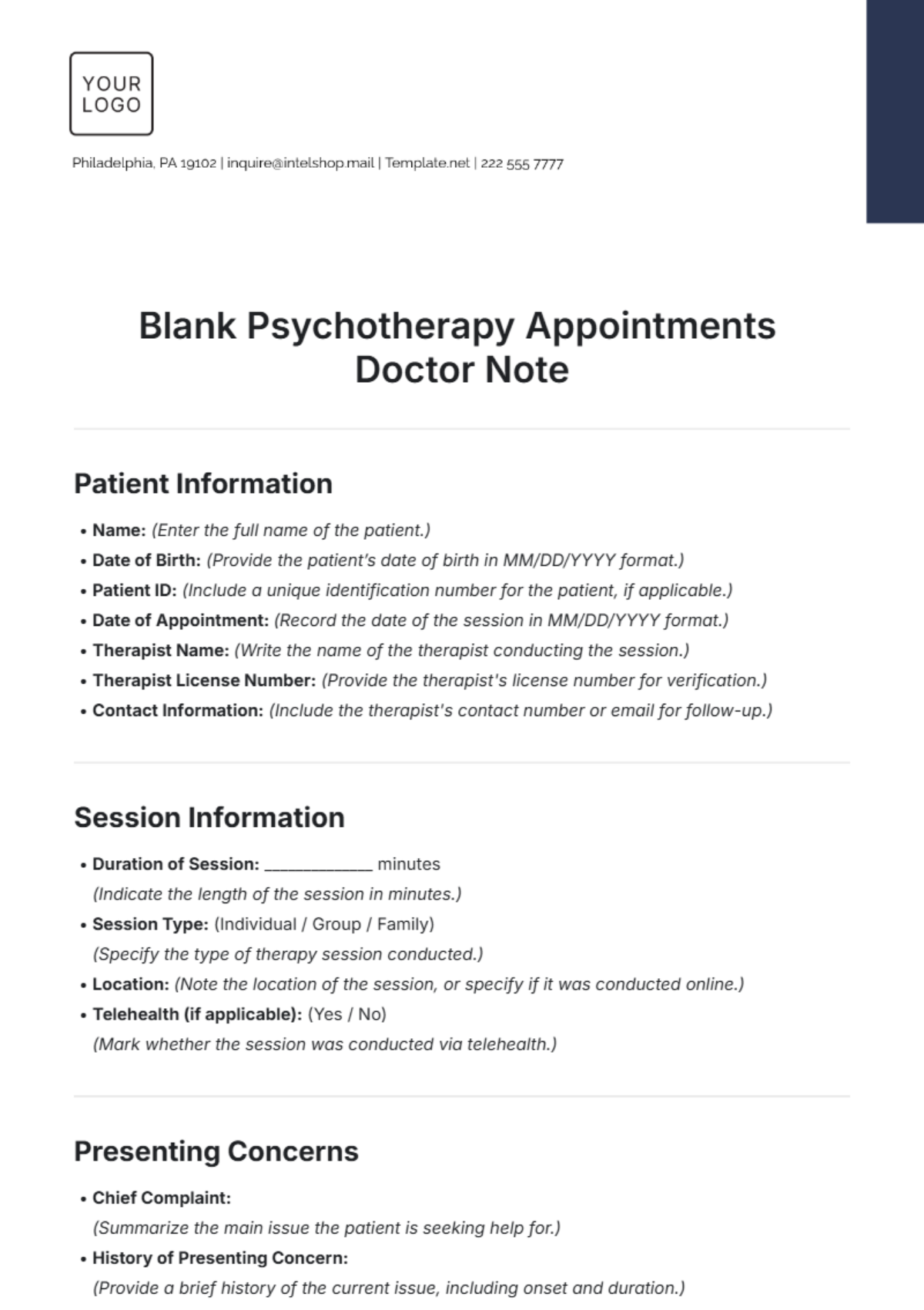
Not every medical document is an excuse note. SOAP notes, progress notes, consultation notes, appointment confirmations, referral letters, and medical certificates all serve different purposes.
SOAP documentation traditionally organizes information into Subjective, Objective, Assessment, and Plan sections. This structure is useful because it distinguishes patient-reported information from clinician-observed findings, clinical assessment, and planned care.
An AI system can help organize information into a SOAP structure when the source information is accurate and appropriately documented. It should not manufacture objective findings or transform assumptions into clinical facts.
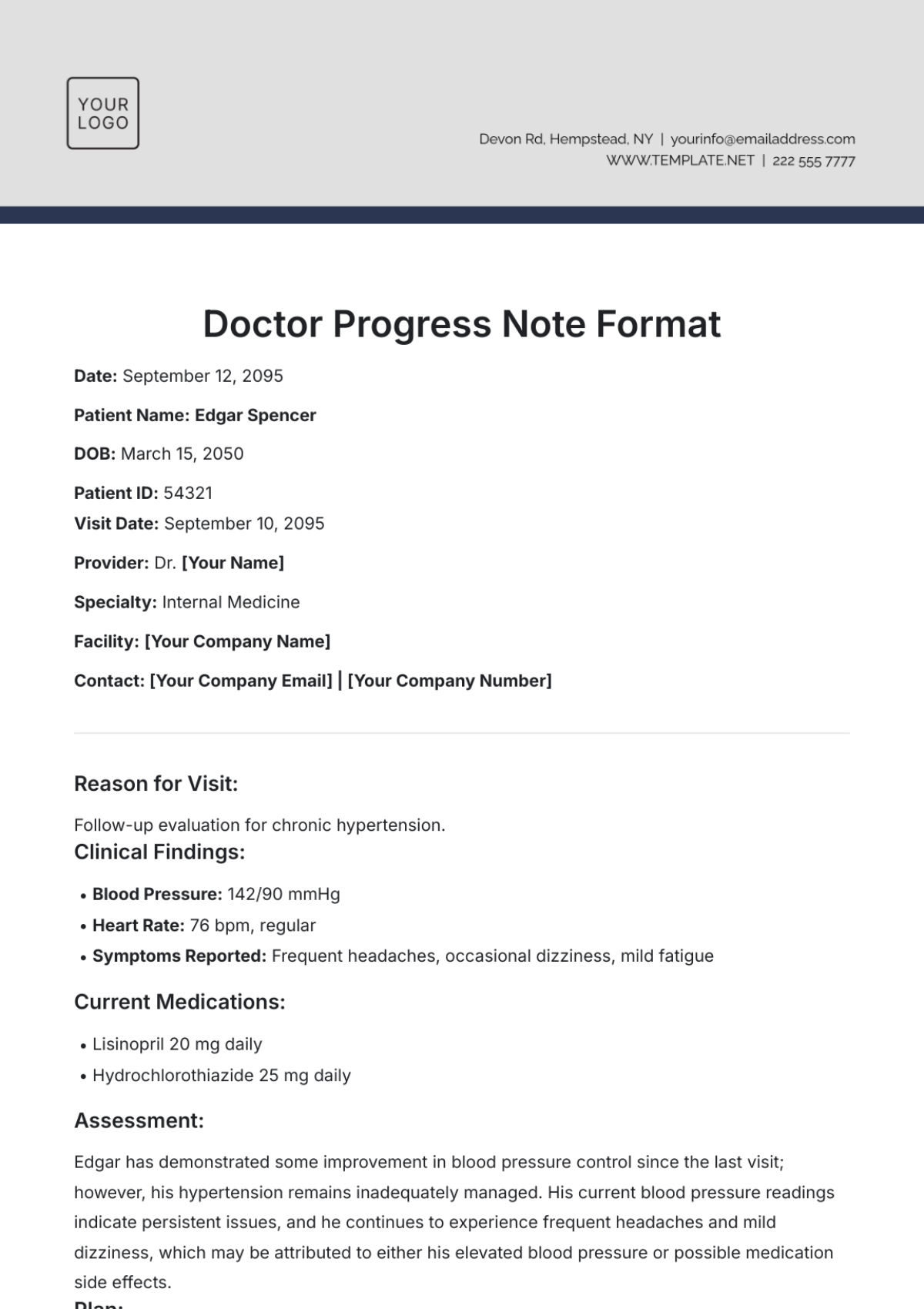
The same principle applies to a progress note. A template can make it easier to record changes since the previous encounter, current treatment, relevant observations, and next steps, but the content must come from the clinical encounter.
Separating clinical documentation from administrative absence documentation is one of the most important template-design decisions. It prevents an employer-facing letter from becoming unnecessarily detailed while preserving a fuller record for clinical use.
Why SOAP Structure Is Different
A SOAP note is generally intended for clinical documentation and communication among authorized healthcare professionals or other appropriate parties. A work excuse is primarily administrative. They may share some information, but they should not be treated as identical documents.
The subjective section records what the patient reports, such as symptoms or relevant history. Objective information should describe what was observed, measured, or otherwise established through the encounter. The assessment captures the clinician’s interpretation, and the plan describes treatment, follow-up, or other clinical actions.
AI can help convert fragmented notes into a coherent structure, but it must preserve these distinctions. Mixing patient statements with objective findings can make a record less reliable and harder to interpret.
Templates should also discourage unnecessary copying. Repeating old information simply because a field exists can create stale documentation. Each encounter should reflect what was actually relevant at that time.
A structured progress form can be particularly useful when a practice wants a consistent layout for repeated visits.
Free AI Doctor Note Template Options: What “Free” Should Mean
The phrase ai doctor note template free can refer to a free blank template, a free online editor, a limited AI generation feature, or a resource that is free to view but requires payment for exporting or advanced functions.
Before relying on any free resource, check what “free” actually covers. A template may be free to inspect but restricted when downloading, exporting to PDF, removing branding, or accessing editable formats.
There is also an important distinction between a free template and a free AI service. A static template can be used as a document framework without processing data through an AI system. An AI service may process the information you enter, which introduces additional privacy and security considerations.
For medical information, privacy should be considered before entering real patient data into any online service. A free tool is not automatically appropriate for sensitive healthcare information merely because the interface is convenient.
A good evaluation process therefore looks at privacy, data handling, export options, editing controls, provider review, document integrity, and whether the resource is designed for legitimate clinical use.
Free Does Not Mean Official
A free template may be professionally designed while still having no official status. It should not be described as an official government, employer, school, hospital, or insurer form unless that status has been independently established.
This distinction is especially important for search results that use words such as “medical certificate,” “official,” or “legal.” A visually formal layout does not itself make a document legally valid.
The appropriate approach is to use a generic template as a drafting aid and then follow the actual requirements of the recipient and the healthcare practice. Where a specific institutional form is required, that form should take precedence.
AI can make the formatting process faster, but it does not change the authority of the underlying document.
The following example shows a general medical certificate layout. It should be treated as a visual example of document structure, not as a universal official certificate.
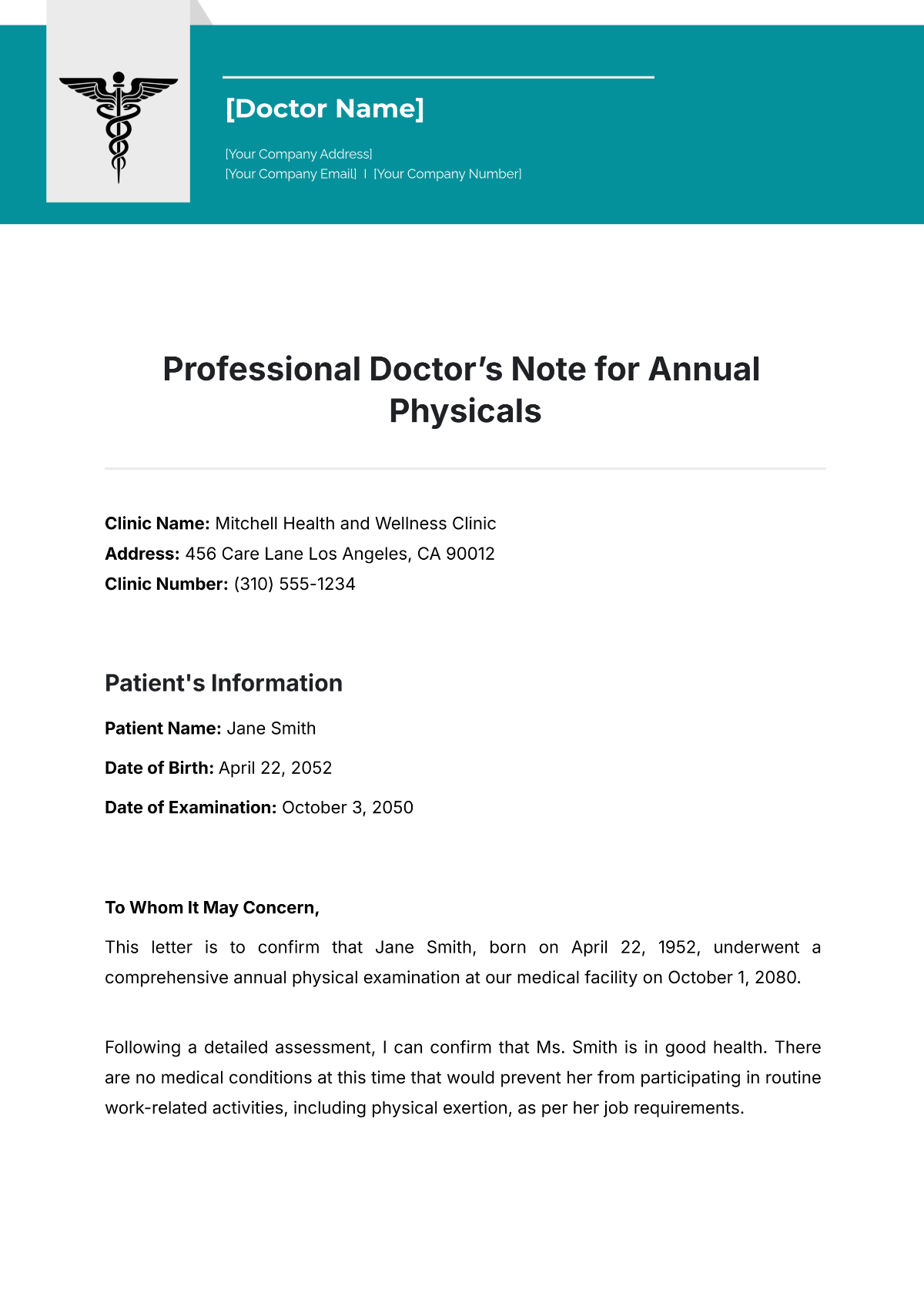
AI Doctor Note Template PDF and Document Formats
An ai doctor note template pdf is useful when the goal is to preserve a finalized layout for printing or secure sharing. PDF is particularly helpful because the recipient generally sees the document as a fixed page rather than as an easily altered editable file.
However, PDF is usually the final distribution format rather than the best format for initial drafting. A clinician or administrative team may create and review the document in an editable environment and then export the approved version to PDF.
Word or Google Docs can be convenient during drafting because fields can be edited, checked, and rearranged. A PDF can then be generated after the content has been reviewed.
When evaluating a PDF template, check whether it is actually fillable or merely a static image. A static PDF may require separate editing software, while a fillable form can provide structured fields.
Regardless of format, the same rule applies: file type does not determine authenticity. A PDF containing invented information remains inaccurate, and an authentic clinical document can exist in several legitimate formats depending on the workflow.
PDF Quality Checks
A professional PDF should preserve readable typography, consistent spacing, complete fields, and a clear hierarchy. Text should not be clipped when exported, and signatures or authentication elements should remain visible where appropriate.
Dates should be checked after export because formatting conversions can occasionally alter line breaks or field alignment. The final PDF should also be compared with the reviewed source document before distribution.
File names should avoid unnecessary patient information when possible, particularly when documents are stored or transmitted electronically. Organizations should follow their own secure-record and document-management procedures.
For sensitive documents, the destination and transmission method can matter as much as the document itself. Sending a correctly formatted medical letter through an inappropriate channel can still create privacy problems.
A final PDF review should therefore consider content, layout, recipient, transmission method, and authorization rather than simply asking whether the document “looks professional.”
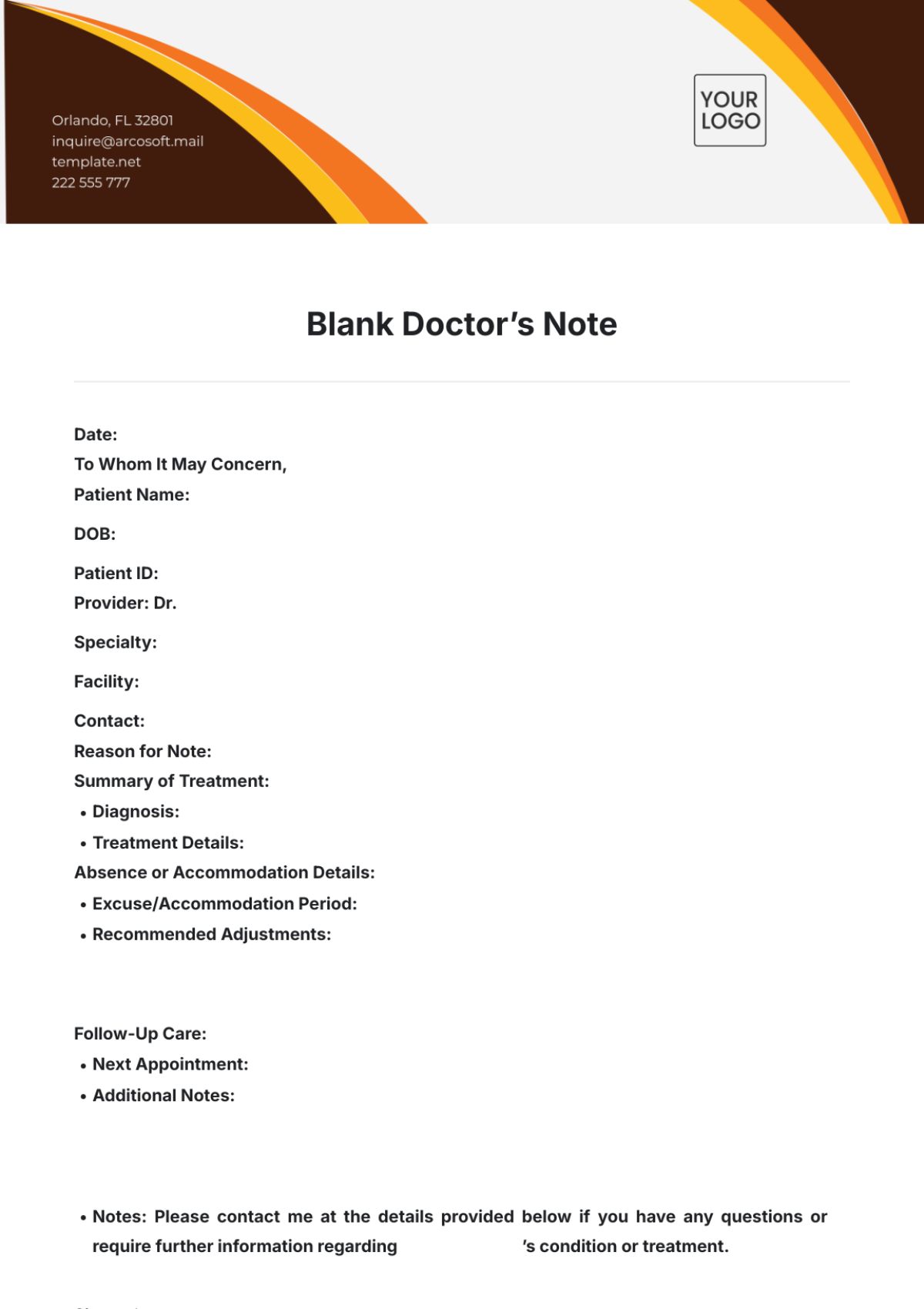
AI Doctor Note Template Google Docs Workflows
An ai doctor note template google docs workflow can be convenient for collaborative drafting, especially when a practice uses cloud-based document systems. The advantage is easy editing and standardized formatting, but the workflow must still respect the organization’s privacy and access controls.
A useful process begins with a template containing clearly labeled fields. Authorized staff can populate those fields from verified information, use AI to draft appropriate administrative wording, and then route the document for professional review.
Access permissions are important. Medical documents should not be shared through broad public links or uncontrolled accounts simply because the editing platform makes sharing easy.
Version control is another consideration. If several people can edit the same document, the organization should know which version was reviewed and issued. A final approved copy should be distinguishable from an earlier draft.
Google Docs can be an editing environment, but it does not itself authenticate the medical statement. The healthcare professional’s review and authorized issuance remain essential.
When an Editable Template Is Better Than a PDF
An editable document is often more practical during drafting because it allows corrections without rebuilding the entire page. This is especially useful when a practice has several related templates for work, school, appointment confirmation, and return-to-work situations.
The editable version should be treated as a working document rather than the final record when the workflow requires a fixed issued copy. Once approved, the organization can preserve the final version according to its document-retention practices.
AI can assist with language refinement at this stage, but every generated sentence should be checked against the source information. The goal is to improve clarity, not to add medical facts.
A template can also contain optional sections that are removed when irrelevant. This prevents documents from becoming cluttered with headings that do not apply to a particular case.
The best editable templates are therefore modular, transparent, and easy to review.
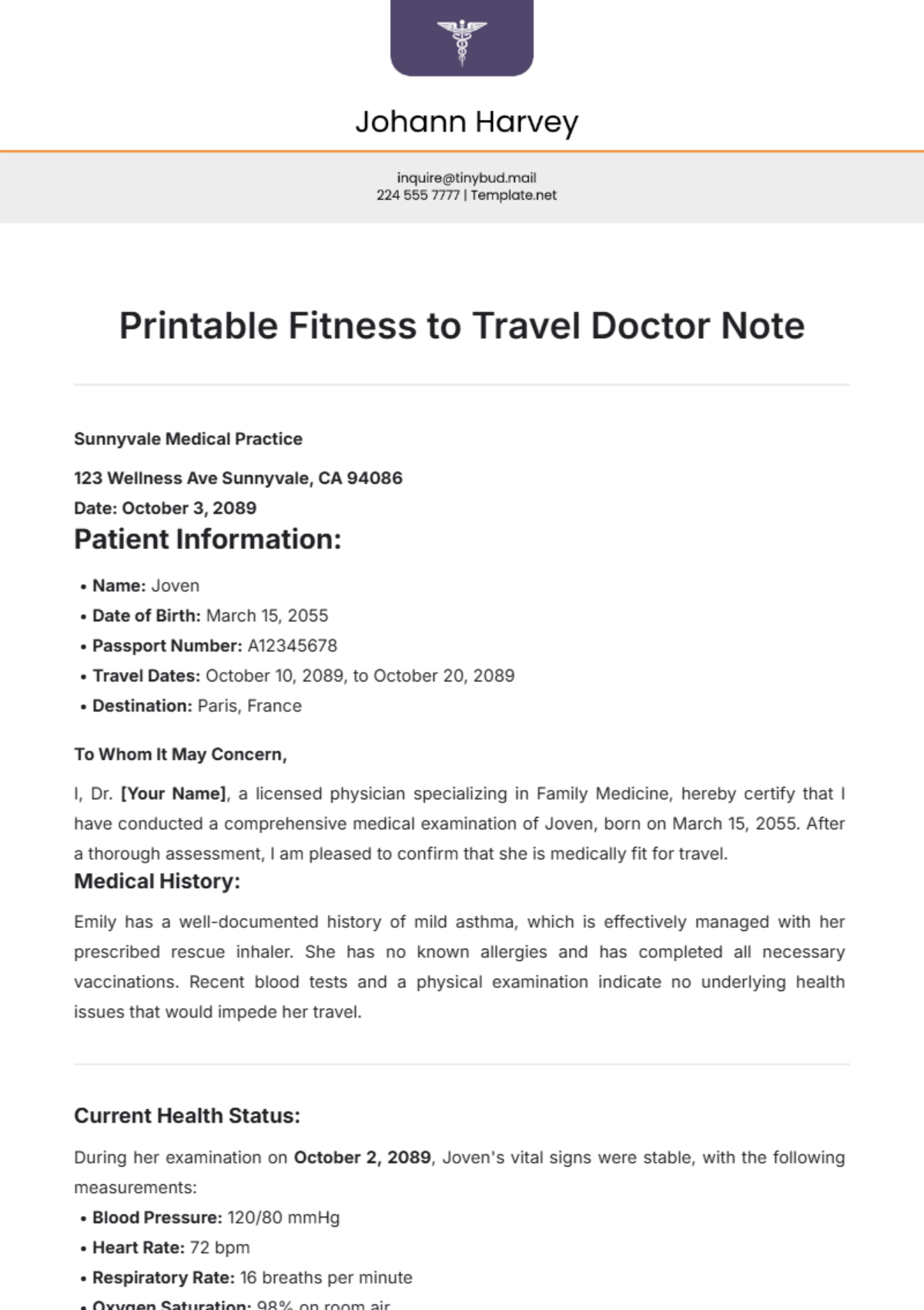
How an AI Doctor Note Generator Should Work in a Legitimate Workflow
An ai doctor note generator should be treated as a drafting assistant rather than an independent medical authority. The most defensible workflow begins with information that has already been documented through a genuine encounter.
First, the clinician or authorized staff member identifies the document type. The system should know whether it is producing an appointment confirmation, absence note, return-to-work statement, return-to-school note, or another administrative document.
Second, the user provides only the information necessary for that document. Unnecessary medical details should not be copied into an external letter merely because they are available in the clinical record.
Third, AI generates a draft using a predefined structure. The system can improve grammar, organize dates, and place information in the appropriate sections, but it should not invent missing information.
Fourth, a qualified reviewer compares the output against the source record. This is the stage where errors, unsupported statements, wrong dates, and inappropriate disclosures should be removed.
A Five-Stage Review Model
Stage one: identity. Confirm that the correct patient and provider information appear in the document. This prevents an administrative error from becoming a patient-safety or privacy problem.
Stage two: encounter. Confirm the date and nature of the actual consultation or evaluation. Do not allow a generated document to imply an encounter that did not occur.
Stage three: recommendation. Confirm that the absence period, return date, restrictions, or accommodations match the provider’s actual assessment.
Stage four: disclosure. Remove clinical information that is unnecessary for the intended recipient, while retaining anything legitimately required for the document’s purpose.
Stage five: authentication. The authorized healthcare professional approves and issues the final document through the appropriate practice workflow. AI does not substitute for this responsibility.
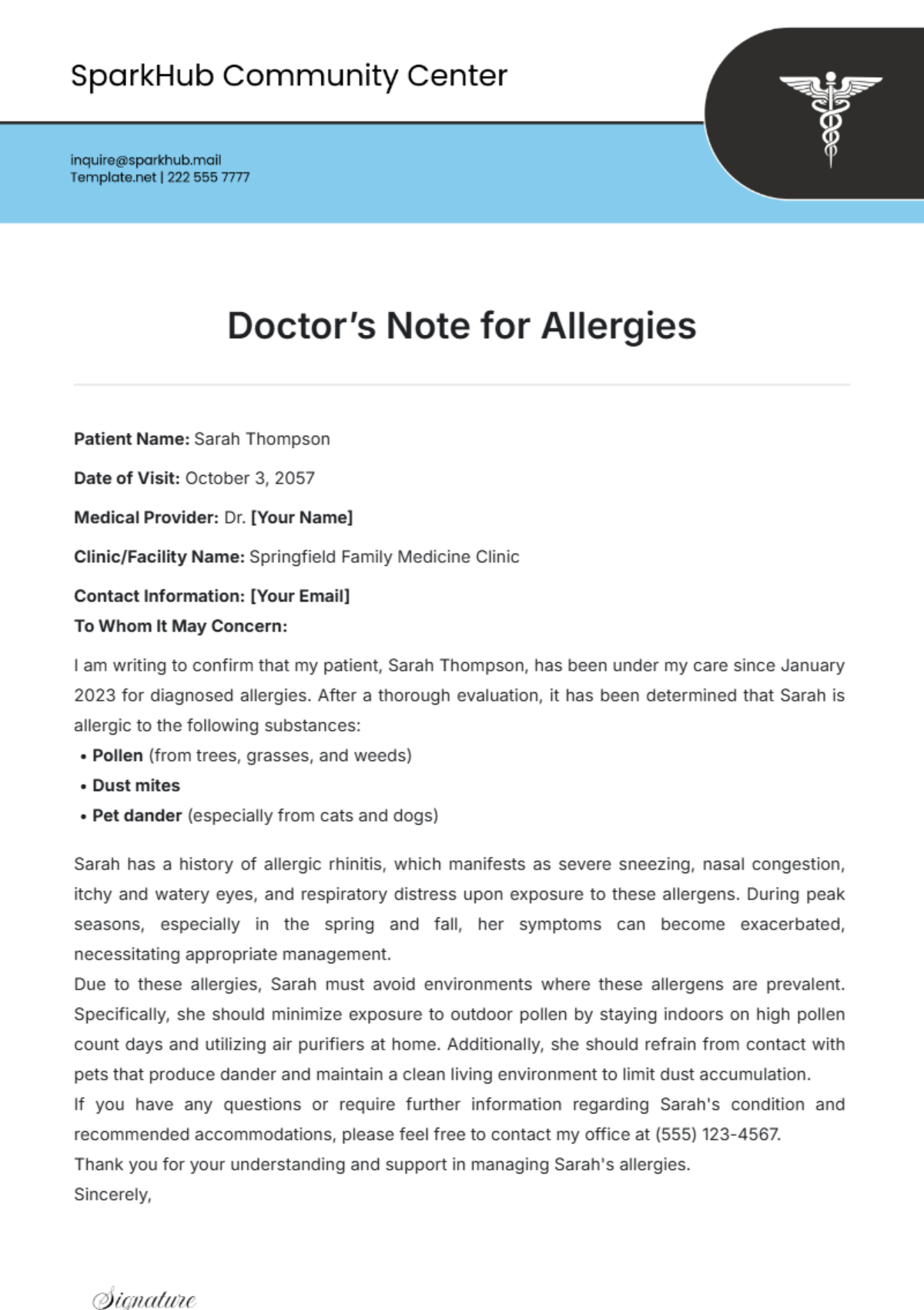
AI Doctors Note Template Free Download: What to Check Before Using a Resource
The phrase ai doctor note template free download can attract users who want a ready-made document. Before downloading anything, determine whether the resource is a blank template, a sample, an editable document, or a completed example intended only to demonstrate layout.
A sample document should not be copied and submitted as though it describes a real clinical encounter. Names, dates, diagnoses, signatures, license numbers, and clinic information in examples are often placeholders or fictional demonstration data.
Check whether the resource provides an editable version, whether its license permits the intended use, and whether the format works with your software. A downloadable file is useful only if its permissions and functionality are understood.
Also check whether the resource contains branding that might be mistaken for a real medical provider. A generic template should not be altered to impersonate a clinic, physician, or institution.
The safest use of a downloaded template is as a structural reference for an authorized medical-documentation process.
Why Downloadable Templates Need Human Review
A downloaded template can contain outdated language, unnecessary fields, or assumptions that do not apply to the recipient. It may also be designed for a different jurisdiction or organizational policy.
AI adds another potential source of error because generated wording may sound more authoritative than the underlying information justifies. This makes a final review especially important.
When a template is used repeatedly, organizations should periodically review it rather than assuming that an old format remains appropriate indefinitely. Policies, workflows, and software requirements can change.
A useful template is therefore a maintained tool rather than a permanent authority.
The next example demonstrates how a document can combine a clear heading, patient fields, a medical statement, an absence period, and provider authentication in a single-page format.

AI Doctors Note for Work: Privacy and Minimum Necessary Information
An ai doctors note for work should be designed around the recipient’s legitimate administrative need. An employer may need confirmation of an absence, a return date, or functional restrictions without needing a complete description of the patient’s medical history.
Privacy principles vary by jurisdiction and circumstance, so organizations should use appropriate professional and legal guidance when determining exactly what may be disclosed. A template should not claim that one wording is universally required.
AI can make privacy mistakes if it summarizes too much information. A system instructed to “write a detailed note” may include facts that are irrelevant to the employer’s decision. A better workflow asks for a concise administrative document and provides only the information necessary for that purpose.
Clinicians should also check automatically generated references to diagnoses, medications, tests, or treatment plans. If the recipient does not need those details, they may not belong in the external document.
Privacy is not merely a legal issue. It is also a document-design issue. A shorter, purpose-specific template naturally reduces opportunities for unnecessary disclosure.
Restrictions and Accommodations
Restrictions should be expressed clearly enough for the recipient to understand the functional limitation. Examples might involve modified duties, temporary limits on particular activities, or a specified reassessment period, but the actual restrictions must be determined by the appropriate healthcare professional.
AI can organize several restrictions into a readable list or table, but it should not invent limits simply because they are common in similar situations.
A good template also includes an “if applicable” approach. That keeps unrelated restrictions out of documents where they do not apply.
Return dates should likewise be based on the clinician’s assessment. If the return date is uncertain, the document should not manufacture a precise date merely to make the form look complete.
These controls make the document both clearer and safer.
AI Doctor Note Template for Students: Practical Design Principles
Student documentation benefits from a simple hierarchy. The recipient should be able to identify the student, the relevant date, the provider, and the recommendation without searching through dense clinical language.
A student template may include the school name or recipient, absence period, expected return date, and applicable restrictions. The provider’s contact information can support legitimate verification when appropriate.
For physical education or sports participation, the document may need to state whether the student should be excused from specific activities. Again, those recommendations must come from the healthcare professional rather than the AI system.
When AI drafts such a note, it should preserve neutral wording and avoid adding unnecessary details about the student’s medical condition. This is especially important when the document will be handled by nonclinical school personnel.
A good school template is therefore short, specific, and purpose-driven.
Example Scenario
Consider a hypothetical student who was genuinely evaluated by a healthcare professional and advised to remain away from school for two days. The clinician could use a school absence template containing the student’s name, evaluation date, absence dates, expected return date, and provider authentication.
The AI system could help turn those verified facts into a professional paragraph. It should not add a diagnosis unless the clinician decides that disclosure is appropriate, and it should not extend the absence period beyond the provider’s documented recommendation.
If the school asks for an additional accommodation, the clinician can determine whether another document is appropriate. AI can assist with formatting that document after the clinical decision has been made.
This separation between medical judgment and document drafting is what makes AI assistance useful without treating generated text as independent medical evidence.
The following visual is another example of a return-to-school document structure and shows how return information can be made prominent.
What People Mean by AI Doctor Note Template Reddit Searches
The phrase ai doctor note template reddit reflects a different type of search intent from someone looking for a clinical template. People often use community discussions to compare experiences, ask whether a format was accepted, or discuss concerns about online documentation services.
Community discussions should be treated as anecdotal rather than authoritative. A comment describing what happened at one workplace or school does not establish a universal policy, legal requirement, or medical-documentation standard.
Reddit discussions can still reveal useful questions to investigate. For example, users may raise concerns about verification, whether an employer accepts a particular format, or whether a school requires specific information.
The correct next step is to verify those questions against the actual employer, school, healthcare provider, or applicable official guidance. Community commentary should not replace the governing policy.
Most importantly, discussions about fake or fabricated medical notes should not be interpreted as legitimate documentation advice. A generated or edited document becomes problematic when it falsely represents an examination, provider, signature, diagnosis, or authorization.
Common Mistakes When Using AI Doctor Note Templates
The first common mistake is confusing formatting with authenticity. A document can have a professional letterhead, clean typography, and a signature line while still being invalid because no authorized professional issued it.
The second mistake is allowing AI to fill gaps with assumptions. If the source information does not specify a return date, diagnosis, or restriction, the system should not invent one simply to complete the template.
The third mistake is copying too much medical information into an external document. A clinical record may contain details that are relevant to treatment but unnecessary for an employer or school.
The fourth mistake is failing to compare the final output against the original record. AI can introduce errors through summarization, date confusion, missing qualifiers, or inappropriate wording.
The fifth mistake is treating a generic template as an official requirement. Requirements differ, and a template should be adapted to the actual context rather than assumed to be universally accepted.
Other Quality Problems
Inconsistent dates are particularly serious. A document might mention one evaluation date in the header and another date in the body. Automated review should check all date fields before issuance.
Provider information should also be consistent. A generated letter should not accidentally combine the name of one clinician with the practice information of another.
Another problem is excessive certainty. Phrases that promise a patient will definitely recover by a particular date may be inappropriate when the clinician can only recommend a reassessment or expected return.
Finally, a document should not contain leftover placeholder text. Fields such as “[Patient Name]” or “[Return Date]” should be caught during final review.
These mistakes are preventable with a structured review checklist and a clear separation between drafting and authorization.
Best Practices for Clinics and Healthcare Teams
Clinics considering AI-assisted notes should begin with document governance rather than software selection. Define which document types may be drafted with AI, who may use the system, what information can be entered, who reviews the result, and how the final document is stored.
Templates should be standardized where possible. A practice might maintain separate templates for appointment confirmations, work absence, school absence, return-to-work clearance, and clinical documentation. Each template should have a clear purpose.
AI prompts or configuration should emphasize factual fidelity. The system should be told to use only supplied information, preserve dates exactly, avoid inventing clinical findings, and identify missing information rather than filling gaps.
Human review should be mandatory for documents that communicate clinical conclusions or restrictions. The reviewer should have sufficient authority and knowledge to determine whether the document is accurate.
Organizations should also periodically test their templates. A controlled test can reveal whether AI changes dates, expands diagnoses, creates unsupported recommendations, or produces confusing language.
Designing for Review
A template should make errors easy to spot. Clear labels, separate sections, and consistent field order help the reviewer scan the document quickly.
Important administrative information should not be buried inside long paragraphs. Dates, restrictions, and return guidance are often easier to verify when visually separated.
Optional sections should be clearly identified so they can be removed when irrelevant. This avoids clutter and reduces the temptation to fill fields merely because they exist.
A review box or internal workflow marker can also help staff confirm that the document has passed the appropriate checks before it is issued, although such internal controls should not be confused with the medical signature itself.
The goal is not to make AI produce a document with no human involvement. The goal is to make human review faster, clearer, and more reliable.

Practical Solution: A Safe AI-Assisted Doctor Note Workflow
The most practical solution is to treat the ai doctor note template as one component of a controlled documentation workflow. The workflow should begin with a legitimate clinical encounter and end with an authorized professional approving the final document.
Step 1: Identify the document purpose. Decide whether the document is an appointment confirmation, work absence note, school absence note, return-to-work statement, return-to-school statement, or another administrative document. Do not use one generic format for every situation.
Step 2: Gather verified facts. Use the actual patient and encounter information. Confirm the patient’s identity, date of evaluation, relevant recommendation, absence period, return guidance, and applicable restrictions.
Step 3: Minimize disclosure. Include only information appropriate for the intended recipient. Do not automatically transfer the entire clinical history into an employer- or school-facing document.
Step 4: Generate a draft. Use the selected template and AI assistance to organize the verified information. Configure the system to avoid adding facts that are not present in the source material.
Step 5: Review every field. Check names, dates, recommendations, restrictions, provider information, and recipient details. Compare the generated text with the source record rather than reviewing the document only for grammar.
Step 6: Remove unsupported content. Delete any statement that was not established by the clinician. If the AI introduced a diagnosis, date, treatment detail, or restriction that was not supplied, it should not remain in the final document.
Step 7: Authenticate appropriately. The authorized healthcare professional should approve and issue the final document according to the practice’s normal procedures. AI-generated text is not a substitute for professional authentication.
Step 8: Export and inspect. If the document will be delivered as PDF, inspect the exported version for missing text, layout problems, incorrect dates, or misplaced signatures.
Step 9: Deliver securely. Use an appropriate communication method for sensitive medical information. Convenience should not override the organization’s privacy and security procedures.
Step 10: Retain the final version appropriately. Where applicable, preserve the issued document and relevant audit information according to the healthcare organization’s record-management practices.
This workflow is more useful than simply asking an AI system to “make a doctor’s note.” It creates a defined boundary between clinical facts, automated drafting, human review, and final authorization.
For example, a legitimate clinician could start with a documented appointment, select an absence template, provide the verified dates and recommendation, generate a concise draft, remove unnecessary clinical information, and then approve the final document. The AI has reduced administrative writing without becoming the source of the medical decision.
That approach also scales better. Once a clinic has separate templates for common administrative scenarios, AI can assist with repetitive language while the practice retains control over what information is disclosed and who can issue the document.
A practical quality-control rule is simple: every factual statement in the final document should be traceable to a legitimate source, and every clinical conclusion should be attributable to an appropriately authorized professional.
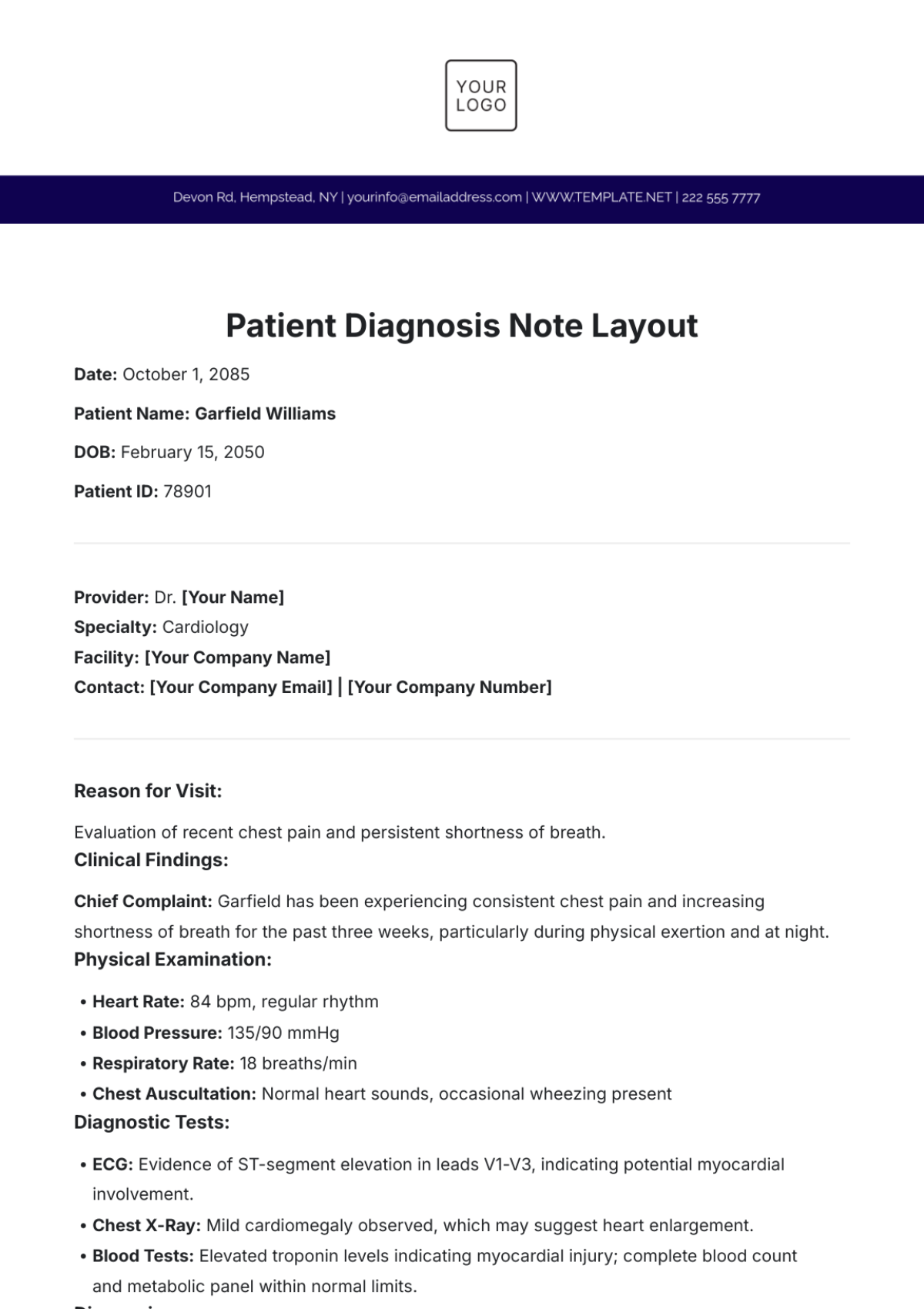
The following example represents a more detailed clinical-style layout and demonstrates why structured fields can make professional review easier.
How to Evaluate an AI Doctor Note Template
Start by checking purpose. A good template should clearly state whether it is intended for an absence note, appointment confirmation, clinical note, return-to-work document, or another use. Ambiguous templates tend to encourage inappropriate reuse.
Next, inspect the fields. The document should contain the information necessary for its purpose without forcing users to enter excessive medical details.
Then evaluate editability. A useful template should allow authorized users to correct dates, remove irrelevant sections, and adjust wording without damaging the document structure.
Privacy should be evaluated separately. If an AI service is involved, determine what information the system processes and whether its use is appropriate for the organization’s data-handling requirements.
Finally, evaluate the review process. A template is only as reliable as the workflow surrounding it. If no one checks the generated document, even a beautifully designed template can produce administrative errors.
Questions to Ask Before Adoption
Does the template distinguish between patient-reported information and clinician-determined information? Does it make absence dates easy to verify? Can unnecessary diagnosis information be removed? Does it support provider authentication without pretending that AI itself is a clinician?
Can the template be adapted for different recipients? Does it clearly separate work, school, and clinical uses? Does it preserve the original facts without encouraging AI to fill missing fields?
For AI-enabled tools, another important question is whether users can review the generated text before it becomes final. Systems that encourage automatic issuance without meaningful review create unnecessary risk.
A strong template should make the safe workflow easier rather than making shortcuts easier.
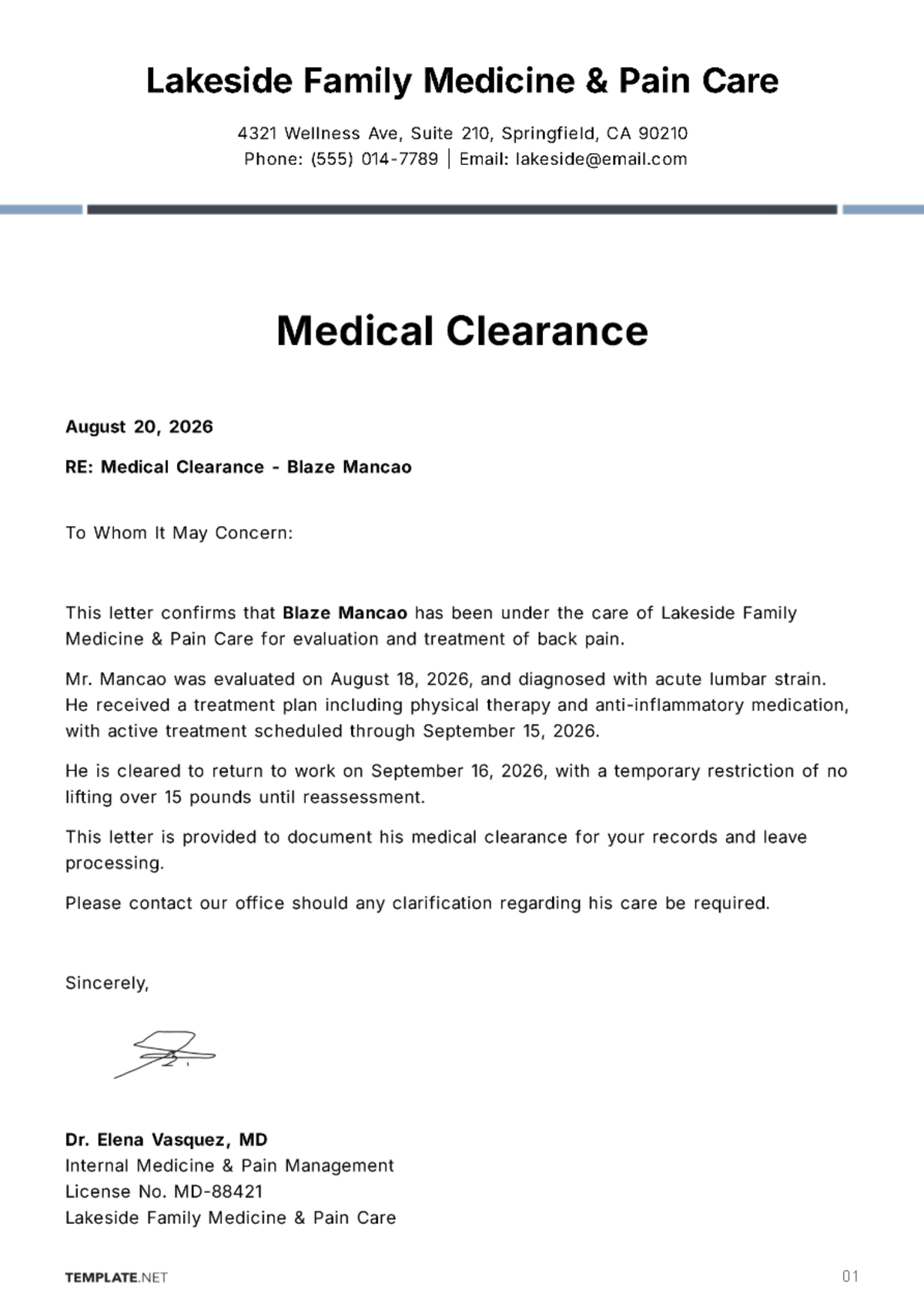
The final visual example in the article shows a medical-clearance structure that emphasizes the distinction between clinical evaluation, return status, restrictions, and provider authentication.
Reference Examples
The following reference visuals correspond to the requested search phrases and illustrate different aspects of AI-assisted doctor-note templates, document formats, work and school use, and online search discussions. They are visual references only and should not be treated as proof that a particular template is an official or universally accepted medical form.
ai doctors note template

Source: Template.net
ai doctor note template free

Source: Template.net
ai doctor note template pdf
Source: Template.net
ai doctor note template reddit
Source: Cheezburger / FAIL Blog, featuring a Reddit discussion screenshot
ai doctor note template google docs
Source: Template.net
ai doctor note template for work
Source: Template.net
ai doctor note template free download
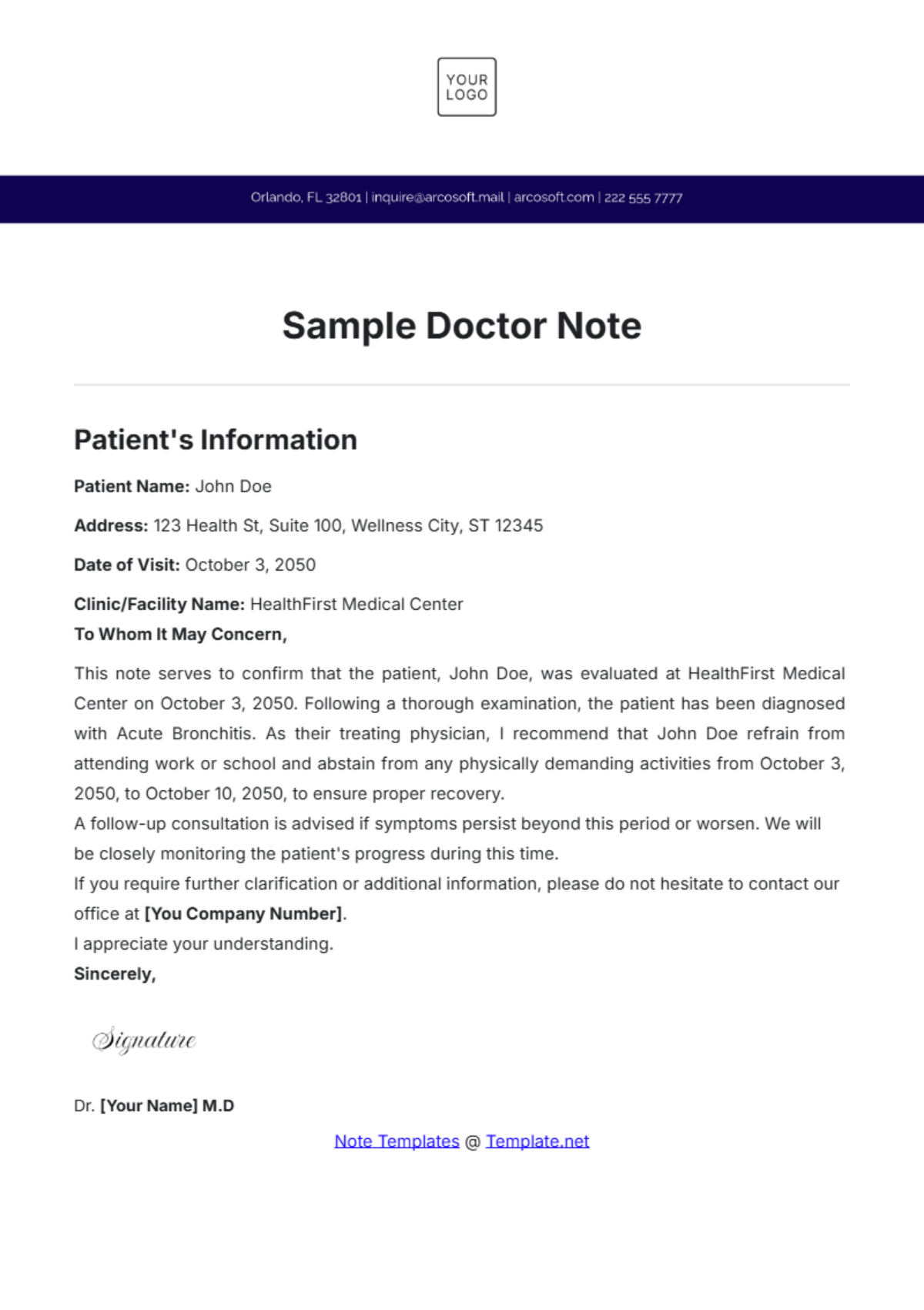
Source: Template.net
ai doctor note template for students
Source: Template.net
ai doctor note generator
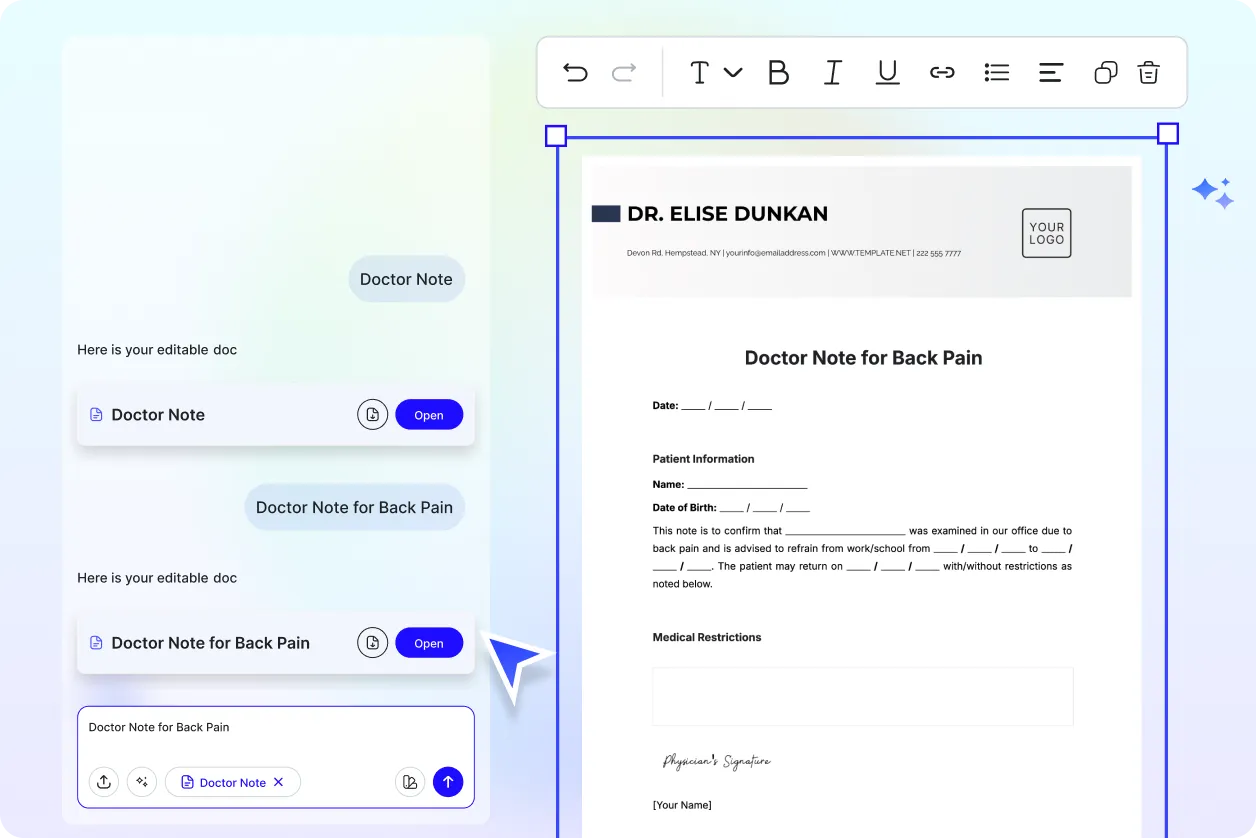
Source: Template.net
ai doctors note for work
Source: Template.net
ai for doctors notes
Source: Template.net
free ai doctors note generator
Source: Template.net
Frequently Asked Questions
What is an ai doctor note template?
An ai doctor note template is a structured document format that can be used with AI-assisted drafting tools to organize legitimate medical-documentation information. It is not itself medical evidence and does not replace professional review or authorization.
Can AI create a legitimate doctor’s note?
AI can assist an authorized healthcare professional with drafting and formatting a note based on real, documented information. The final document should be reviewed and issued through an appropriate professional process. AI alone cannot establish that a patient was examined or authorize a medical statement.
Is an AI-generated note automatically valid?
No. Validity depends on the circumstances, the issuing professional, the recipient’s requirements, and applicable rules. A generated document should not be assumed to be official merely because it has professional formatting.
Can an AI template be used for work?
It can support the drafting of a legitimate work-related document when an authorized healthcare professional has actually evaluated the patient and approves the content. Employer requirements vary, so the final document should match the relevant workplace process.
Can an AI template be used for school?
It can assist with drafting legitimate school absence or return documentation after an appropriate healthcare evaluation. Schools may have different documentation policies, so a generic template should not be assumed to satisfy every institution.
Should a diagnosis always appear on a doctor’s note?
Not necessarily. The appropriate amount of medical information depends on the document’s purpose, the recipient, patient privacy considerations, professional obligations, and applicable requirements. An external administrative document often does not need the full clinical record.
What is the difference between a doctor’s note and a SOAP note?
A doctor’s note used for work or school is usually an administrative communication about attendance, fitness, restrictions, or similar matters. A SOAP note is a clinical documentation structure covering Subjective, Objective, Assessment, and Plan information.
Is a free template the same as an official form?
No. A free template may simply be a general example or editable starting point. It should not be described as an official institutional form unless that status has been independently verified.
What should an AI doctor note generator never do?
It should not invent examinations, diagnoses, dates, restrictions, providers, signatures, or other facts. It should not be used to impersonate a healthcare professional or create a document that falsely represents medical care.
What is the safest way to use AI for medical documentation?
Use AI as a controlled drafting aid, provide only appropriate verified information, require professional review, correct unsupported content, minimize unnecessary disclosure, and issue the final document only through an authorized workflow.
Conclusion
An ai doctor note template can be a useful administrative tool when it is used for legitimate documentation and placed inside a controlled professional workflow. The strongest templates are clear about their purpose, separate clinical information from administrative information, make important dates easy to verify, minimize unnecessary disclosure, and leave final responsibility with the appropriate healthcare professional.
Whether the goal is a work document, student absence note, editable document, PDF, or AI-assisted clinical draft, the same principles apply: use accurate source information, avoid invented facts, review every generated statement, protect sensitive information, and distinguish a template from an officially issued medical document. AI is most valuable when it reduces repetitive writing while preserving human clinical judgment and accountability.
