A dental guard medical device can be an important part of protecting your teeth from grinding, clenching, accidental impact, and other forms of dental wear. Depending on your needs, a dental guard may be recommended for nighttime use, sports protection, or specific dental conditions. Choosing the right type and maintaining it properly can help improve comfort while supporting long-term oral health.
Dental guards are available in different materials, designs, and levels of rigidity. Some are soft and flexible, while others are made from harder materials for people who need stronger protection. A dentist can assess your teeth, jaw, bite, and symptoms to determine whether a dental guard is appropriate and what type may be suitable.
This guide explains what a medical dental guard is, why it may be used, the common types available, how to care for one, and practical considerations before using a dental guard.
What Is a Dental Guard Medical Device?
A dental guard is a removable oral appliance designed to create a protective barrier between the upper and lower teeth. The term dental guard medical is commonly associated with professionally recommended mouthguards or occlusal appliances used to help protect teeth and support specific dental needs.
Dental guards may be used for several purposes. For example, a dentist may recommend an occlusal guard for someone who grinds or clenches their teeth during sleep. A sports mouthguard may be recommended for protecting the teeth and mouth during physical activities where facial impact is possible.
Because dental conditions vary from person to person, a dental guard should not automatically be considered a one-size-fits-all solution. Professional assessment is especially useful when a person has persistent jaw discomfort, significant tooth wear, changes in their bite, or other oral health concerns.
Why Might Someone Need a Dental Guard?
One of the most common reasons for using a dental guard is protection against excessive contact between the teeth. Nighttime grinding, also known as bruxism, can place repeated pressure on teeth and jaw muscles.
A properly selected guard may help create a protective layer between the dental surfaces. It can also provide a physical barrier that reduces direct tooth-to-tooth contact while sleeping.
Common Reasons for Dental Guard Use
- Protecting teeth from excessive grinding or clenching.
- Reducing direct contact between upper and lower teeth.
- Protecting teeth during certain sports and recreational activities.
- Supporting management of symptoms associated with nighttime clenching.
- Helping protect dental restorations when recommended by a dental professional.
- Providing a customized oral appliance for specific dental needs.
It is important to remember that a dental guard does not necessarily treat the underlying cause of grinding or jaw problems. Instead, it may be one part of a broader dental care plan.
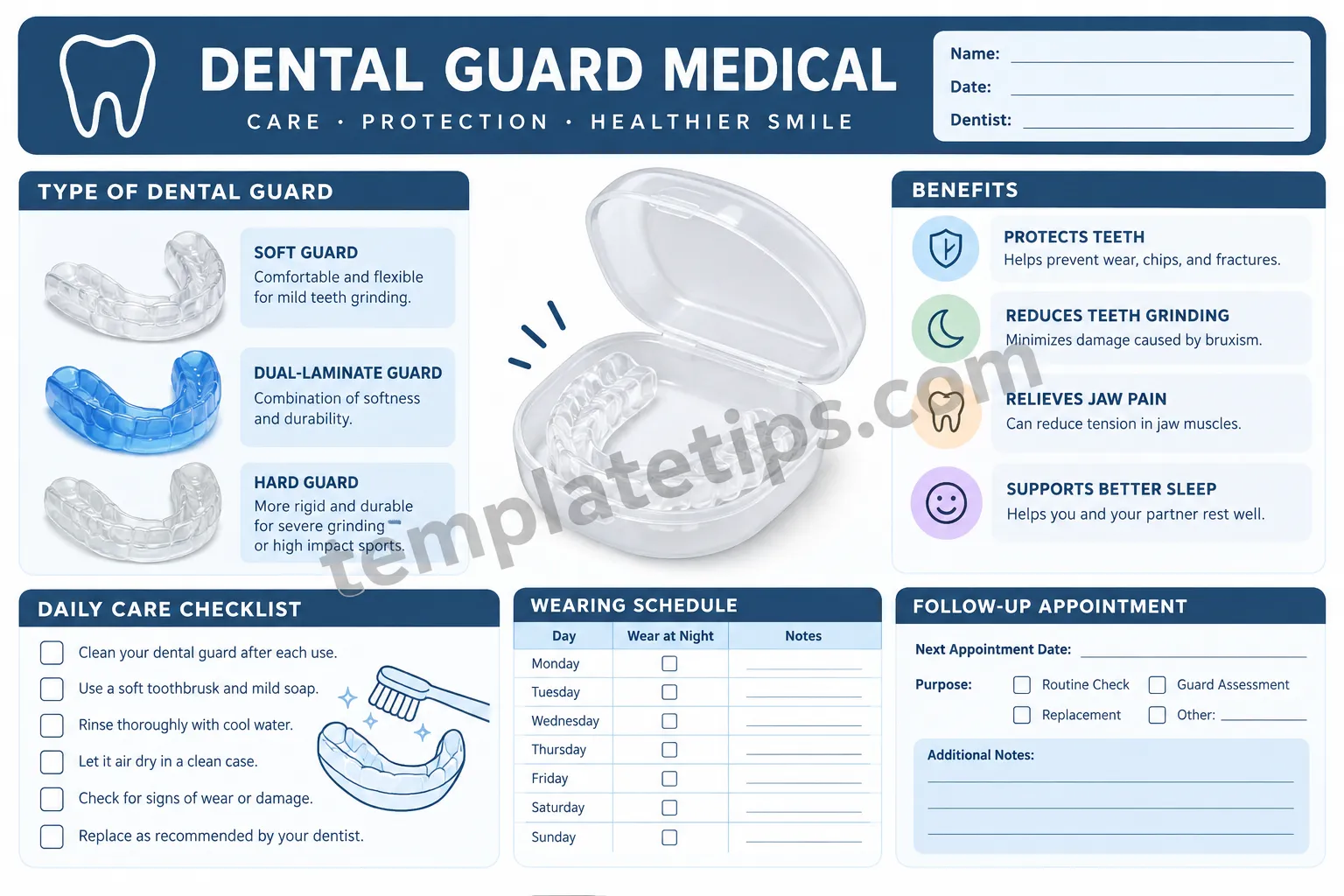
Types of Dental Guards
Not every dental guard is designed for the same purpose. Understanding the main categories can make it easier to discuss your options with a dentist.
Soft Dental Guards
Soft guards are generally made from flexible materials and may be comfortable for certain users. They can be considered for some people with mild grinding or for specific protective purposes. However, their suitability depends on the individual situation and the recommendation of a dental professional.
Hard Dental Guards
Hard guards are made from more rigid materials and are often designed for durability and controlled contact between the teeth. They may be appropriate for certain cases of significant grinding or clenching, but they can require an adjustment period.
Dual-Laminate Dental Guards
Dual-laminate designs combine different material characteristics. They may provide a balance between cushioning and durability. Whether this type is suitable depends on the user’s dental condition, comfort preferences, and professional assessment.
Sports Mouthguards
Sports mouthguards are designed primarily to reduce the risk of dental injury during physical activities. They differ from nighttime grinding guards because their purpose, design, and fit may be different.
For activities with a higher risk of facial impact, a properly fitted mouthguard can provide an additional layer of protection for the teeth and soft tissues of the mouth.
Custom Dental Guard vs. Over-the-Counter Options
Dental guards can generally be obtained through dental professionals or purchased as ready-made products. The most appropriate option depends on the intended use and the person’s oral health.
A custom dental guard is made based on impressions or digital scans of the patient’s teeth. Because it is designed for an individual’s mouth, it can provide a more precise fit than many generic alternatives.
Over-the-counter guards may be less expensive and easier to obtain. However, fit and comfort can vary considerably. A poorly fitting appliance may feel uncomfortable, interfere with normal use, or fail to provide the intended level of protection.
If you have significant tooth wear, dental restorations, jaw symptoms, orthodontic appliances, or persistent grinding, consult a dentist before choosing a guard.
How to Use a Dental Guard Correctly
Following the instructions provided with your dental guard is important. Usage instructions can vary depending on the type of appliance and its intended purpose.
Before Wearing Your Guard
- Brush and floss your teeth as part of your normal oral hygiene routine.
- Clean the dental guard according to the manufacturer’s or dentist’s instructions.
- Check the appliance for cracks, sharp edges, deformation, or other visible changes.
- Make sure the guard is correctly positioned before use.
During Use
A dental guard should generally feel secure without causing significant discomfort. Do not force an appliance into position if it does not fit properly. If the guard suddenly feels too tight, loose, painful, or different from its normal fit, ask your dentist for advice.
After Use
Remove the guard as directed and clean it carefully. Allowing it to dry before placing it in a ventilated protective case can help maintain better hygiene.
How to Clean and Store a Dental Guard
Regular cleaning is an important part of dental guard care. Oral appliances can accumulate saliva, bacteria, plaque, and debris when they are not cleaned properly.
- Rinse the guard with cool or lukewarm water after use.
- Use a soft toothbrush when cleaning is recommended.
- Follow the manufacturer’s cleaning instructions.
- Avoid exposing the appliance to very hot water unless specifically instructed to do so.
- Allow the guard to dry before storing it.
- Keep it inside a clean, ventilated protective case.
- Keep the case away from pets and young children.
Harsh cleaning products or inappropriate temperatures can damage certain dental guard materials. When in doubt, follow the instructions supplied with your specific appliance or ask your dental professional.
Signs That Your Dental Guard May Need Attention
Dental guards do not last forever. Regular inspection can help identify changes before they become a bigger problem.
Watch for These Changes
- Visible cracks or tears.
- Sharp or rough edges.
- Significant thinning or worn areas.
- A noticeable change in fit.
- Persistent discomfort while wearing the guard.
- Changes in your bite after using the appliance.
- Persistent jaw pain or other new symptoms.
If you notice these issues, stop relying on the appliance as your only solution and contact a dental professional for an evaluation. Replacement timing varies according to the material, frequency of use, grinding intensity, and condition of the appliance.
Dental Guard Medical Care Tips
Good habits can extend the useful life of a dental guard while keeping the appliance cleaner and more comfortable.
- Keep it clean: Clean the appliance consistently rather than allowing buildup to accumulate.
- Handle it carefully: Avoid bending or twisting the guard unnecessarily.
- Use a protective case: Store the guard in an appropriate case when it is not being worn.
- Inspect it regularly: Look for changes in shape, thickness, fit, or surface condition.
- Attend dental checkups: Your dentist can evaluate both your teeth and the condition of the appliance.
- Replace it when necessary: Follow professional recommendations instead of waiting until the appliance is severely damaged.
Can a Dental Guard Help With Teeth Grinding?
A dental guard can be used as part of a management approach for teeth grinding, particularly nighttime bruxism. Its primary role is generally to protect the teeth from excessive contact and wear rather than to eliminate every cause of grinding.
People grind or clench their teeth for different reasons, and treatment depends on the individual. A dentist may assess tooth wear, jaw symptoms, sleep-related concerns, medications, stress-related factors, and other relevant information before recommending an appropriate approach.
If grinding is frequent or associated with pain, headaches, damaged teeth, or other symptoms, professional assessment is recommended rather than simply purchasing an appliance without guidance.
When Should You Talk to a Dentist?
Professional advice is particularly valuable when you experience ongoing dental or jaw symptoms. Consider arranging a dental appointment if you have unexplained tooth sensitivity, noticeable tooth wear, frequent jaw discomfort, difficulty using a dental guard, or repeated damage to the appliance.
You should also consult a dentist if you are unsure whether you need a nighttime guard, sports mouthguard, or another type of oral appliance. The correct design depends on the intended purpose and your individual dental anatomy.
Frequently Asked Questions About Dental Guard Medical Care
Is a dental guard the same as a mouthguard?
The terms can overlap, but the intended purpose can differ. A sports mouthguard is primarily designed for protection from physical impact, while an occlusal or nighttime dental guard may be used to manage tooth contact associated with grinding or clenching.
How often should a dental guard be replaced?
There is no single replacement schedule that applies to everyone. Replacement depends on wear, material, frequency of use, fit, and professional recommendations. Inspect your appliance regularly and ask your dentist when replacement is appropriate.
Can I clean my dental guard with hot water?
Very hot water can affect some dental guard materials and may change their shape. Unless the product instructions specifically allow it, cool or lukewarm water is generally a safer choice for routine rinsing.
Can children use dental guards?
Children may need mouth protection in certain situations, particularly during sports, but the appropriate appliance depends on age, dental development, activity, and individual needs. Parents or guardians should discuss suitable options with a dental professional.
Conclusion
A dental guard medical appliance can provide valuable protection when it is selected, fitted, used, and maintained appropriately. Dental guards may be used for nighttime grinding, clenching, sports protection, and other specific dental needs. However, different situations require different designs, so choosing an appliance based solely on appearance or price may not provide the best fit for your circumstances.
Regular cleaning, careful storage, routine inspection, and professional dental checkups can help keep a dental guard hygienic and functional. If you experience persistent discomfort, changes in fit, significant tooth wear, or jaw symptoms, speak with a dentist for personalized guidance.
With the right appliance and consistent care, a dental guard can become a practical part of a broader oral health routine.
