A marketing product feedback collection Template is a structured framework for gathering customer opinions about a product, organizing those responses, and turning them into decisions that marketing, product, sales, and customer experience teams can use. The most useful version is not simply a questionnaire. It connects the questions asked, the customer segment, the feedback source, the product area, the severity of an issue, and the action that follows.
Research into current product-feedback resources shows a common pattern: effective feedback structures combine rating questions with open comments, product-specific questions, customer context, and a way to organize responses after collection. Existing templates from survey and work-management providers also emphasize concise questions, consistent rating scales, comments, categorization, reporting, and follow-up.
For marketing teams, the central goal is to capture feedback that explains not only whether customers like a product, but why they feel that way, who feels that way, what experience created the opinion, and what should happen next. A well-designed template therefore acts as a bridge between customer voice and marketing decisions such as positioning, messaging, audience segmentation, product education, campaign refinement, and retention work.

What a marketing product feedback collection Template is designed to accomplish
The basic purpose is to give every response a consistent structure. Without a common structure, feedback tends to arrive through scattered emails, support conversations, survey responses, reviews, sales notes, social comments, and research interviews. Those sources can contain valuable information, but inconsistent wording makes it difficult to compare one response with another.
A structured template creates a repeatable record. A useful record can include the date, product or feature, customer segment, acquisition source, usage context, rating, feedback category, customer comment, urgency, and follow-up status. Not every project needs every field, but the fields should exist for a reason. Each field should help answer a business question or make later analysis easier.
The template also needs to separate measurement from explanation. A numerical rating can indicate the direction of sentiment, while an open comment can explain the reason behind that rating. Current product-feedback examples commonly combine rating scales with open-ended questions and questions about product features, usability, quality, value, and improvement opportunities.

For marketing purposes, context is particularly important. The same complaint can mean different things when it comes from a first-time buyer, a long-term customer, a trial user, a high-value account, or someone who has never completed the intended product journey. Adding a small number of contextual fields can make later interpretation considerably more useful.
Why structured feedback matters for marketing decisions
Marketing teams often need to understand the language customers naturally use when describing a product. A feedback template preserves that language while adding enough structure to identify recurring themes. Customer comments can reveal confusing terminology, unmet expectations, missing information, perceived weaknesses, desirable benefits, and reasons customers consider a product valuable.
This information can influence messaging without turning customer feedback into a substitute for broader market research. For example, if several customer segments independently describe the same product benefit in similar terms, marketers may want to examine whether that language aligns with existing positioning. If different segments emphasize completely different benefits, the finding may suggest a need for more precise segmentation.
Feedback can also reveal gaps between the promise made before purchase and the experience after purchase. A marketing product feedback collection Template can therefore include fields for the original expectation, actual experience, strongest benefit, biggest difficulty, and desired improvement. This makes it easier to distinguish a product problem from a communication problem.

Another important distinction is between feedback volume and feedback importance. A frequently mentioned issue deserves attention, but a rare issue can still matter when it affects an important customer segment or blocks a critical journey. A good template records enough context to prevent the team from treating every response as equally urgent.
Feedback should lead to a decision
A collection system becomes much more useful when each feedback record can eventually lead to a decision. The decision might be to investigate an issue, change messaging, revise onboarding content, improve documentation, test a product change, monitor the theme, or close the item because no action is currently justified.
This does not mean every customer request should become a roadmap item. Customer feedback is evidence, not an automatic instruction. Teams should consider frequency, customer impact, strategic relevance, feasibility, supporting evidence, and whether the request reflects a broader problem rather than a single preferred solution.
The strongest template therefore gives marketers and product teams a place to record the problem behind the request. Instead of recording only “add feature X,” the record might capture what the customer was trying to accomplish, what prevented success, how often the problem occurred, and what outcome the customer expected.

Core fields to include in the template
The first group of fields should establish feedback identity and context. Useful fields can include feedback ID, date received, product name, feature or product area, customer segment, market, acquisition channel, feedback source, customer type, and usage stage. A business should only collect information it has a legitimate reason to use and can manage responsibly.
The second group should capture the customer’s actual experience. This can include an overall satisfaction score, ease-of-use rating, product quality rating, perceived value, favorite aspect, biggest frustration, expected outcome, actual outcome, and open-ended comments. Rating questions should use consistent scales so results can be compared across periods.
The third group should describe what happens after collection. Useful operational fields include category, theme, severity, customer impact, frequency, owner, status, next action, target review date, and follow-up status. This turns the template from a passive record into a working feedback-management structure.
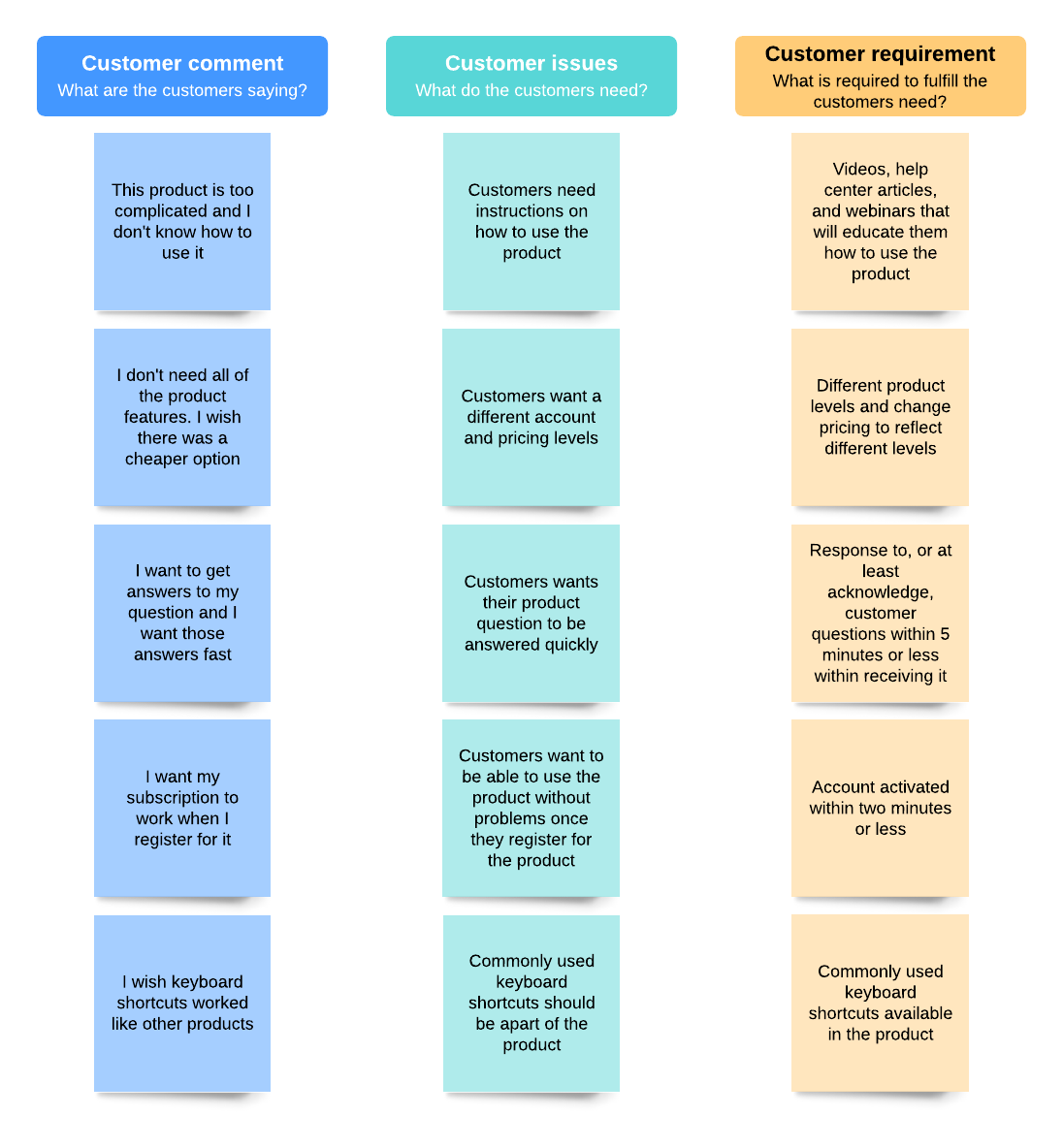
A particularly useful field is feedback type. Possible values might include praise, complaint, question, feature request, usability issue, quality concern, pricing concern, messaging confusion, onboarding issue, or competitive observation. These categories should reflect the actual decisions the organization makes rather than becoming an unnecessarily long classification system.
How to design better questions
Strong feedback questions are specific enough to produce useful answers without forcing respondents to write lengthy explanations. “How was your experience?” is easy to ask but often produces vague answers. A more focused question might ask which part of the product created the most value, what made the experience difficult, or what prevented the customer from reaching a desired outcome.
Use a mixture of closed and open questions. Closed questions make responses easier to compare, while open questions capture unexpected information. A useful sequence can begin with the customer’s context, move into an overall assessment, examine specific product dimensions, and finish with an open comment or improvement question.
Question order also affects the quality of the record. Asking a customer to identify the product or usage context before requesting a detailed opinion gives the later answers a clearer frame. Conditional questions can also reduce unnecessary effort by showing a follow-up question only when it is relevant.

Keep rating scales consistent. If one section uses a five-point satisfaction scale and another uses a seven-point agreement scale, the difference should have a clear reason. Consistency makes reporting easier and reduces the mental effort required from respondents.
Choosing a practical template format
People searching for a marketing product feedback collection template excel are usually looking for a structured spreadsheet that can hold many individual records, while someone searching for a marketing product feedback collection template free may be looking for a starting structure that requires little preparation. A marketing product feedback collection template free download signals a similar desire for a ready-made resource, but the important consideration is whether the structure actually fits the feedback process.
For teams that need a printable record or a fixed document, a marketing product feedback collection template pdf can be useful for offline review and controlled layouts. A marketing product feedback collection template google sheets is more suitable when several collaborators need to work with the same response dataset. For narrative questionnaires and polished internal documents, a marketing product feedback collection template word can be a practical format.
Other searches reflect regional or file-format preferences. A marketing product feedback collection template google docs can suit collaborative document editing, while a marketing product feedback collection template uk or marketing product feedback collection template australia may indicate that the reader wants terminology, spelling, or business context that feels suitable for that market. A marketing product feedback collection template doc is another document-oriented variation, while a marketing product feedback collection template powerpoint is useful when feedback findings need to be presented visually to stakeholders.

The phrase marketing product feedback collection template download can also signal a desire for an immediately usable file. The important quality test is not the file extension but whether the structure supports the intended workflow. A spreadsheet with poor categorization can be less useful than a simple document with clear questions and a well-defined review process.
When a spreadsheet is the better choice
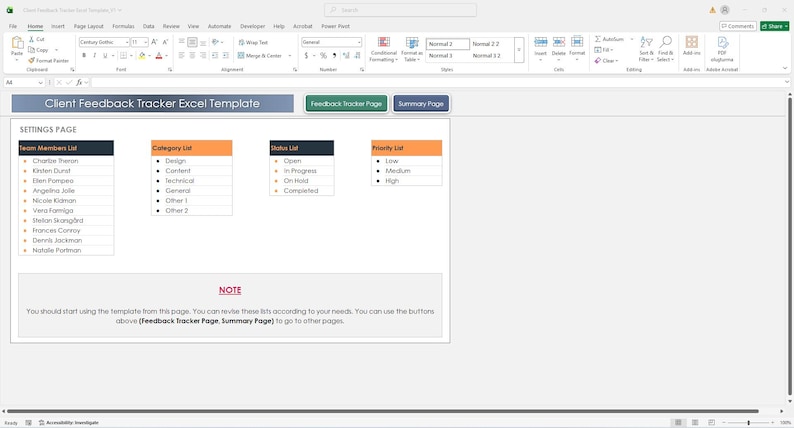
A spreadsheet is especially useful when the organization expects many feedback records. It can provide separate columns for customer context, ratings, categories, themes, ownership, status, and dates. Filters and consistent values make it easier to isolate feedback from a specific segment or product area.
Spreadsheet structures can also support summary calculations. Teams can calculate average ratings, count responses by category, compare periods, and identify themes that require further review. These calculations should be treated as indicators rather than automatic decisions.
The main risk is uncontrolled complexity. If every stakeholder adds new columns and categories, the template can become difficult to maintain. A strong spreadsheet starts with a small set of fields and expands only when a new field answers a recurring business question.
When a document is the better choice
A document-based format is useful for interview guides, structured customer-review forms, research sessions, and situations where respondents need to read explanatory instructions before answering. It can also be easier to share internally when the purpose is qualitative research rather than high-volume record management.
The limitation is that documents do not naturally provide the same filtering and aggregation capabilities as a structured spreadsheet. If a team expects hundreds of responses, it is usually better to establish a structured dataset as the primary record and use documents for selected research sessions or summaries.
For marketing research, a hybrid model can work well. The questionnaire captures customer language and context, while a structured feedback register stores standardized categories and decisions. This preserves qualitative detail without sacrificing organization.
Creating a feedback collection workflow
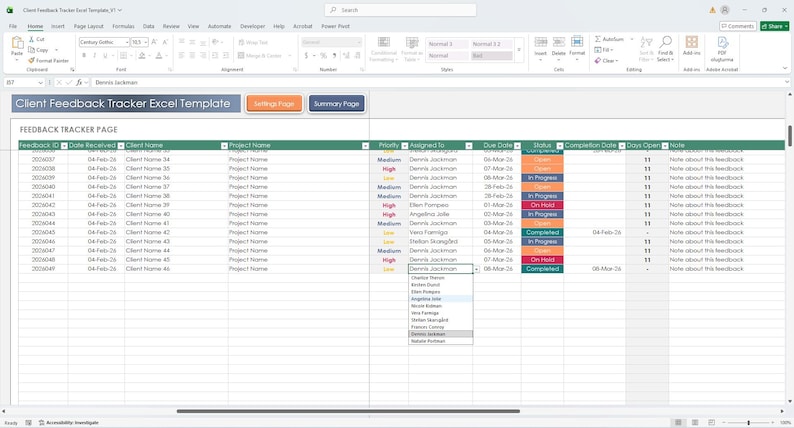
The first stage is collection. Decide where feedback will come from and establish a consistent record for each source. Depending on the organization, sources can include customer surveys, support interactions, sales conversations, product research, reviews, website feedback, customer success notes, or direct requests.
The second stage is normalization. Different people describe similar problems in different language, so the team should identify the underlying theme. “Checkout takes too long,” “payment feels slow,” and “I waited forever before confirmation” might all relate to one broader experience problem.
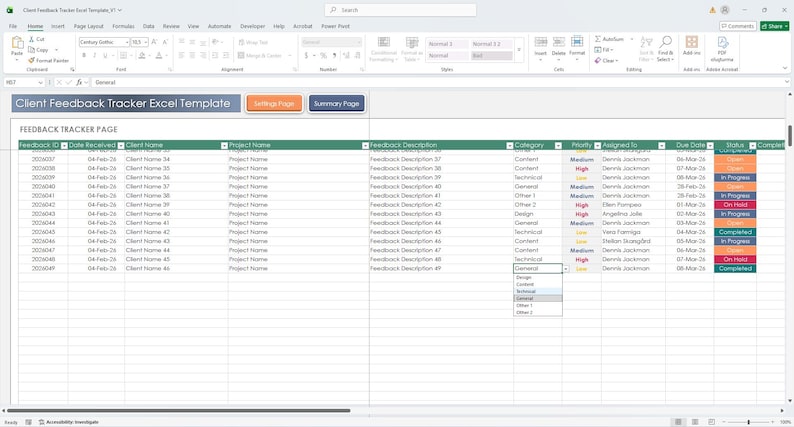
The third stage is categorization. Give each record a controlled category and product area. Avoid creating a new category for every comment. Categories should be broad enough to reveal patterns while remaining specific enough to support decisions.
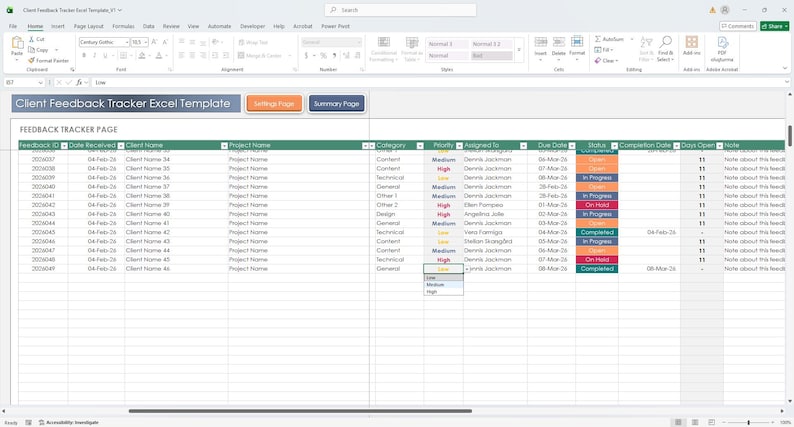
The fourth stage is prioritization. Consider impact, frequency, strategic importance, customer value, urgency, and evidence. A useful priority field can use simple levels such as low, medium, and high, provided the team defines what each level means.
The fifth stage is action tracking. Every high-priority theme should have a responsible owner or a clearly stated next step. If no action is planned, record why. This prevents important feedback from disappearing after the initial review.
The sixth stage is follow-up. When a change is made because of feedback, the team should record the relationship between the feedback theme and the action. Later, the organization can assess whether the change actually improved the relevant customer experience.
How to organize feedback categories
One useful classification layer is the customer journey stage. Feedback can be associated with discovery, evaluation, purchase, onboarding, first use, regular use, renewal, support, or advocacy. This helps marketing teams see whether an issue begins before purchase or becomes visible only after customers start using the product.
A second classification layer is the feedback theme. Themes might include usability, product quality, missing capability, performance, value, pricing perception, messaging, education, support, reliability, or competitive comparison. These categories should be adjusted to the product rather than copied blindly from another organization.
A third layer is customer impact. Ask whether the issue causes confusion, slows a task, prevents completion, reduces perceived value, creates dissatisfaction, or blocks adoption. This helps distinguish minor preferences from problems that meaningfully affect the customer journey.
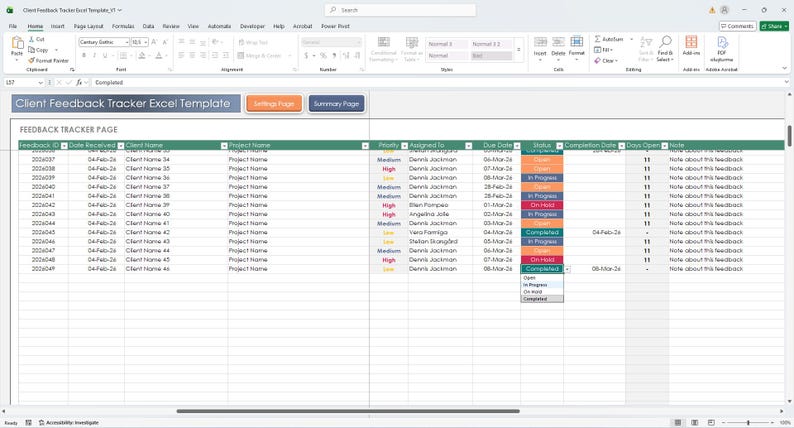
Combining these dimensions creates a more useful record than a single sentiment label. For example, “negative” tells a team very little. “New customer, onboarding stage, usability theme, high impact, recurring issue” provides much more decision value.
Using feedback to improve marketing messages
Customer feedback can reveal the words customers use to describe outcomes, frustrations, and benefits. Marketing teams can examine those words when reviewing landing pages, campaign messages, product descriptions, educational content, and positioning statements.
This does not mean copying customer comments directly into promotional material. Instead, marketers can look for recurring concepts and compare them with the organization’s current messaging. If customers repeatedly describe a benefit that is underrepresented in marketing, that may justify a messaging experiment.
Feedback can also identify language that creates confusion. If customers consistently misunderstand a feature, price structure, or product limitation, the issue may require clearer communication rather than a product change. The template should therefore include a field for expected message versus customer interpretation when messaging is a major research objective.
Analyzing ratings and written comments together
Quantitative ratings are useful for identifying direction and change. If the same question is asked consistently over time, a team can monitor whether customer sentiment is moving upward, downward, or remaining stable. The interpretation should always consider the number and type of responses behind the score.
Written comments provide the explanatory layer. A rating tells you how a respondent evaluated something, while a comment can explain the reason. A low score associated with confusing onboarding is a different problem from a low score caused by pricing expectations.
For this reason, analysis should not focus exclusively on average scores. Averages can hide different experiences between customer groups. Segmenting results by customer type, product version, market, acquisition source, usage frequency, or journey stage can expose patterns that an overall average does not show.
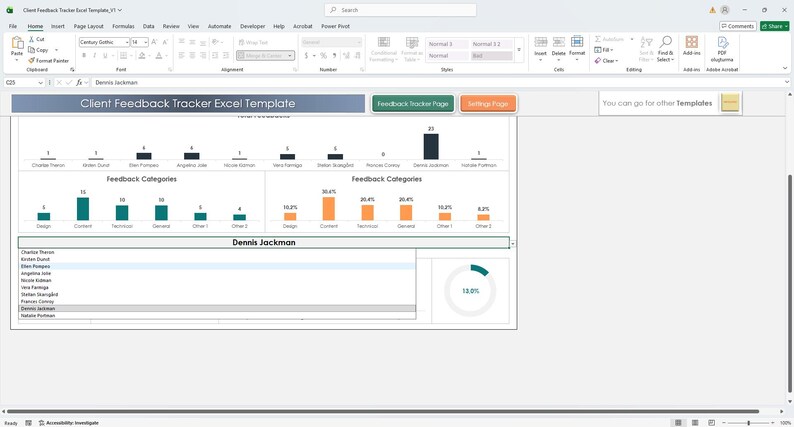
A practical analysis routine can begin with a summary of ratings, followed by category counts, then recurring themes, then representative comments, and finally recommended actions. This sequence moves from measurement to interpretation and then to decision-making.
Building a feedback dashboard
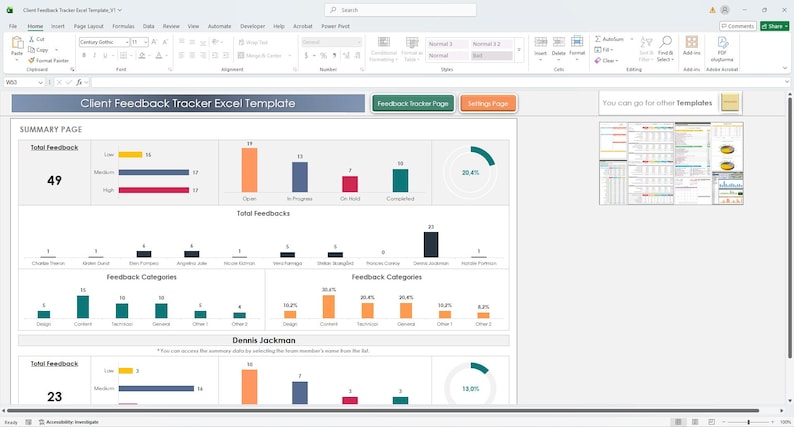
A dashboard should answer a small number of important questions quickly. Useful indicators can include total responses, response trend, average satisfaction, feedback by category, feedback by product area, high-impact issues, unresolved themes, and actions awaiting review.
Visualizations should match the question being asked. A trend chart works well for change over time. A bar chart can compare categories. A distribution chart can show rating patterns. A detailed response list is better when the team needs to inspect individual comments.
A dashboard should not become a collection of decorative charts. Every visual should support a decision or help a reviewer locate an important pattern. Too many visuals can make the feedback process harder to understand rather than easier.

Turning feedback into a prioritization model
One practical model is to evaluate each theme across impact and frequency. High-impact and frequently reported issues generally deserve immediate investigation. High-impact but infrequent issues may need targeted research before action. Low-impact and infrequent feedback can often be monitored rather than prioritized.
Another useful factor is strategic relevance. A complaint may not be frequent, but if it affects a product capability central to the company’s positioning, it may deserve attention. Conversely, a frequent request may not be strategically important if it concerns a narrow preference with limited customer impact.
Evidence quality also matters. A single comment can identify a hypothesis, while repeated feedback across different customer segments provides stronger evidence of a broader pattern. The template can include an evidence field that records the number of related responses and the sources from which they came.

Using feedback across teams
Marketing should not own every part of the feedback process. Product teams can investigate feature and usability themes. Customer success can provide account context. Sales can identify objections and expectations. Support can identify recurring problems. Marketing can interpret language, segments, positioning, and customer perception.
A shared structure makes cross-functional discussion easier because everyone can refer to the same categories and records. Instead of debating isolated anecdotes, teams can review a group of related responses and examine the evidence behind a proposed decision.
The template should also make ownership visible. A feedback record without an owner can remain in a review queue indefinitely. An owner does not necessarily mean that person must solve the problem; it means someone is responsible for determining the next step.

Reporting feedback to stakeholders
Stakeholder reports should focus on themes and implications rather than presenting every response. A concise report can describe the period reviewed, number of responses, major positive themes, major friction points, important segment differences, unresolved questions, and proposed actions.
Representative comments can make a report more understandable, but comments should be selected carefully and handled according to the organization’s privacy and consent practices. The purpose is to illustrate a theme, not expose unnecessary personal information.
For senior stakeholders, a useful report connects customer feedback with decisions. Instead of saying “many customers mentioned onboarding,” explain what the onboarding theme means, which customer segment reported it, what evidence supports the interpretation, and what action is being considered.

Common mistakes to avoid
The first mistake is asking too many questions. Long forms can produce lower-quality responses because participants become less willing to provide thoughtful answers. Each question should have a clear purpose, and unnecessary questions should be removed.
The second mistake is using vague categories. Labels such as “other,” “issue,” or “negative” can be useful as temporary values, but if most responses end up there, the classification system needs refinement.
The third mistake is treating every feature request as a product requirement. Customers describe solutions from their own perspective. The team should investigate the underlying need before deciding what solution, if any, should be pursued.
The fourth mistake is collecting feedback without a review rhythm. A template cannot create value if nobody examines the responses. Establish a recurring review schedule and define which themes require immediate attention, periodic analysis, or long-term monitoring.
The fifth mistake is failing to close the loop. When customers provide feedback and later see meaningful improvements, the organization has an opportunity to demonstrate that customer input influenced action. Closing the loop can also generate a second layer of feedback about whether the change solved the original problem.
Practical Solution
Start by defining the decision the feedback system must support. If the main goal is product improvement, emphasize feature, usability, quality, and outcome fields. If the goal is marketing research, add fields for acquisition source, customer expectation, perceived value, message clarity, competitive comparison, and segment. If the goal is customer experience, focus on journey stage, satisfaction, effort, friction, and resolution.
Next, create one standardized feedback record. Begin with a small field set: date, product area, customer segment, source, rating, feedback type, customer comment, theme, impact, priority, owner, status, and next action. Test the structure with a small set of real or representative responses. If a field repeatedly creates confusion or produces no useful information, revise it rather than keeping it simply because it was part of the original design.
Then establish a recurring review process. A simple workflow can move from collect to clean, then categorize, prioritize, assign, and follow up. Review recurring themes rather than isolated comments, compare important customer segments, and record the reasoning behind significant decisions. Current feedback-management guidance similarly emphasizes collecting, categorizing, prioritizing, and closing the loop so that feedback does not remain an unmanaged archive.
Finally, connect the feedback register to a reporting view. Review response volume, rating movement, major themes, high-impact issues, unresolved items, and completed actions. Use the report to identify where deeper research is needed rather than treating the dashboard as the final answer.
Reference Examples
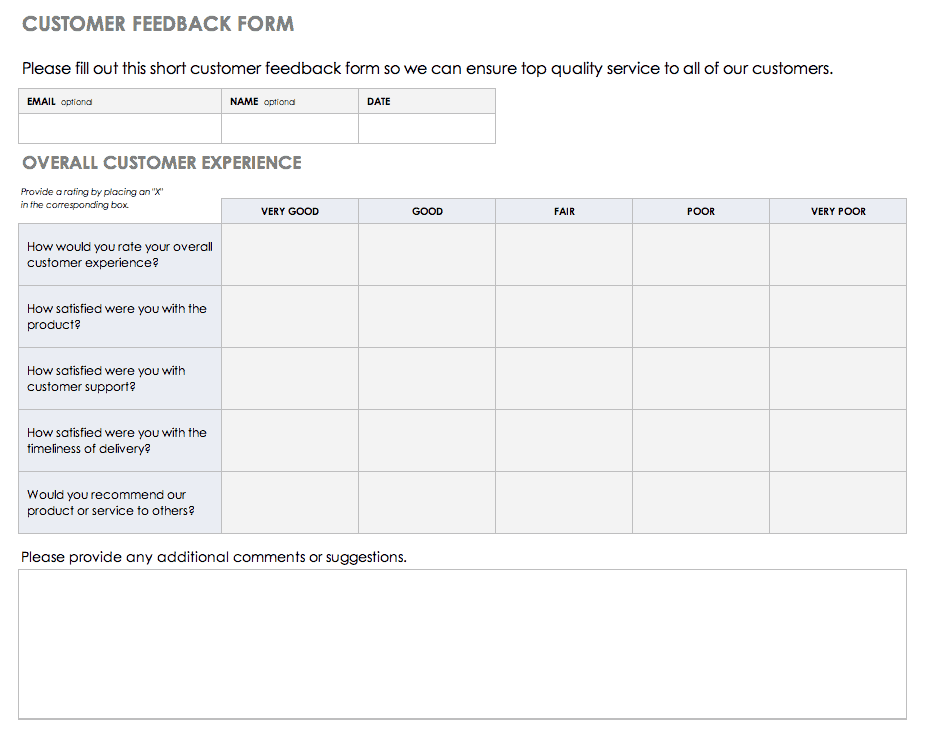
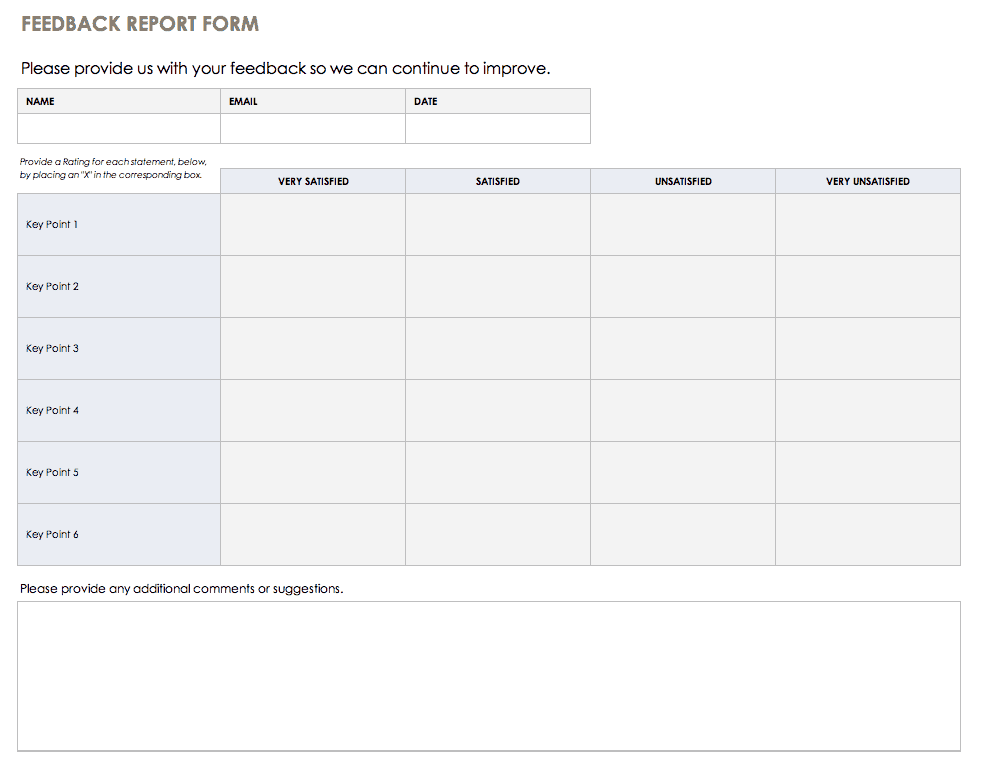
A marketing product feedback collection Template can take several visual forms depending on whether the primary task is collecting responses, organizing records, reviewing customer sentiment, or presenting findings. A useful reference should therefore be judged by its structure rather than its decoration. Look for clear question grouping, recognizable rating scales, space for qualitative comments, logical product or service categories, and enough contextual fields to make each response meaningful. A strong visual example should make it easy to see how a respondent moves through the form and how the resulting information could later become an organized feedback record.
The following examples illustrate different ways feedback information can be structured, including customer experience forms, product-focused questionnaires, service assessments, and organized feedback records. They can help readers compare layouts and identify elements worth adapting to their own marketing product feedback collection Template. The visuals should be treated as references rather than as mandatory structures. The right design depends on the product, audience, research objective, collection channel, and decisions the organization needs to make after responses are received.

Customer Feedback Form
Source: Template.net

Customer Satisfaction Feedback Form
Source: Template.net

Product Feedback Form
Source: Template.net

Service Feedback Form
Source: Template.net

Client Feedback Form
Source: Template.net

Customer Experience Feedback Form
Source: Template.net

Business Customer Feedback Form
Source: Template.net

Small Business Customer Feedback Form
Source: Template.net

Customer Service Employee Feedback Form
Source: Template.net

Customer Service Feedback Form
Source: Template.net
