A work dental certificate Template is a structured document used to confirm that an employee attended a dental appointment, received dental treatment, or was advised to remain away from work for a clinically appropriate period. The most useful version is not simply a decorative certificate. It should communicate the necessary facts clearly, identify the dental practice and issuing professional, and distinguish an attendance confirmation from a statement about fitness for work.
People searching for this type of document are usually looking for a practical format that can be adapted for a dental clinic, employer, or employee. The ideal structure depends on the purpose. A short appointment confirmation may only need the patient’s name, date, time, and confirmation of attendance, while a certificate relating to post-treatment absence may need treatment dates, recommended restrictions, expected return date, and the dentist’s professional details.
There is also an important distinction between a dental certificate and an official work-fitness document. Requirements vary by country, employer, profession, and healthcare system. For example, UK government guidance describes a formal fit note as evidence based on a healthcare professional’s assessment of how a health condition affects fitness for work, and identifies specific professions authorized to issue such notes. A dental clinic’s own attendance certificate should therefore not automatically be presented as an official statutory fit note. :contentReference[oaicite:0]{index=0}

What a work dental certificate should accomplish
The central purpose of a dental work certificate is verification. An employer may need confirmation that an employee attended a dental practice during working hours, while the employee may need evidence supporting an absence or modified schedule. The document should communicate only what the issuing dental professional is qualified and authorized to confirm. It should never be used to invent treatment, fabricate a clinical assessment, or imitate an official document issued by another authority.
A well-structured certificate also reduces ambiguity. A statement such as “the patient attended the clinic” is materially different from “the patient was clinically advised not to work.” The first confirms attendance. The second makes a clinical statement about work capacity and should only be included when the dental professional has actually assessed the patient and is permitted to make that statement under applicable rules.
Dental records themselves are important professional documents. The American Dental Association notes that accurate dental records should document relevant diagnostic information, treatment, health history, clinical notes, treatment plans, and patient-related communications. The same principle supports a work certificate: factual, dated, identifiable documentation is more useful than vague language or unnecessary detail. :contentReference[oaicite:1]{index=1}
Key information to include
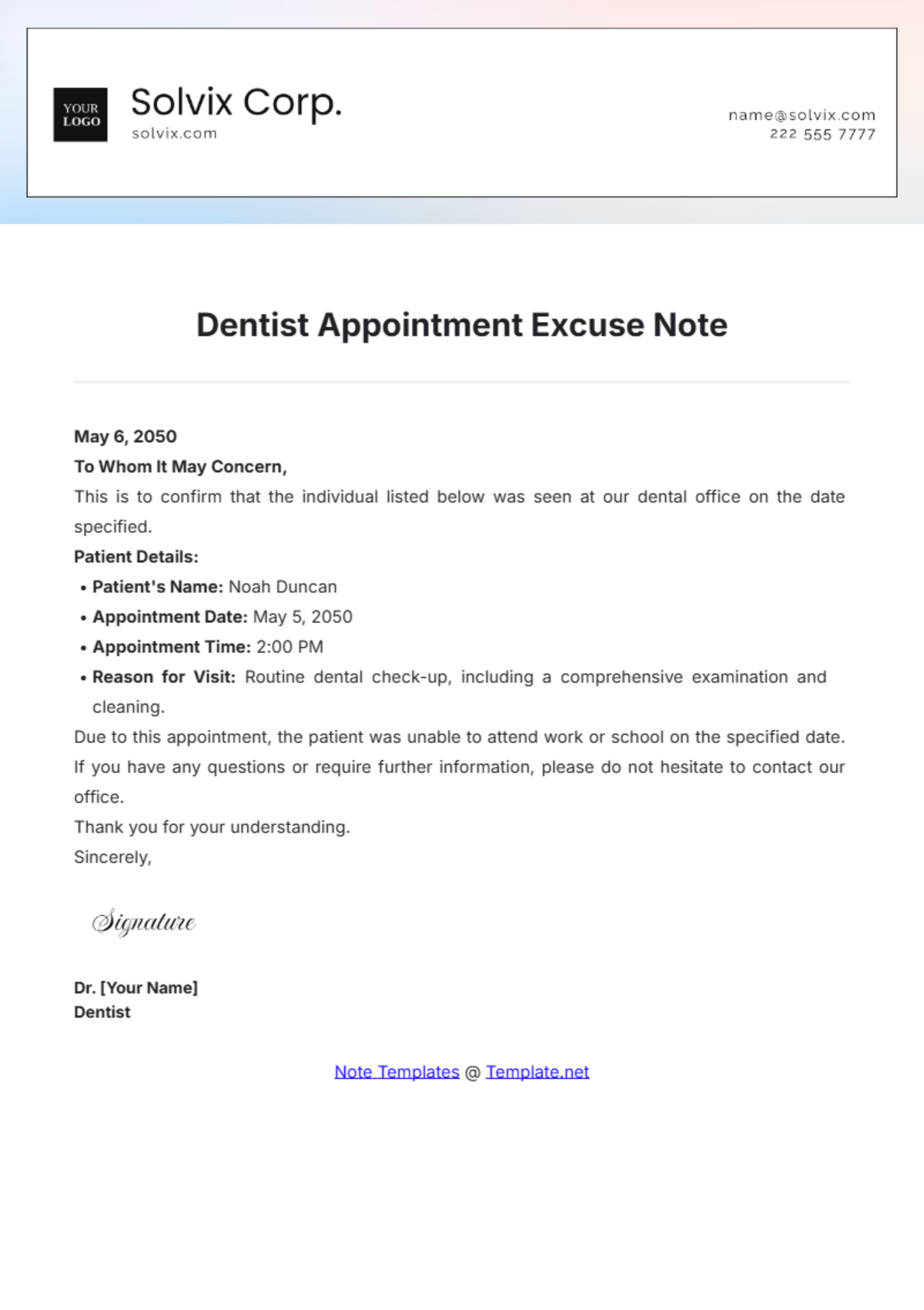
A practical certificate normally begins with the dental practice name and contact information. The document should then identify the patient and state the purpose of the certificate. Depending on the situation, the wording may confirm attendance, treatment, recommended absence, or an expected return date. The document should have a clear issue date so the recipient can understand when the statement was created.
Professional identification is equally important. A certificate should identify the dentist or authorized professional who issued it, along with relevant professional credentials or registration information when appropriate. A signature or other permitted authentication method can strengthen the document’s provenance. The exact requirements depend on local law, professional regulation, and the recipient’s policy, so a generic template should be treated as a starting structure rather than a universal legal form.
Privacy should guide the amount of clinical information included. An employer may need confirmation of an appointment or work-related restriction without needing a detailed description of the patient’s dental condition. The ADA emphasizes confidentiality and the importance of safeguarding patient records. A certificate intended for an employer should therefore use the minimum information necessary for its stated purpose. :contentReference[oaicite:2]{index=2}
Patient identification
The patient section should normally contain the patient’s full name and, when genuinely necessary, another identifier such as a date of birth. Avoid adding unnecessary personal information simply because the template has blank space. A certificate intended for an employer should be concise and should not expose unrelated clinical information.
The appointment or treatment date is one of the most important fields. If the employee attended during a particular period, the certificate can identify the start and end times when appropriate. A time range can be particularly useful when the employee was away from work for only part of a shift.
For treatment-related absence, the certificate can identify the relevant treatment date and the period for which the dentist recommends avoiding work. The wording should remain factual and should reflect the professional’s actual assessment rather than the employee’s requested outcome.

Dental practice details
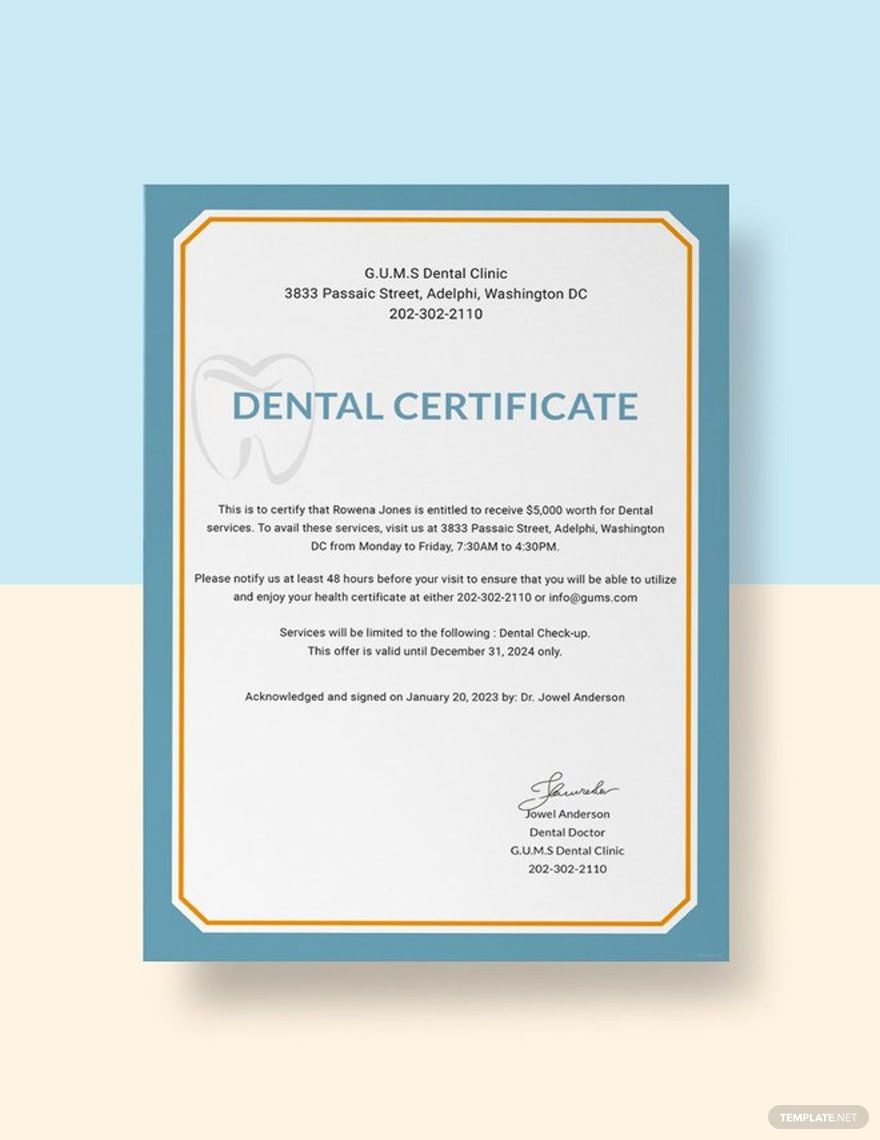
The practice header creates immediate context for the recipient. It may include the clinic name, physical address, telephone number, email address, and other professional contact details. A simple header is often preferable to elaborate graphics because the recipient should be able to identify the issuing practice quickly.
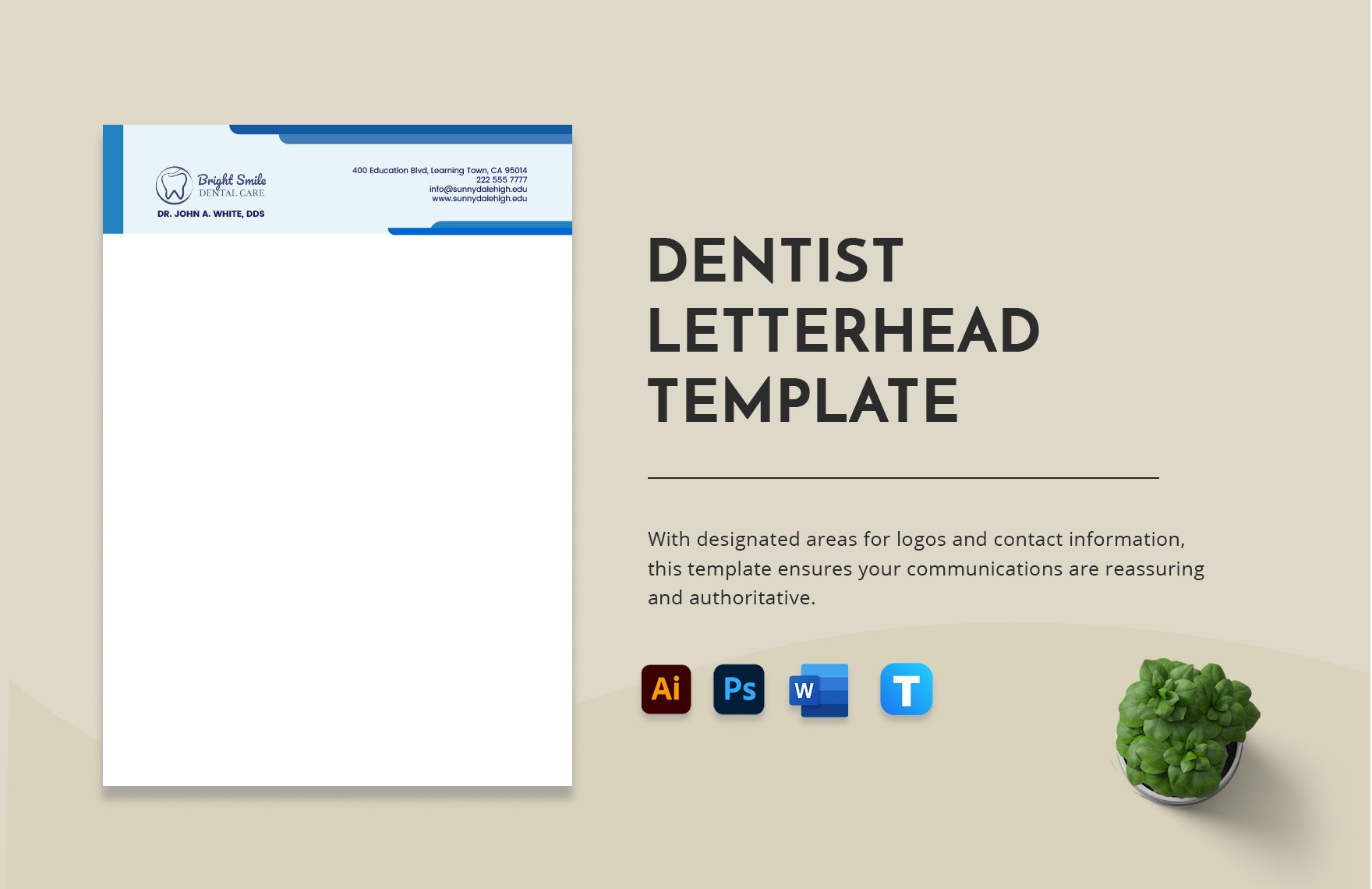
Letterhead can also provide a consistent visual identity across certificates, treatment communications, and other administrative documents. A dental office letterhead can include the practice logo, address, telephone number, and website while leaving enough white space for the certificate body.
The visual examples used in this article show why a clean header matters. A strong document hierarchy lets the reader identify the practice, document type, patient, dates, and issuing professional without searching through decorative elements.

Attendance certificate versus work-absence certificate
An attendance certificate is generally the simpler document. It confirms that a named patient attended a dental practice on a stated date, potentially including the appointment period. This format is useful when an employee needs to explain late arrival, early departure, or a short absence without making a broader medical statement.
A work-absence certificate has a different function. It may state that a dental procedure occurred and that, in the issuing professional’s clinical opinion, the patient should not perform normal work duties for a specified period. Such wording should only be used when clinically appropriate and permitted under local rules.
These two documents should not be confused with statutory work-fitness documentation. In the United Kingdom, for example, official fit-note guidance states that the relevant healthcare professional assesses whether a person’s health affects their fitness for work and may advise on amended duties, altered hours, or other workplace adjustments. A clinic attendance certificate is therefore not automatically interchangeable with that formal process. :contentReference[oaicite:3]{index=3}

Choosing the right format
Someone searching for a work dental certificate template pdf is usually prioritizing a document that preserves its layout when shared or printed. PDF is useful as a final distribution format because the visual structure is less likely to change between devices. However, the clinic should retain its authoritative record according to its own record-management procedures rather than treating a distributed certificate as the complete clinical record.
A work dental certificate template word format can be useful when the clinic needs to edit patient-specific information before issuing the document. Word-based layouts are familiar to many offices and make it relatively straightforward to change dates, names, practice details, and wording. Editing should still be controlled so that the final certificate accurately reflects the clinical event.
For teams that collaborate online, a work dental certificate template google docs format can provide a convenient drafting environment. However, shared editing should be handled carefully when patient information is involved. Access should be restricted to authorized staff, and the clinic should follow applicable privacy, security, and record-retention requirements.

Designing a professional certificate layout
The best layouts usually use a strong hierarchy. The clinic name belongs near the top, followed by the certificate heading. Patient and appointment information should appear before the main certification statement. The signature and professional identification should be placed near the bottom where the recipient naturally expects authentication.
Typography should emphasize readability rather than decoration. A large certificate title can help the recipient identify the document type, while body text should remain comfortably readable when printed. Consistent spacing, clear labels, and restrained use of color can make a document appear professional without distracting from the information it communicates.
Margins and print behavior also matter. A certificate may be printed on ordinary office paper, saved as a PDF, or sent digitally. A design that looks attractive on a screen but clips important fields when printed is not a successful work document. Leave adequate space around signatures, dates, and professional identification.
How to write the certification statement
The certification statement should be direct and factual. For attendance, a useful structure is: “This is to confirm that [patient name] attended [practice name] for dental care on [date] from [time] to [time].” The exact wording should be adjusted to match what actually occurred.
For treatment-related absence, the statement can explain that the patient underwent a specified dental procedure and that the dental professional has advised a particular period away from work, if that advice is clinically justified. Avoid promising a specific outcome when the patient’s recovery cannot reasonably be predicted.
When an employer only needs proof of attendance, adding a diagnosis or detailed treatment description may create unnecessary privacy exposure. The strongest certificate is not necessarily the longest one. It is the one that provides enough information for the stated purpose while avoiding unrelated clinical details.

What not to put on the document
A work certificate should not contain invented diagnoses, fabricated treatment dates, false signatures, or altered professional credentials. A template can organize information, but it cannot make an unsupported statement true. If a field does not apply, it is generally better to omit it or mark it appropriately than to fill it with assumptions.
Avoid excessive clinical detail when the recipient is an employer. The employee may have a legitimate need for privacy, and the employer may only need confirmation of attendance or a functional work restriction. Dental records and certificates should be handled as confidential health information where applicable.
Do not present a clinic-designed certificate as an official government form unless it genuinely is one. Official work-fitness systems may have their own rules concerning who can certify fitness, what information must appear, and how the document is issued. The UK’s current guidance is one example of a jurisdiction where formal fit notes follow defined professional rules. :contentReference[oaicite:4]{index=4}

Using a dental work note appropriately
A dental work note template can be useful for creating a consistent structure for appointment confirmation or treatment-related workplace communication. It should be completed by the appropriate dental professional or authorized clinic staff and should accurately reflect the underlying appointment record.
For a routine appointment, the note may simply establish that the patient was seen at the clinic. For a procedure requiring recovery, the document can state the dates of recommended absence or restrictions when supported by the professional’s assessment. If the employee needs a formal statutory fitness statement, the clinic should determine whether it can issue that document under the relevant jurisdiction or whether another authorized healthcare professional must do so.
A useful internal workflow is to verify the patient identity, confirm the appointment record, confirm the wording with the treating professional, complete the issue date, authenticate the document according to practice procedures, and then provide it through an appropriate channel. The ADA recommends that dental record entries be accurate, linked to the person making the entry, and documented promptly. :contentReference[oaicite:5]{index=5}

Related certificate and template types
An example of dental certificate can help a clinic understand how information is arranged, but it should not automatically be copied word for word. Existing examples may have been designed for a specific country, organization, employer, or purpose. The best approach is to study the structure and then adapt the content to the actual situation and applicable requirements.
A dental gift certificate template serves a different purpose from a work certificate. A gift certificate is generally promotional or transactional, while a workplace dental certificate communicates attendance, treatment, or work-related clinical advice. Keeping these purposes separate prevents a decorative certificate format from being mistaken for professional health documentation.
Likewise, a dental office website template is primarily a branding and communication tool. It can help establish consistent clinic colors, logos, contact details, and typography, but it should not replace the clinical and administrative controls used when issuing a patient certificate.

Using branding without weakening credibility
Branding can make a certificate easier to recognize, especially when a dental practice issues many documents. A consistent logo, practice name, address, and contact block can establish continuity with the clinic’s other correspondence. The design should nevertheless remain subordinate to the certification statement.
Color can be used sparingly to distinguish headings or create a recognizable clinic identity. Light backgrounds and sufficient contrast are preferable when the certificate may be printed. Excessive decoration can make an administrative document look like a promotional piece, which may reduce its professional clarity.
Branding should never obscure the issuing professional’s information. The recipient should be able to determine who issued the certificate, which practice issued it, when it was issued, and what factual statement is being certified.

Privacy and record-handling considerations
Patient confidentiality is a central consideration when preparing any document containing dental information. The ADA states that dentists have obligations relating to the confidentiality and protection of patient records. A certificate sent to an employer should therefore be limited to information relevant to the employment-related purpose. :contentReference[oaicite:6]{index=6}
Before sending a certificate electronically, the clinic should confirm the intended recipient and use an appropriate communication channel. Staff should avoid sending patient information to an incorrect address or including unrelated clinical records in an email attachment. Where health information is regulated by law, the practice should follow the applicable privacy and security framework.
Record retention is another separate issue. A work certificate provided to an employee is not necessarily the same thing as the underlying dental record. The clinical record should remain complete and accurate according to professional and legal requirements, while the certificate can serve as a focused document prepared for a particular recipient.

Common mistakes in dental work certificates
One common mistake is failing to state the document’s purpose. A recipient should not have to infer whether the certificate confirms an appointment, treatment, recommended absence, or work restriction. A precise heading and opening statement can eliminate this ambiguity.
Another mistake is using overly broad language. Saying that someone is “unable to work” is substantially stronger than confirming that the person attended an appointment. Such wording should only be used when supported by an appropriate professional assessment and when the issuer is authorized to make the statement.
A third mistake is leaving authentication incomplete. Missing dates, missing professional identification, inconsistent practice details, or an absent signature where one is required can make a document difficult to verify. A final review before issuance can catch these problems without requiring a complicated workflow.

Practical Solution
The most practical approach to creating a work dental certificate Template is to begin with the purpose rather than the design. First determine whether the document confirms attendance, records treatment, supports a recommended absence, or communicates a work restriction. Once the purpose is clear, include only the information needed to support that purpose. This creates a shorter, clearer certificate and reduces the risk of unnecessary disclosure.
Next, build the document around five core blocks: practice identification, patient identification, appointment or treatment information, certification statement, and professional authentication. Use a consistent date format and make the work-related period explicit when one exists. If the certificate concerns a return-to-work recommendation, state the recommended date or conditions only when the issuing professional has actually assessed the situation.
Finally, create a controlled review process. The staff member preparing the document should compare the patient’s name and appointment details against the practice record, confirm the wording with the responsible dental professional, check the issue date, verify professional details, and review the final document before it reaches the employer or other recipient. The clinic should also retain its underlying record according to applicable professional and legal requirements.
For recurring use, maintain separate layouts for appointment attendance, treatment-related absence, and other legitimate dental documentation rather than trying to make one certificate cover every scenario. This makes each document easier to understand and reduces the temptation to insert inappropriate information into a generic form.
Reference Examples
A work dental certificate Template is best understood as a professional communication document rather than merely a decorative certificate. Useful examples typically show a recognizable dental practice heading, a clear document title, patient or appointment information, a concise certification statement, and an area for professional authentication. Some examples focus on attendance, while others demonstrate treatment-related leave or fitness-related wording. Comparing these structures helps readers recognize which fields are essential and which design elements are optional. The examples below are visual references for layout and presentation, not universal legal forms or substitutes for local professional requirements.
The following visual references also demonstrate how different document styles can support different workplace situations. A simple letterhead may be appropriate when a clinic wants to issue a short confirmation, while a formal certificate layout may be better suited to treatment-related documentation. Appointment cards and branded correspondence can also illustrate how consistent practice information is presented. When evaluating any example, focus on the purpose, factual wording, patient privacy, issuing professional, date, and authentication rather than copying a design without checking whether it fits the actual use case.
Dental Medical Certificate Sample Template
Source: Template.net
Fit To Work Dental Certificate Template
Source: Template.net
Dentist Leave Certificate Template
Source: Template.net

Dentist Doctor Certificate Template
Source: Template.net

Fitness Certificate Template for Dental Patients
Source: Template.net
Dentist Appointment Excuse Note Template
Source: Template.net

Excuse Letter for Dentist Appointment Template
Source: Template.net
Dentist Appointment Card Template
Source: Template.net
Dental Office Letterhead Template
Source: Template.net
Dental Clinic Letterhead Template
Source: Template.net
