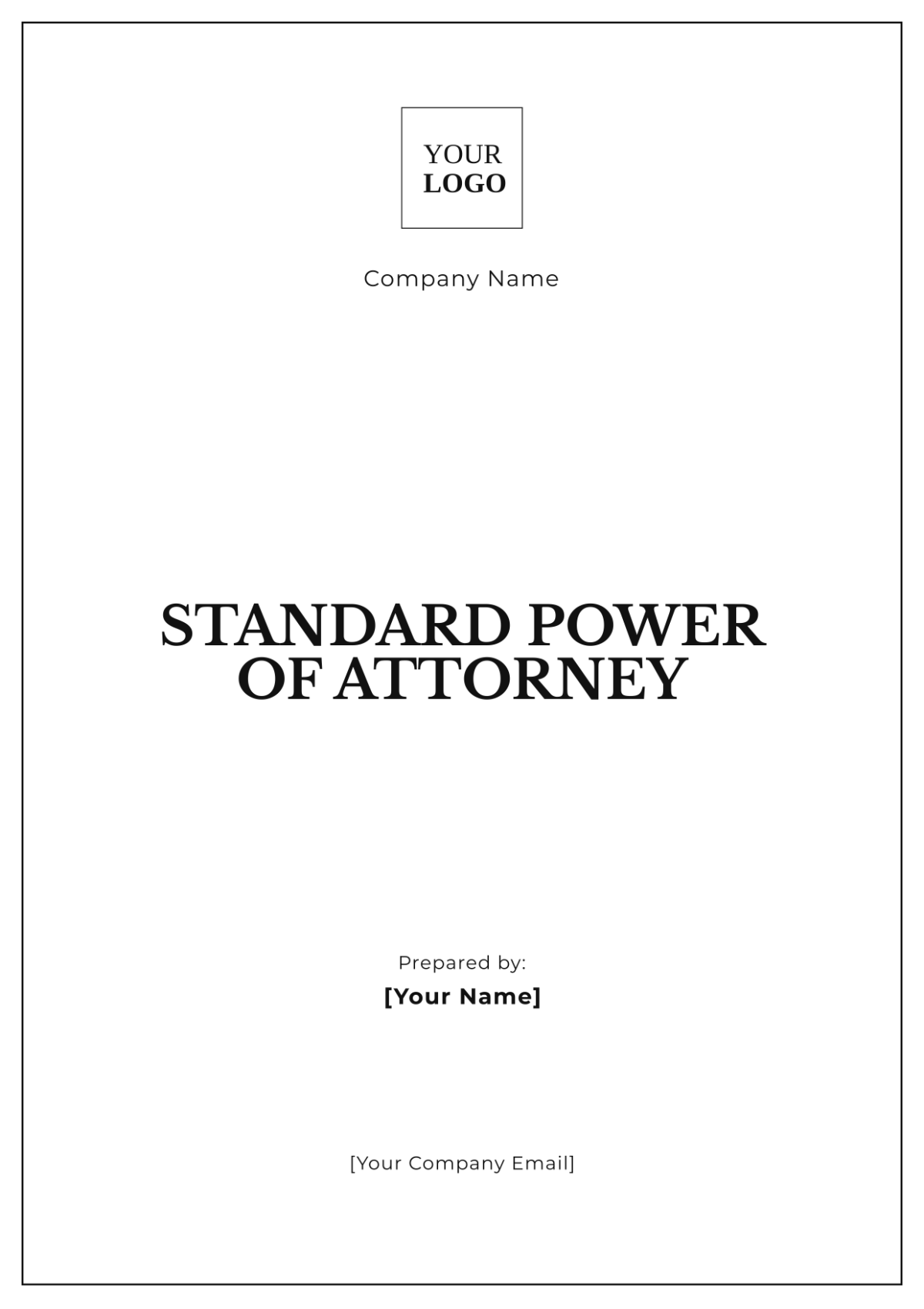
A state power of attorney cover page Template is best understood as a front-facing document layout that identifies a power of attorney instrument, the people involved, the governing jurisdiction, and, when relevant, recording or delivery information. The cover page should make the underlying document easy to identify without accidentally changing the legal substance of the authority being granted. That distinction matters because a cover sheet is not automatically the same thing as the power of attorney itself.
Power of attorney rules vary substantially by jurisdiction and by purpose. California, Florida, Indiana, and Virginia, for example, have different statutory frameworks and specialized forms for particular matters. California publishes a statutory financial power of attorney framework, Florida regulates execution under Chapter 709, Indiana uses specialized tax authorization forms, and Virginia has statutory forms and certification provisions. :contentReference[oaicite:0]{index=0}
For that reason, a cover page should normally be treated as an organizational aid rather than a substitute for the applicable state form. A well-designed first page can identify the principal, agent, document type, effective date, jurisdiction, and recording information while leaving the substantive grant of authority to the legally appropriate instrument. California county recording offices, for instance, may use separate recorded-document cover pages for documents presented to a recorder, which illustrates why filing requirements should be checked separately from the POA itself. :contentReference[oaicite:1]{index=1}
What a power of attorney cover page should accomplish
The primary purpose of a cover page is identification. A reader should be able to determine what document they are holding without opening every subsequent page. A useful cover page can show the document name, the state whose law is relevant, the principal’s name, the agent’s name, the execution date, and a short description of the document’s purpose. When a document will be handled by a bank, title company, government office, attorney, or recorder, clear identification can reduce confusion between several related instruments.
The cover should also preserve a clear distinction between the principal and the agent. The principal grants authority, while the agent receives authority to act within the scope of the instrument. Some documents use the term attorney-in-fact for the agent. These terms describe roles and do not necessarily mean that the agent is a licensed attorney. The distinction is especially important when several documents exist, such as a financial POA, health-care directive, vehicle authorization, or revocation.
A strong cover page does not attempt to summarize every legal power in a few decorative lines. Broad language on a cover can create ambiguity if it conflicts with the actual document. Instead, the cover should point the reader toward the controlling instrument. Delaware law, for example, provides a statutory durable personal POA form and describes a notice that may appear at the beginning of the instrument. The statute also distinguishes the principal, agent, effective date, granted authority, and agent certification. :contentReference[oaicite:2]{index=2}
Core elements to consider when designing the page
The first element is the document title. A title such as “Power of Attorney,” “Durable Power of Attorney,” or “Limited Power of Attorney” should correspond to the underlying instrument. Avoid calling a document durable merely because the layout looks professional. Durability is a legal characteristic determined by the applicable law and the language of the instrument, not by typography or page design.
The second element is jurisdiction. A state name can be useful when the document is specifically intended for that jurisdiction, but it should not be presented as proof that the document satisfies every state requirement. A cover can say “State of California” or “State of Florida” when that is accurate, while the substantive document should be checked against the current governing statute or official form.
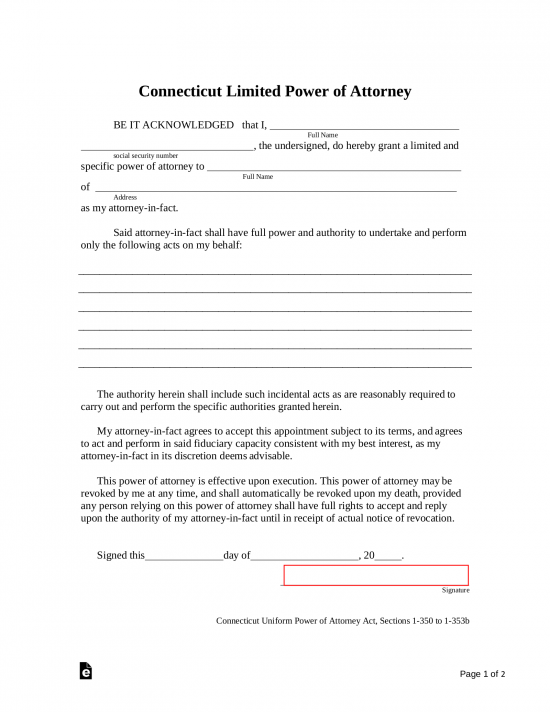
The third element is party identification. A practical layout normally reserves clearly labeled areas for the principal and agent. If successor agents or co-agents are relevant, they can be identified in a secondary field, although the complete legal appointment should remain in the controlling POA language. A concise cover page is generally better than a crowded page that attempts to reproduce the entire appointment structure.
Execution information is another important component. The page can identify the date the document was signed and may provide a place for recording information when appropriate. It should not, however, imply that a particular witness or notary procedure is universal. Florida law, for example, requires the principal to sign in the presence of two subscribing witnesses and to acknowledge the instrument before a notary public or as otherwise provided by statute. :contentReference[oaicite:3]{index=3}
Finally, consider document control. For professional records, a cover may include a document reference number, revision date, prepared-for information, or page count. These are administrative fields rather than grants of legal authority. If included, they should be visually subordinate to the actual document title and party information so that the page remains easy to scan.

How state-specific requirements change the design
There is no single national cover-page format that automatically makes every power of attorney valid. State law can control execution, acknowledgment, witnesses, durability, special powers, statutory language, and recording. The visual layout can therefore be standardized, but the legal substance should remain jurisdiction-specific.
California is a useful example. California Courts explains that its statutory power of attorney can allow an appointed person to handle financial, real estate, tax, or other matters, with the principal choosing the powers and duration. The California Law Revision Commission also publishes statutory-form language under the California Probate Code. :contentReference[oaicite:4]{index=4}
Florida provides another clear example of why state research matters. Chapter 709 addresses powers of attorney and similar instruments, while section 709.2105 establishes execution requirements. Florida law also provides that an agent’s authority is tied to authority specifically granted in the POA, making the substantive wording more important than any attractive cover design. :contentReference[oaicite:5]{index=5}

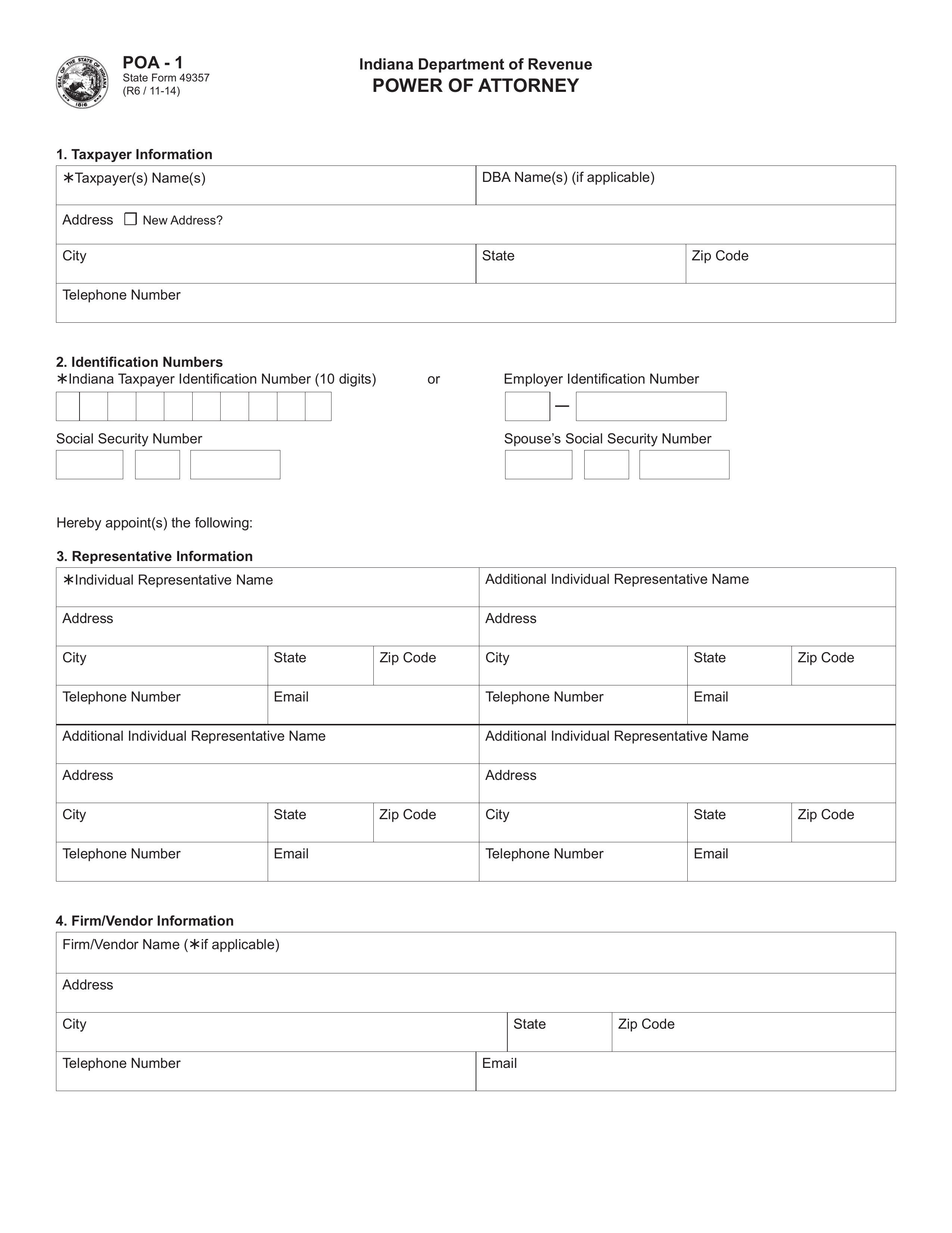
Indiana illustrates another variation because a tax-related POA may be tied to a particular state revenue agency rather than serving as a general financial authorization. The Indiana Department of Revenue states that its Form POA-1 establishes a representative relationship for specified tax matters. That is very different from a general financial POA, so the cover should accurately identify the purpose rather than using a generic title. :contentReference[oaicite:6]{index=6}
Virginia likewise maintains statutory power of attorney provisions, including an agent certification form. The Virginia Code describes an optional certification in which an agent certifies facts concerning the validity of the POA and the agent’s authority. A cover page for such a document should therefore avoid implying that the certification is merely decorative or interchangeable with the underlying appointment. :contentReference[oaicite:7]{index=7}

Choosing between a simple cover and a detailed cover
A simple cover is appropriate when the underlying POA already contains all required identification and execution information. It might contain only the title, state, principal, agent, document date, and a short administrative description. This approach is especially useful when the document will be stored in a physical file with many other legal instruments.
A detailed cover can be useful for professional records where several instruments must be distinguished quickly. It can include document type, purpose, effective date, termination date if known, principal, agent, successor agent, recording reference, and a note identifying the controlling state law. The information should still be factual and should not introduce powers that are absent from the underlying POA.
A third option is a recording-oriented cover sheet. Some county recorder offices publish their own cover pages for recorded documents. These may be designed to provide space for recording information rather than to summarize the POA. Because local recorder practices can differ, a generic cover should not be represented as an official county recording sheet unless it has been verified for that specific office. Tulare County, for example, identifies a recorded-document cover page for recorder submissions as a distinct administrative item. :contentReference[oaicite:8]{index=8}

Important differences between financial, durable, limited, and health-care documents
Before creating a cover, identify the underlying POA type. A limited POA is generally narrower because it authorizes specified actions, transactions, or circumstances. A durable financial POA is structured to continue despite a principal’s later incapacity when the governing law and document language provide for durability. A general financial POA may grant broader financial authority, while a health-care instrument addresses medical decisions and may be governed by a different statutory framework.
The distinction is visible in many state forms. A California statutory financial POA, for example, expressly addresses financial and property-related powers and states that it does not authorize health-care decisions. California Courts separately directs readers to an Advance Health Care Directive for health-care decisions. :contentReference[oaicite:9]{index=9}
Florida’s framework similarly distinguishes the general POA structure from health-care planning instruments. The Florida Legislature’s Chapter 709 governs powers of attorney, while other Florida statutes address health-care surrogate arrangements. A cover should therefore accurately identify the document’s function instead of using “power of attorney” as a catch-all description. :contentReference[oaicite:10]{index=10}
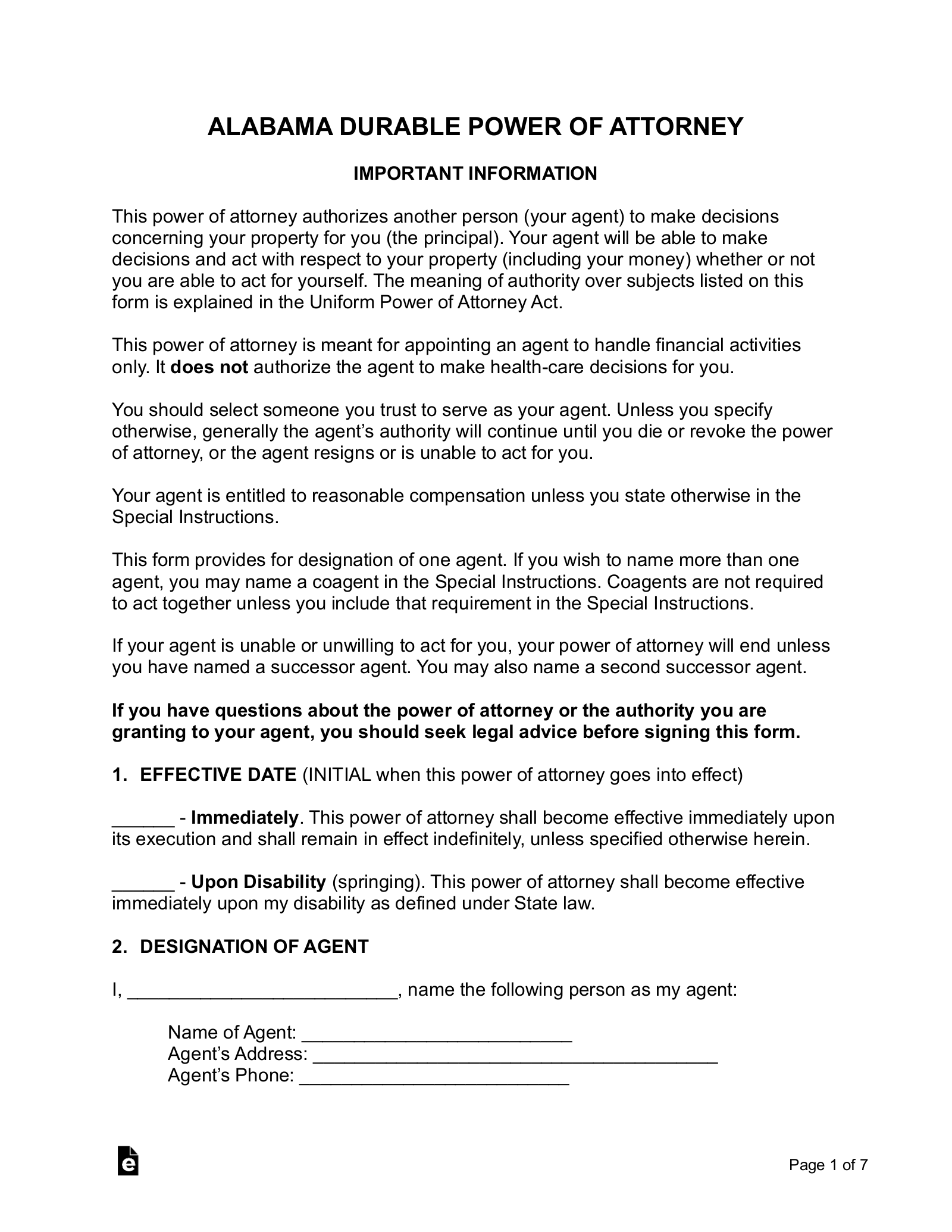
Another important distinction is whether the authority begins immediately or only after a specified event. Some jurisdictions permit a springing POA that becomes effective after a defined condition. A cover should identify the effective structure only when the underlying instrument clearly establishes it. Otherwise, the cover can simply state the execution date and direct the reader to the POA for the effective-date provisions.
What information belongs on a professional cover page
A practical professional layout can begin with a large title followed by a compact identification block. The identification block might include “Principal,” “Agent,” “State,” “Document Type,” and “Execution Date.” If the instrument contains a successor agent, that person can be identified separately. If the document is associated with a particular property or transaction, a short neutral description can help distinguish it from other POAs.
For documents intended for recording, a separate administrative area can identify “Recording Requested By,” “Return To,” or similar information when the applicable office uses those fields. These labels should only be included when they are appropriate to the filing context. They should not be copied from a different state’s recorder form and assumed to be universally accepted.
Professional formatting also depends on restraint. Use a readable typeface, strong hierarchy, consistent margins, and enough white space for handwritten information when needed. A cover page should look formal without using decorative elements that distract from legal identification. A black-and-white layout is often practical for printing and scanning because the content remains legible in ordinary office workflows.

Page numbering can be useful when a cover accompanies a longer POA. For example, the cover may identify the document as “Page 1 of 8” while the substantive form begins on the following page. If the POA itself already contains statutory numbering, however, the cover should not create conflicting numbering that could cause uncertainty about which pages belong to the instrument.
How to create a state power of attorney cover page Template
Start by identifying the exact purpose of the underlying POA. Ask whether it concerns finances, property, a particular transaction, taxes, vehicles, health care, or another defined matter. Then identify the state whose law governs the instrument and check whether the state publishes a statutory form or official instructions. This first step prevents a visually attractive but legally mismatched cover from becoming the starting point for the document.
Next, gather only the information that the cover genuinely needs. At minimum, this often includes the document title, principal, agent, jurisdiction, and date. Add a transaction reference, recording information, or successor-agent field only when it serves a real administrative purpose. Avoid copying sensitive information onto the cover when the information is unnecessary for identification.
After the fields are established, create a hierarchy. The document title should be visually dominant. The jurisdiction and document type should be easy to see next. Party information can appear in a clearly separated block, followed by execution or administrative details. This arrangement lets a bank employee, attorney, recorder, or family member identify the instrument quickly without interpreting its substantive legal provisions.
The final step is legal cross-checking. Compare the underlying POA against current state requirements, including signing, witnessing, acknowledgment, durability, and any special statutory language. The cover should then be checked against the final document to ensure that names, dates, state, and document type are consistent. This simple consistency review can prevent administrative errors that are unrelated to the legal substance but still cause practical delays.
Common mistakes to avoid
One common mistake is treating a generic template as if it were a state statutory form. A template can demonstrate layout and organization, but it does not automatically establish legal sufficiency. California’s statutory form, Florida’s execution statute, and Virginia’s statutory provisions demonstrate why jurisdiction matters. :contentReference[oaicite:11]{index=11}
Another mistake is placing broad legal claims on the cover. A statement such as “this document grants all authority” can be misleading if the underlying POA is limited. Florida law, for example, emphasizes authority specifically granted to the agent, so a cover should not expand the substantive language through an informal summary. :contentReference[oaicite:12]{index=12}
A third mistake is failing to distinguish the cover from the operative document. The cover is organizational; the POA contains the actual grant of authority, limitations, conditions, signatures, acknowledgments, and other legally relevant provisions. Keeping those functions separate makes the document easier to review and reduces the risk that an administrative summary will conflict with the operative language.

Another frequent problem is using outdated state information. Laws and official forms can change, and a form found on an older website may not reflect current requirements. The Indiana Department of Revenue, for example, states that its current POA form has been updated and that users should use the updated version for new matters. :contentReference[oaicite:13]{index=13}

State-specific examples: California, Florida, Indiana, and Virginia
For California, the cover should clearly distinguish a financial or property POA from an advance health-care directive. California Courts explains that the statutory financial POA can address financial, real estate, tax, and other matters, while health-care planning is handled through a separate directive. The California Law Revision Commission’s statutory form also warns that the powers can be broad and should be understood before execution. :contentReference[oaicite:14]{index=14}
For Florida, the cover should not imply that witnessing and notarization are optional when the underlying instrument is subject to the general execution rule in section 709.2105. The Florida Legislature states that the principal signs in the presence of two subscribing witnesses and acknowledges the POA before a notary public or under the statutory alternative. :contentReference[oaicite:15]{index=15}
For Indiana, a tax POA can be tied specifically to the Department of Revenue and should therefore be identified by its agency purpose rather than simply labeled as a general financial POA. For Virginia, the statutory framework includes an agent certification form, so the document package may contain more than the principal’s original appointment. :contentReference[oaicite:16]{index=16}

Practical Solution
The most practical solution is to build the cover as a neutral identification page and let the applicable state POA control the legal substance. Begin with a clear title, followed by the state, document type, principal, agent, execution date, and any necessary administrative reference. If the instrument is limited, state that it is limited only when the underlying document supports that description. If it is durable, use that term only when the document and governing law establish durability.
Then create a verification checklist before the document is signed. Confirm that the principal’s name is consistent throughout the package, the agent’s name is spelled consistently, the jurisdiction is correct, the document type is accurately identified, and any effective-date or termination provisions match the underlying POA. Confirm the current witness and notary rules for the applicable state. Florida’s statute, for example, expressly establishes its execution requirements, while California’s statutory materials establish their own framework. :contentReference[oaicite:17]{index=17}
Finally, keep the completed document package organized. Store the cover together with the operative POA, acknowledgment pages, agent certification when applicable, and any supporting recording information. If the POA is intended for a bank, recorder, government agency, or other institution, check that institution’s current submission requirements before relying on a generic cover. This approach keeps the visual design useful while ensuring that legal validity comes from the correct state-specific instrument rather than from the appearance of the first page.

A cover page can also be designed for later review. Include a clearly marked execution date and, when appropriate, an expiration or review date that reflects the underlying document. Avoid adding an expiration date merely because the cover has a field for one. The purpose is to help the person reviewing the file understand the document, not to create a new legal condition.

Reference Examples
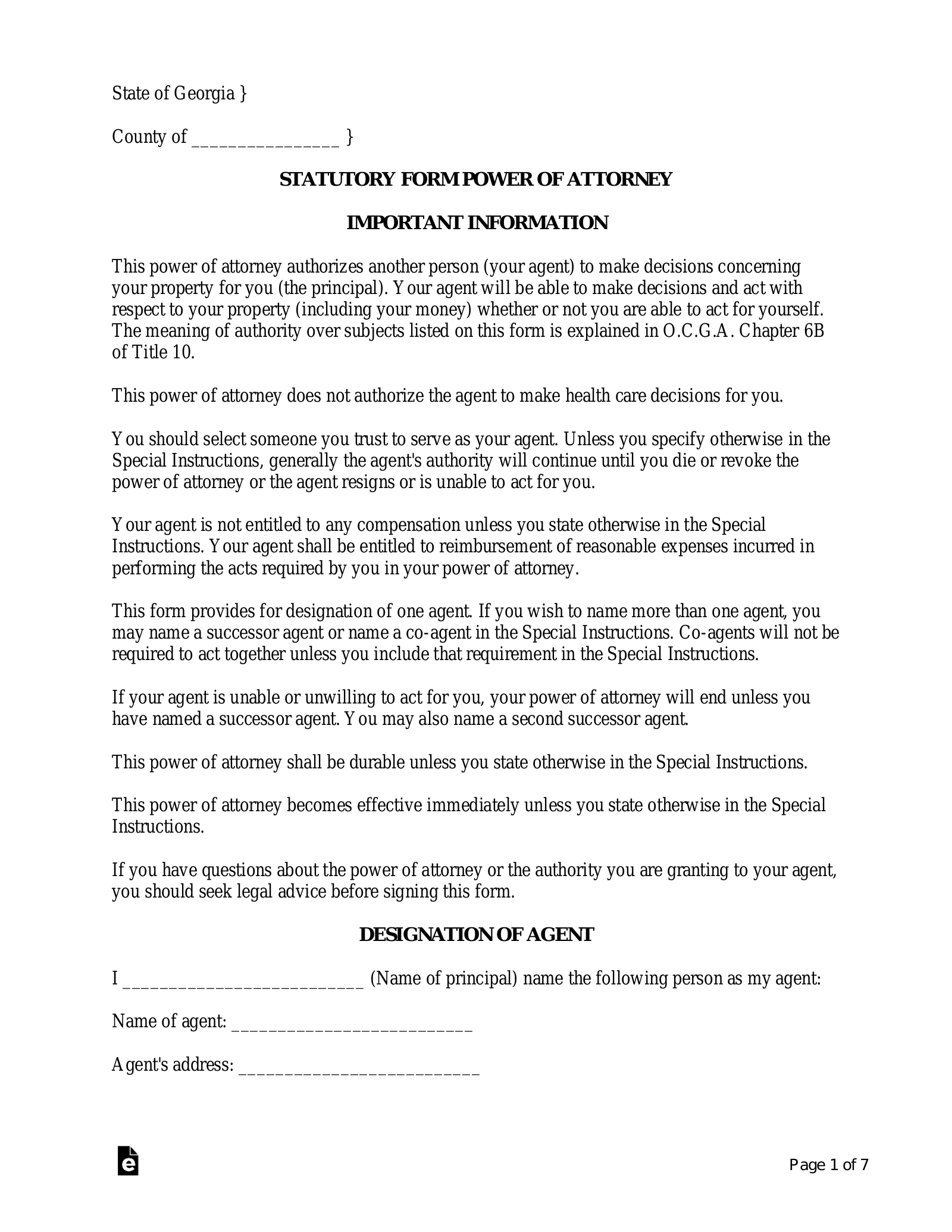
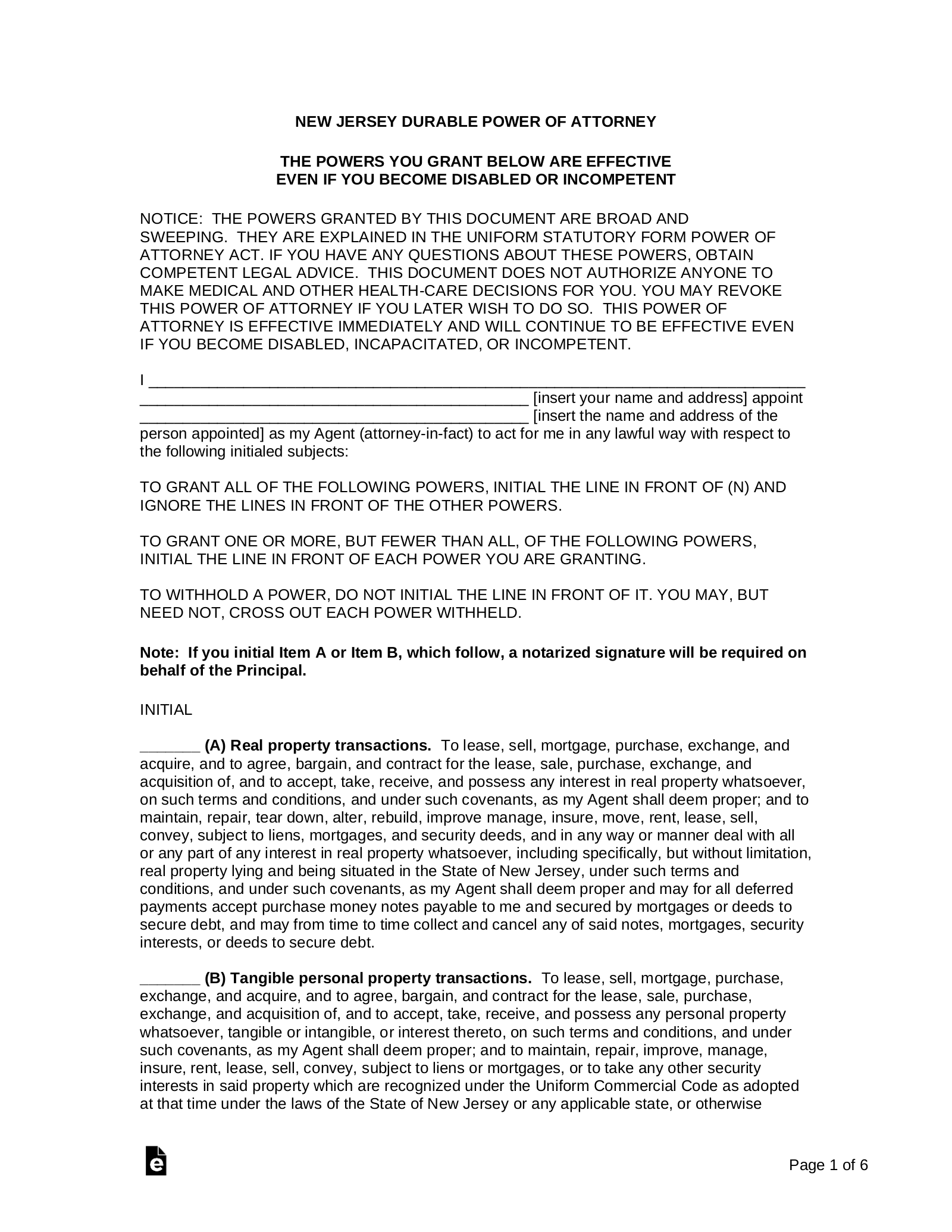
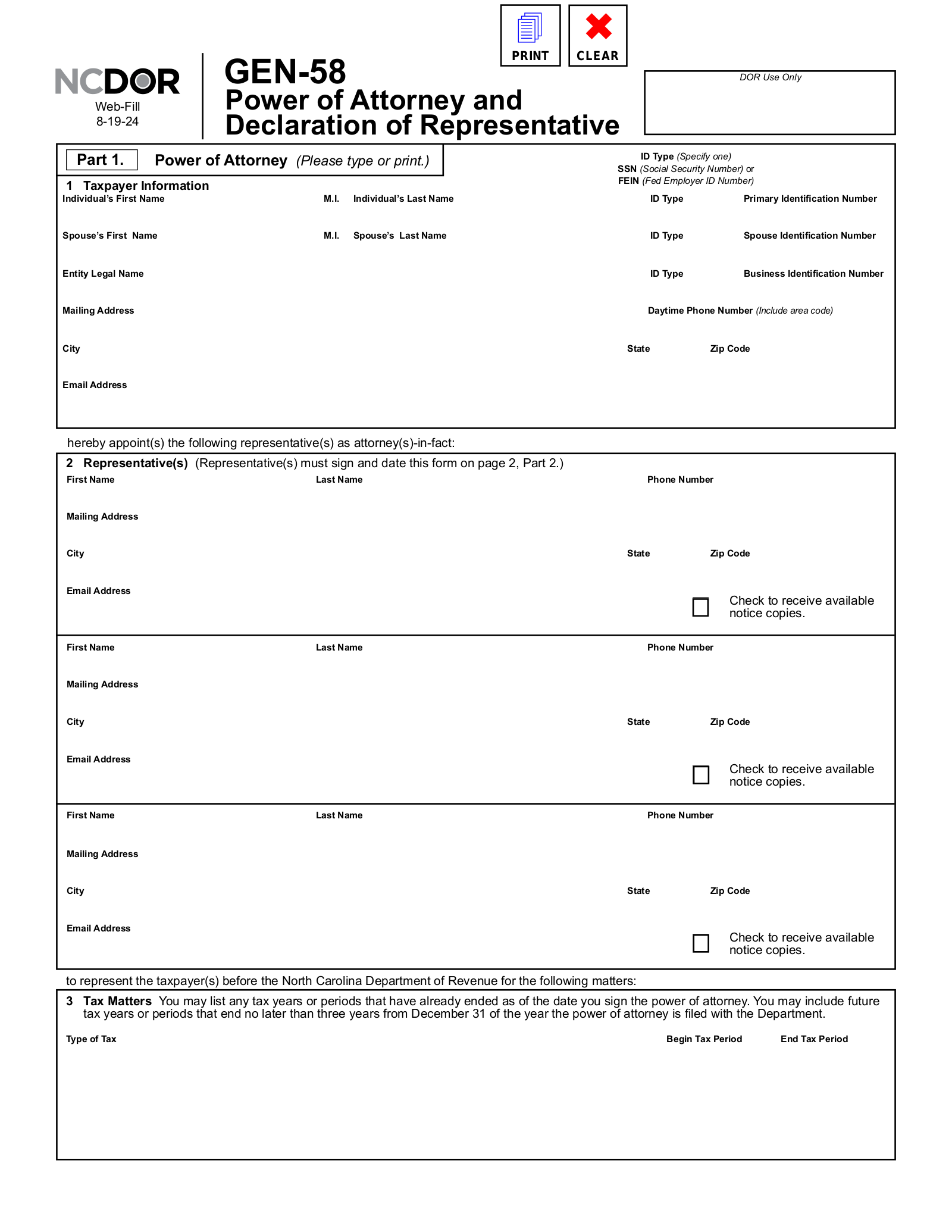
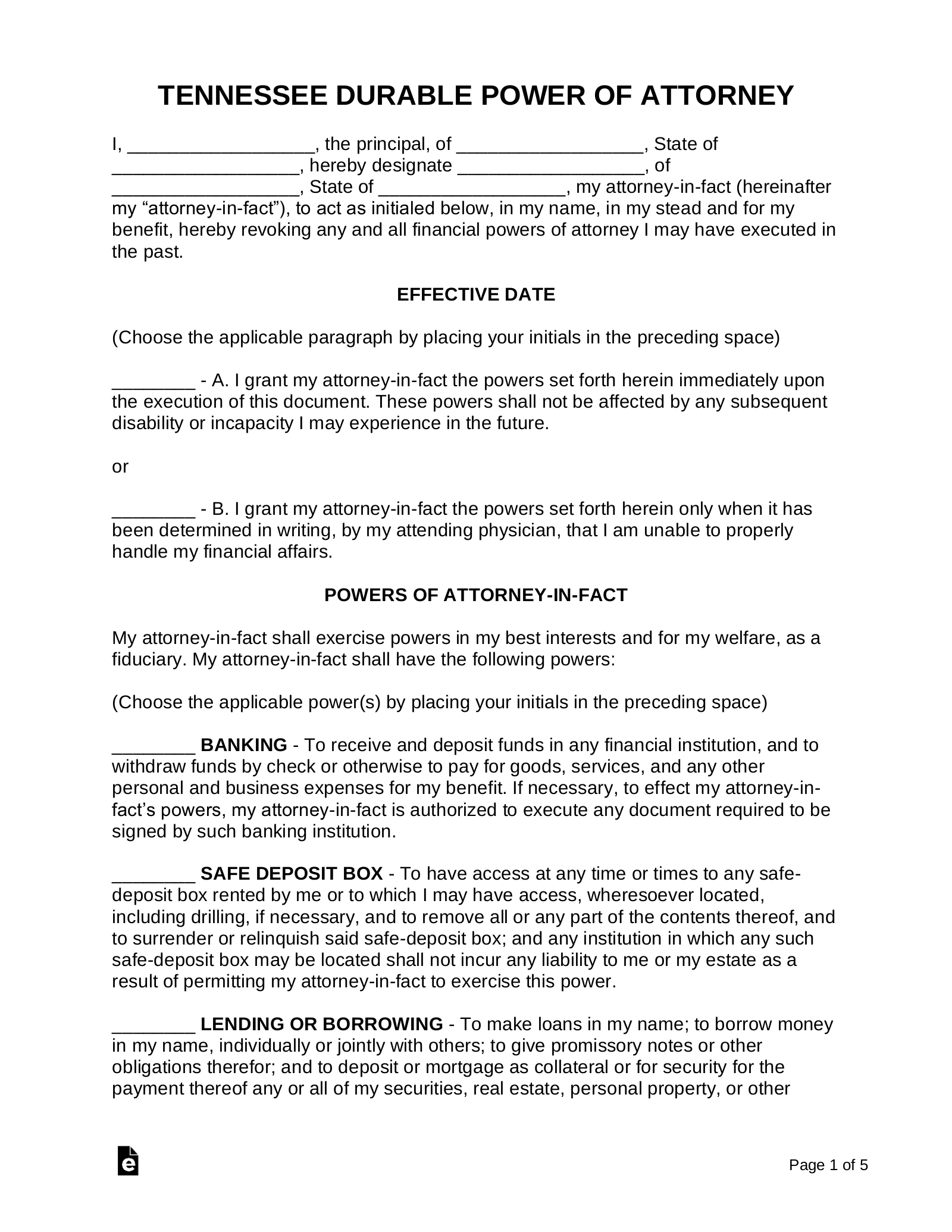
A state power of attorney cover page Template is most useful when it makes a legal document easy to identify without changing the authority contained in that document. Visual references show how different layouts emphasize titles, party information, effective dates, statutory notices, recording areas, and signature sections. The examples below are useful for studying document hierarchy and organization, but they should not be treated as proof that a particular layout satisfies the law of every state. A professional-looking first page can improve clarity, yet the underlying POA remains the controlling document for the authority granted to the agent.
The following references also demonstrate why state-specific review matters. Some forms place statutory warnings at the beginning, others emphasize agent designation, and others organize powers into clearly numbered categories. A cover-page designer can learn from these structures while keeping the final layout neutral and accurate. Compare the amount of information shown, the order of fields, the prominence of the document title, and the separation between administrative information and substantive legal language. Those distinctions can help create a cleaner document without suggesting that one state’s form is interchangeable with another state’s instrument.

Special Power of Attorney Template
Source: Template.net

Florida Power of Attorney Template
Source: OnlineLawDocs

California General Power of Attorney
Source: eForms

California Durable Power of Attorney Sample
Source: PowerofAttorney.online
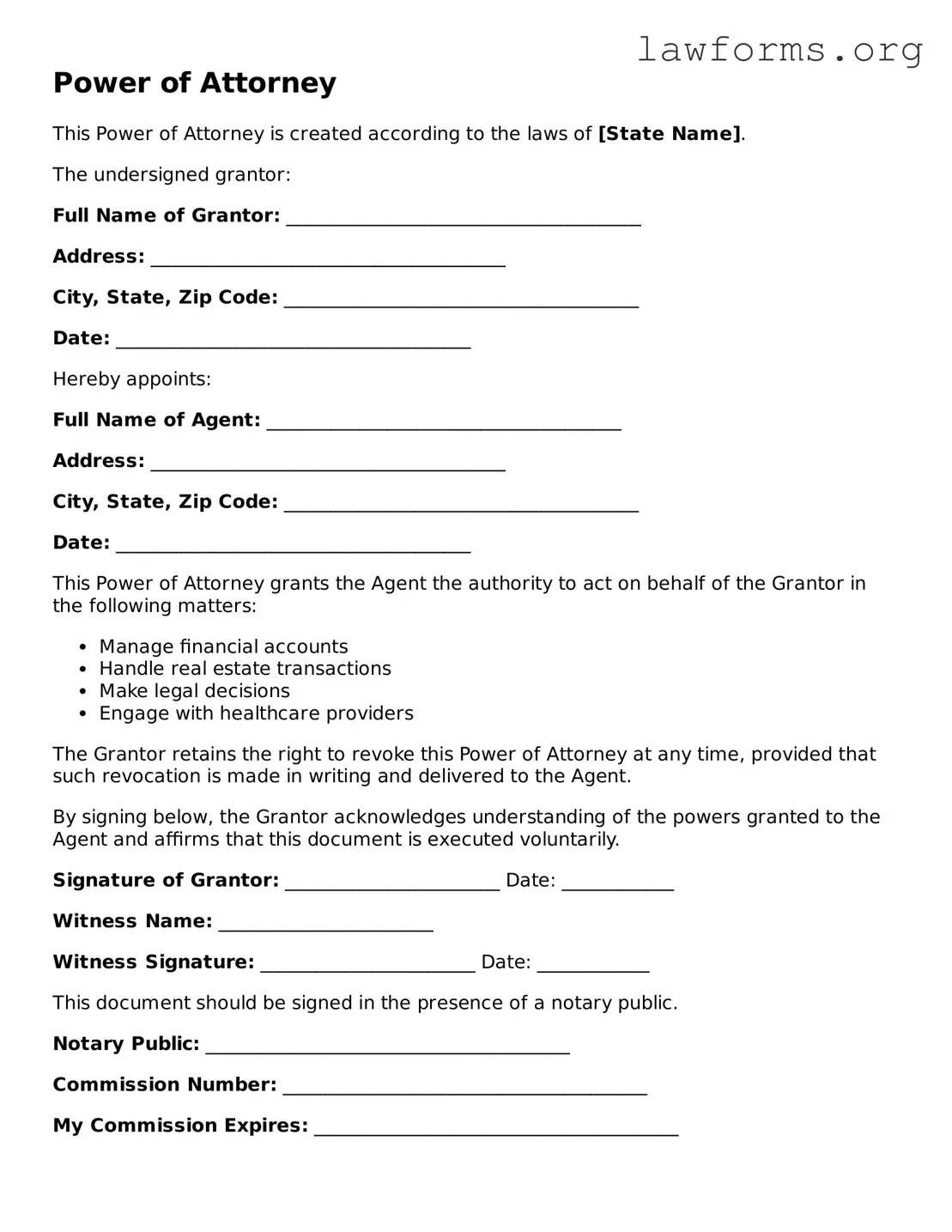
Power of Attorney Form Preview
Source: LawForms.org

Wisconsin Statutory Power of Attorney Form, Page 1
Source: TemplateRoller

Wisconsin Statutory Power of Attorney Form, Page 2
Source: TemplateRoller

Wisconsin Statutory Power of Attorney Form, Page 3
Source: TemplateRoller

Wisconsin Statutory Power of Attorney Form, Page 4
Source: TemplateRoller

Wisconsin Statutory Power of Attorney Form, Page 5
Source: TemplateRoller

Wisconsin Statutory Power of Attorney Form, Page 6
Source: TemplateRoller
